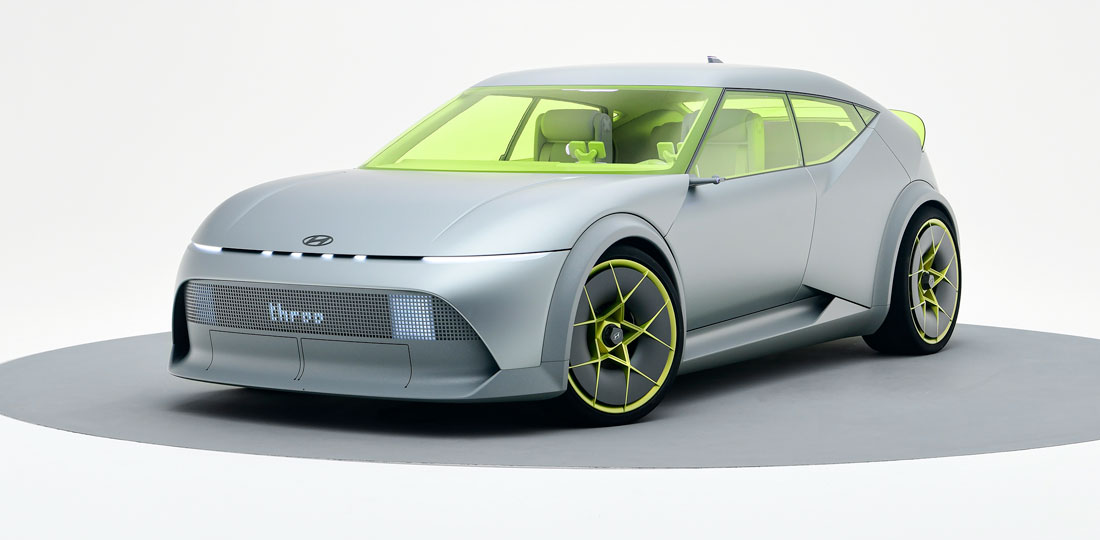
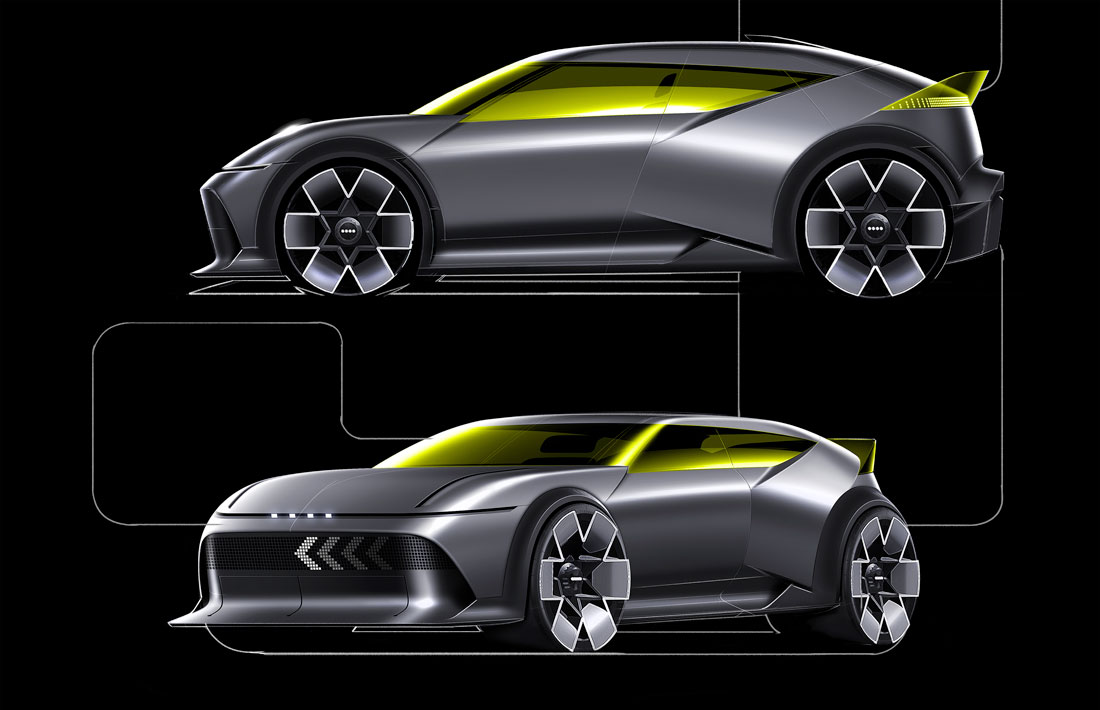
What matters is the number 3 written out in full and in capital letters, THREE, to indicate that this concept isn’t simply a show car but a prelude to a production car – the Ioniq 3, it’s easy to assume – with which the Korean manufacturer is offering two firsts: after its medium and large electric models, this is its first compact EV, but it’s also the first Hyundai to fully adopt, following the previews with the Ioniq 9 and Nexo, the new Art of Steel design philosophy that will now accompany every model.
Inspired by steel
“The effects of this new philosophy,” says Nicola Danza, “are particularly visible in the lateral intersection of volumes between front and rear. The inspiration came precisely from steel and its malleability, which gave us the opportunity to refresh our design language.”
Danza is Head of Exterior Design at Hyundai Motor Europe, where the THREE concept was developed. He worked closely with the top management in Korea, particularly with Simon Loasby, who serves as vice president alongside Head of Hyundai Design Center, and SangYup Lee, Head of Hyundai Global Design.
A language of sculptural beauty
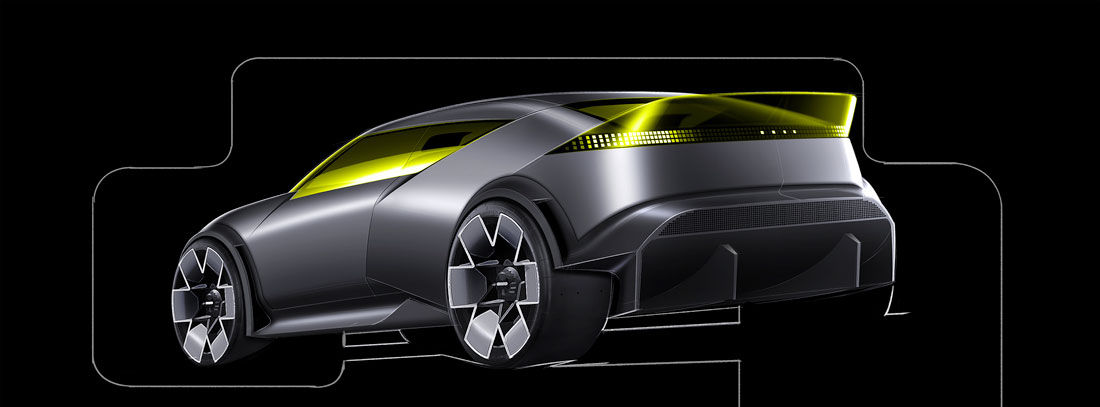
Because the automotive world is a world of steel, the Korean manufacturer’s designers respond in unison. Art of Steel, in their intentions, transforms the strength and flexibility of steel into a language of sculptural beauty. Inspired by Hyundai’s advanced technologies, the natural formability of this material reveals fluid volumes and precise lines that evoke the characteristic aesthetic quality of steel: powerful, gentle, and timeless.
A protective film
Manuel Schöttle, the designer behind the initial project who then collaborated with Danza on the concept, speaks of “authenticity in the way we treated the steel,” and then adds: “It was a natural thing to make the THREE concept extremely pure. And I hope it brings a smile to the face of those who look at it.” THREE, precisely to reveal its true nature, was not painted but simply covered with a protective film that, explains Danza, presents it “as when that material comes out of the steel mill in coils.”
The Aero Hatch is born
But that’s not all. THREE also features another important design innovation. It’s called Aero Hatch. “We asked ourselves if everyone wants an SUV these days,” explains Danza. “So we said: why don’t we try something else? Something, for example, reminiscent of a hatchback from days gone by, with an excellent aerodynamic profile, so important in the world of electric vehicles. We played with volumes and arrived not at a traditional hatchback with a vertical rear, but at something more modern and sportier.
Mr. Pix
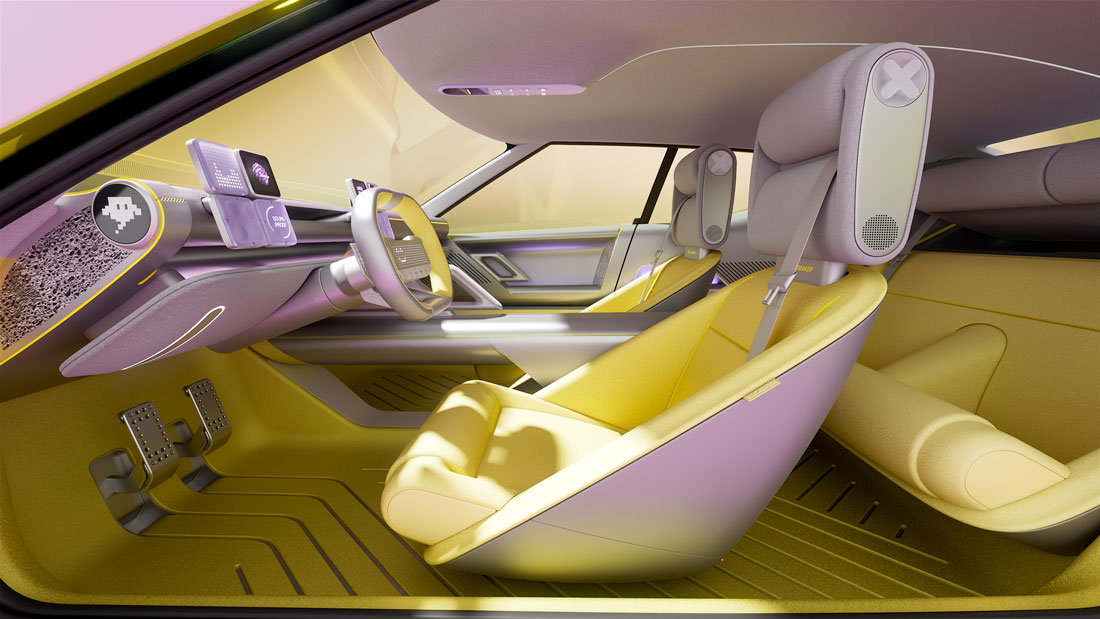
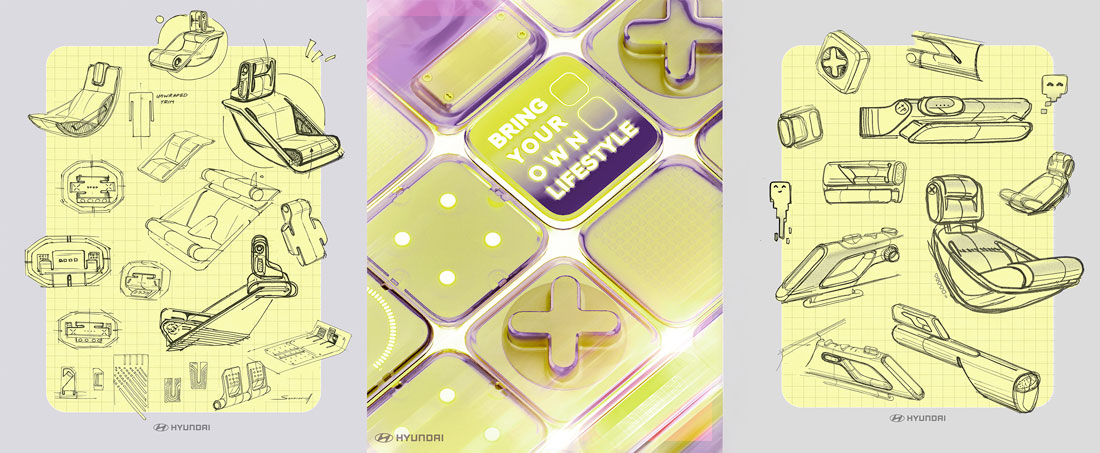
The interiors were designed by Raphaël Brétécher, Head of Interior Design at Hyundai Motor Europe, the same designer who had already given shape to the Ioniq 9 interiors. He developed them with the help of three other designers: Zdenek Borysek, Vitto Bonnemayers, and Alex Suvorov, while Emilie Grimm took care of C&T. And then there’s Mr. Pix, developed jointly by Brétécher and Danza and described as a “humorous communication with the car.” Born from the pixels that characterize the graphics of the headlights throughout the Ioniq sub-badge, pixels which in turn are linked to the Korean alphabet, it lends itself to a treasure hunt, a challenge to find the most Mr. Pix.
(Full article in A&D no. 276)