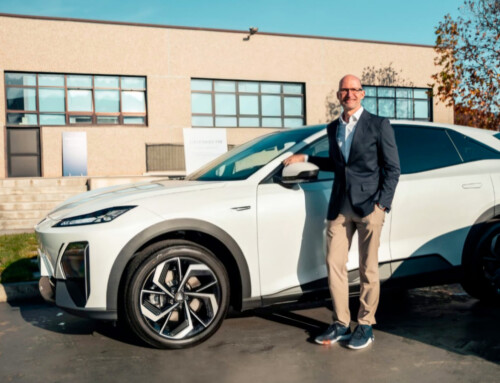
Working your dream job is a privilege, but when the aspiration of becoming a car designer materializes at one of the most prestigious automotive brands, you can truly say you’ve hit the mark. Mitja Borkert, 50, has been Lamborghini’s Head of Design since 2016. His passion is more than just that – it’s a (positive) obsession, as he explains.
When did you realize you wanted to become a car designer?
“I have many childhood memories related to drawing. I would draw anything with wheels, from cars to military vehicles. I was born in an East German town 90 kilometres from Berlin, and we certainly didn’t see the models that were circulating in major European cities on our streets. Cars like Lamborghini, Porsche, or Ferrari weren’t well-known in our area, and we mostly admired ‘normal’ sports cars that we occasionally saw, like the Opel Calibra or the Honda CRX, which became my first car. My brother would sometimes bring home magazines: we would cut them up and create our own model by combining various parts in an album. Our father kept many of those drawings, and sometimes we look at them and smile: we had created a genuine range of vehicles!”
Were there any turning points in your life?
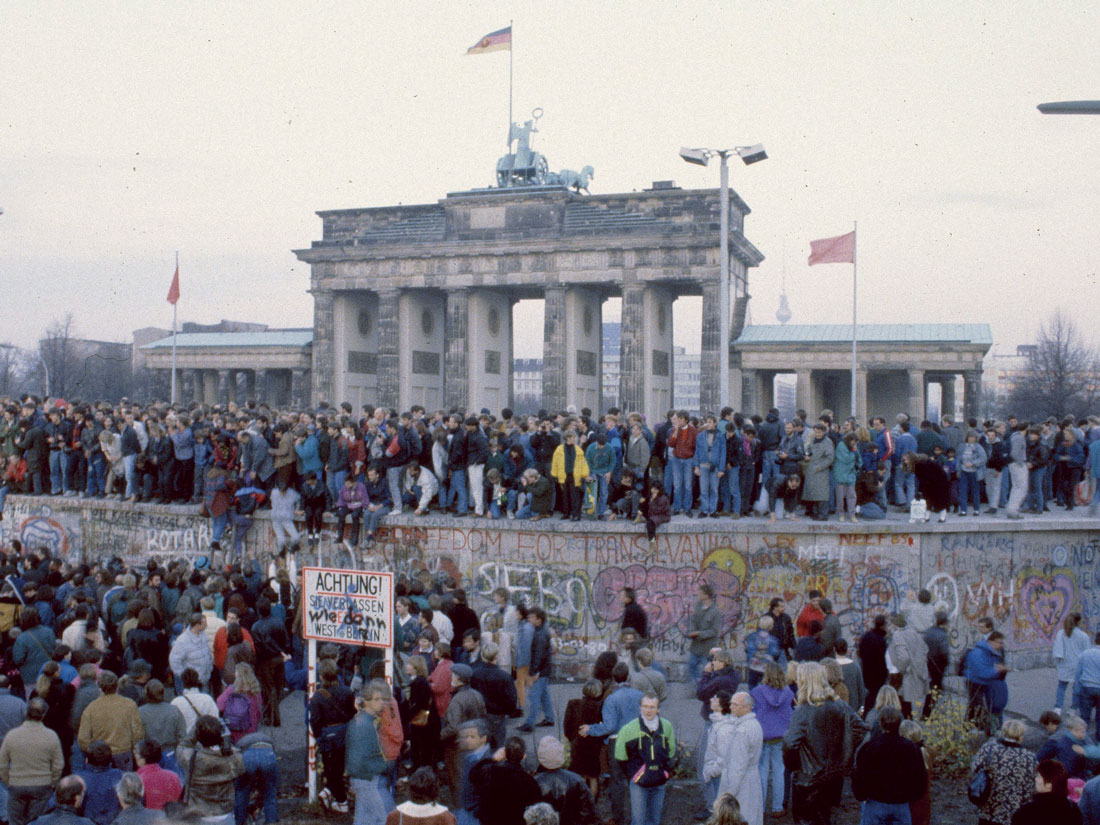
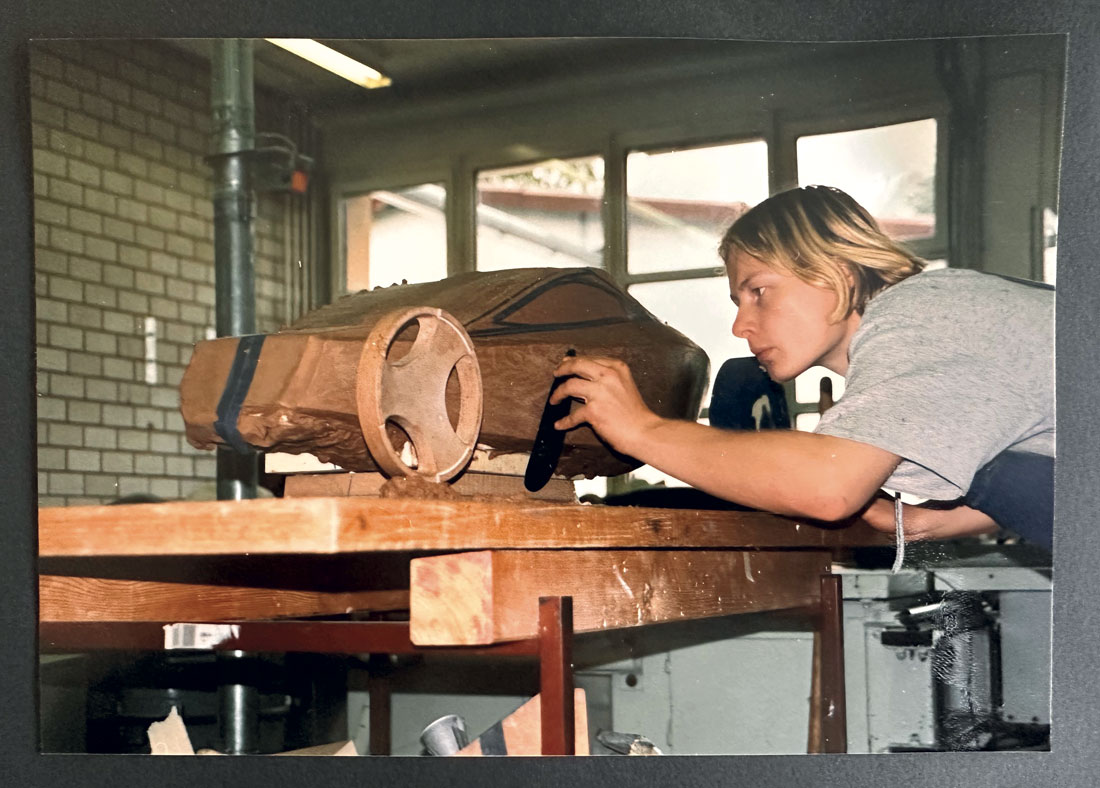
“The fall of the Berlin Wall in 1989 gave us the opportunity to open up to the world, taking away pessimism from people’s lives. Thanks to this, I managed to study and then went to Pforzheim University, where they taught me how to transform my drawing ability into a profession. Initially, we designed coffee machines or umbrellas – not particularly exciting things, but when I discovered the Transportation Design course in 1994, my life changed. I remember the smell of clay in the workshops, and I told myself: ‘Mitja, you’ll smell this for the rest of your life.’ Mine is a positive obsession.”
Which encounters changed your career?
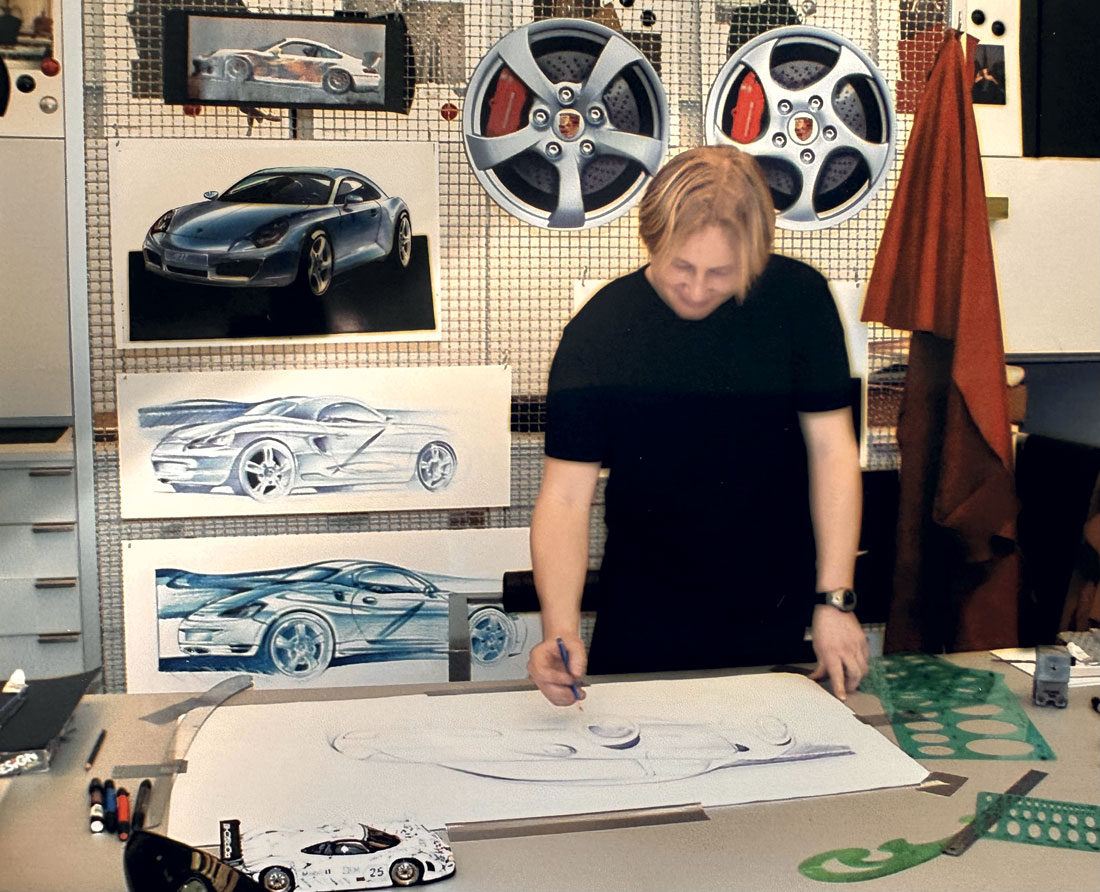
“In 1999, I took part in a competition to join Porsche, and Harm Lagaay chose my work. I remember the tension of that moment; I was experiencing a once-in-a-lifetime opportunity and couldn’t make any mistakes. Then, for sure, I improved a lot by working with Michael Mauer: those were years where I learned a great deal, and in 2014, I became head of exterior design at Porsche. And, obviously, meeting Walter de Silva changed my life: he was the one who asked me to join Lamborghini. A dream came true.”
What’s a typical day like for Lamborghini’s Head of Design?
“There are two types of typical days. When I’m in Sant’Agata Bolognese, I wake up around 6:30, exercise, and try to look at emails with proposals from my collaborators with a fresh mind. Then I have breakfast with my family and go to work. I spend the day with my designers between presentations and modelling, and I often like to organize meetings in the room with the large screen where I can put up the tape drawings: it’s one of the best ways to understand proportions. The second type of day is while travelling. I use the iPad a lot to evaluate proposals and try to get inspired by the places I visit. If the destination isn’t too far, I like to travel by car – looking around opens the door to ideas.”
Who are your go-to designers?
“From Luigi Colani, one must learn flair and genius. When I was studying in Pforzheim, I was literally in love with his Feather Pen, while some of Frank Gehry’s constructions like the Guggenheim in Bilbao, the Walt Disney Concert Hall in Los Angeles, or the Dancing House in Prague are true works of art. In mobility, I discovered a great passion for motorcycles and the art that connects these objects to speed. The forms designed by Massimo Tamburini for some of his models like the MV Agusta F4 are timeless: they taught me to draw even the smallest detail with the same love.”
Which cities set style trends today?
“You can’t ignore Asian metropolises like Shanghai, Hong Kong, or Tokyo. The innovative energy in these cities is a driving force, reminiscent of what New York’s influence might have been in the ‘80s and ‘90s. For those who love contemporary architecture, there are many inspirations to be found in the United Arab Emirates, where great economic possibilities have allowed local governments to commission impressive architectural works.”
Full article in Auto&Design no. 271 – Browse it on A&DCollection