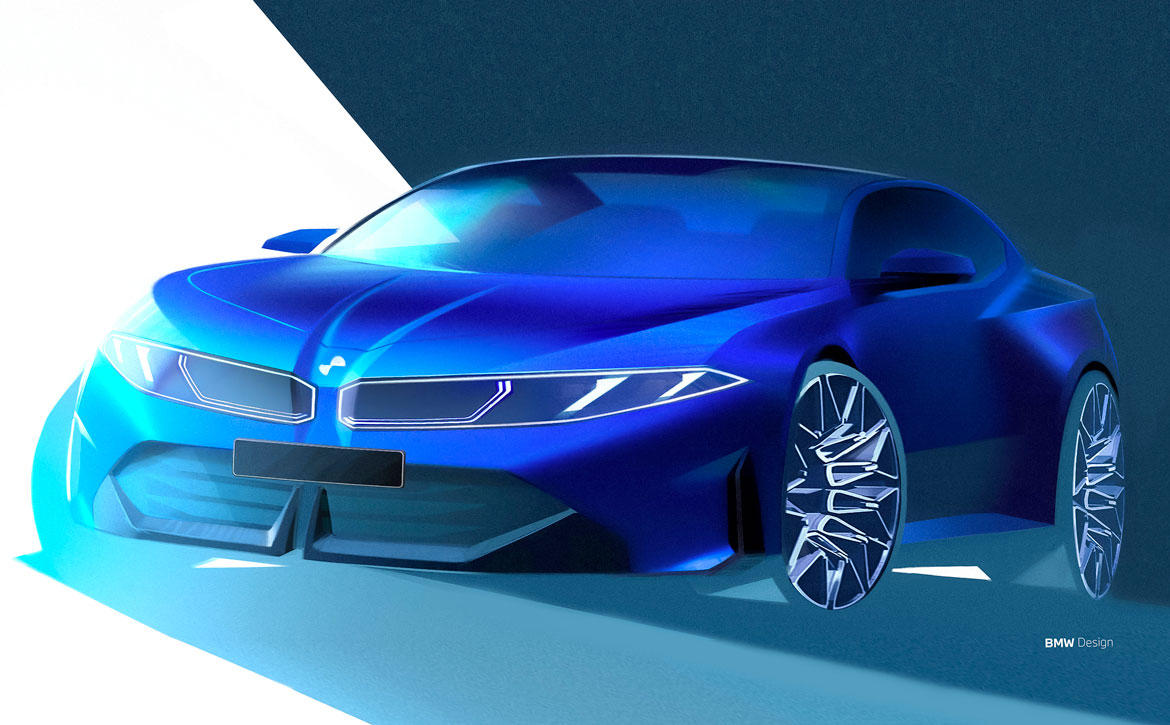
In the transformation journey undertaken by BMW, the Neue Klasse is much more than a new platform: it is a statement of intent, a paradigm shift articulated primarily through its visual identity. The new i3 leads the charge with a cleaner, back-to-basics aesthetic that is still deeply distinctive.

Less complexity
“We have retained the muscularity and emotive surfaces, but have modernised them by reducing complexity”, explains Oliver Heilmer, head of design for the brand. “It is a return to our roots: the first BMWs of the Neue Klasse and the first Series 3 were sporty, dynamic and muscular, but never overly complex”.

A front end between tradition and innovation
The most delicate work was concentrated on the front end, which has always been a signature feature of BMWs. Two key themes come together here: the reinterpretation of the double kidney grille and the return of the “shark nose”, the forward-sloping front. “The biggest test was reinterpreting the double kidney grille”, says Heilmer. “We combined the DNA of the 1960s with modern technologies: sensor integration, lighting elements and a new visual signature”.

Minimalism becomes an experience
Inside, the new i3 takes a further step towards dematerialising the interface. The almost complete absence of physical buttons gives way to an environment dominated by seamless surfaces and projection systems. “We’ve drawn inspiration from the BMW Vision Next 100 concept”, explains Heilmer. “Hands on the wheel, eyes on the road” is the guiding principle. Information is organised architectually across three levels: “The first is the central display with controls on the steering wheel. The second is Panoramic Vision, visible to all passengers. The third is the 3D head-up display, dedicated to the driver.”

Luxury through Circular Design
The sustainability theme is incorporated into the project through what is known as Circular Design, which goes beyond the choice of materials to redefine how they are perceived. “One example is the new Veganza material”, says Heilmer. “We use it in the doors and dashboard as well as on backlit surfaces”.

Valuable recycled materials
Thanks to the focus on tactile quality, the result is a far cry from the traditional idea of recycled material. “It is soft, refined and exclusive. And it offers great freedom in terms of colour customisation”. But the key point is another: “The customer must not perceive it as being recycled. What matters is the aesthetics, the quality and value it conveys.”
(Full article in A&D no. 278)