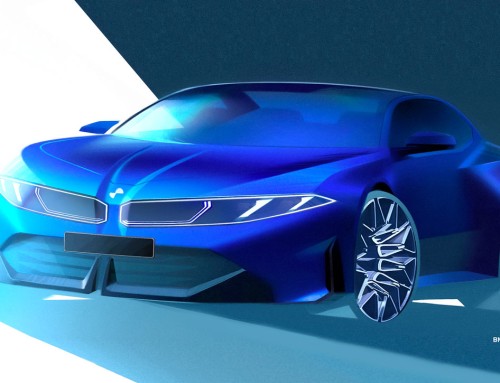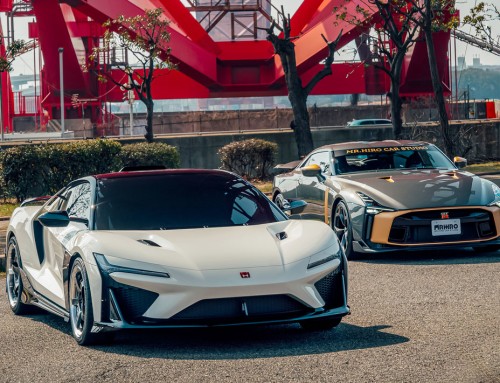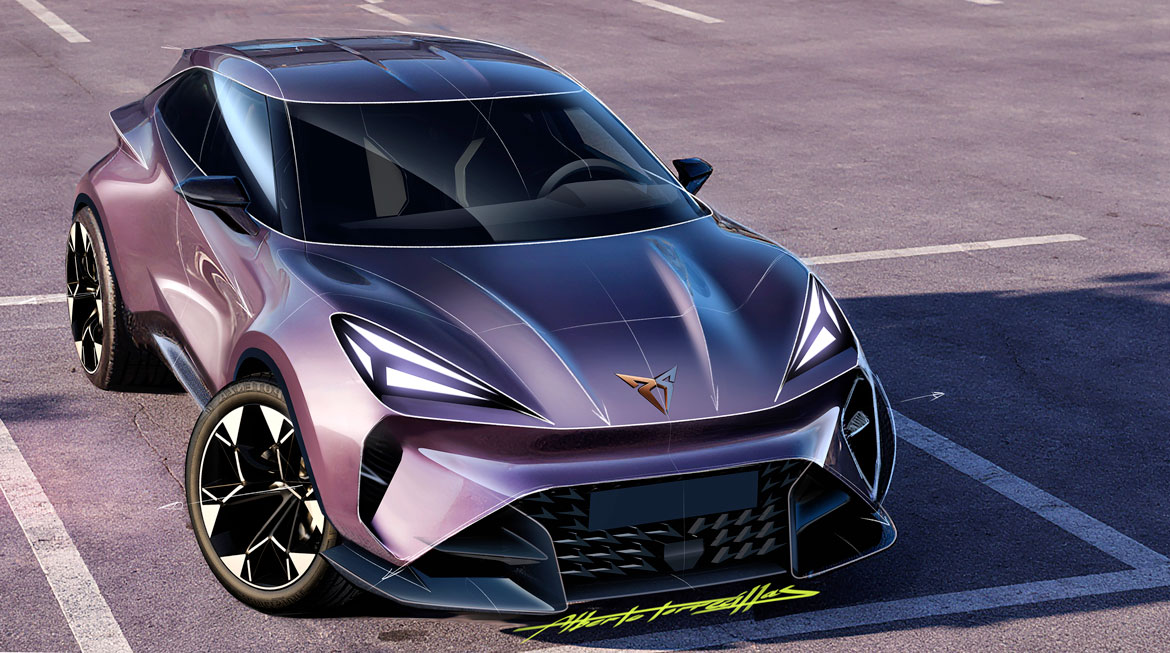
The Spanish brand’s new compact electric pushes the boundaries of automotive design, opening up an entirely new interplay between additive technology and sensory perception. Jorge Díez, Chief Design Officer, and Francesca Sangalli, Head of Colour & Trim at Cupra, take us inside a cabin conceived as a manifesto for sustainability and emotional engagement.
Identity and formal attitude
Jorge Diez reflects on how the brand’s identity is bound up with its geographical roots: “In designing the Cupra Raval, aligning with Spanish culture was essential. We are intrinsically more emotional and expressive; when you bring the soul of a country to bear on a car, something authentic emerges. We are not after a static or restful design: we want a formal tension that speaks to the ambition of pushing boundaries, the hallmark of a young brand unconstrained by a long history.”
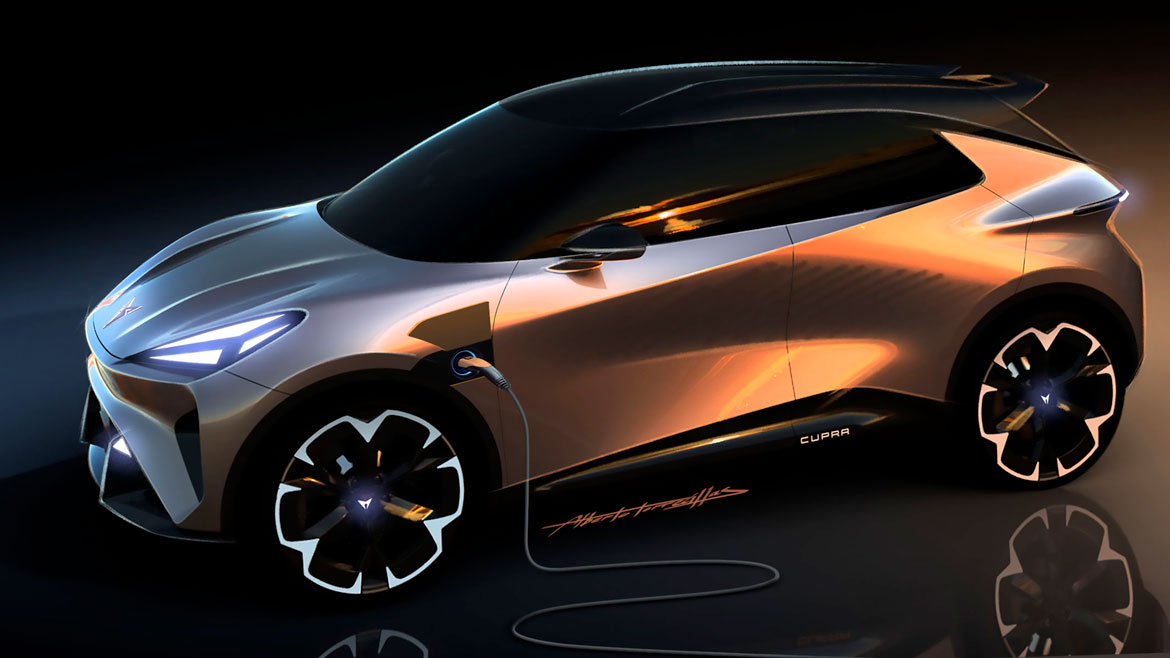
A reverse path
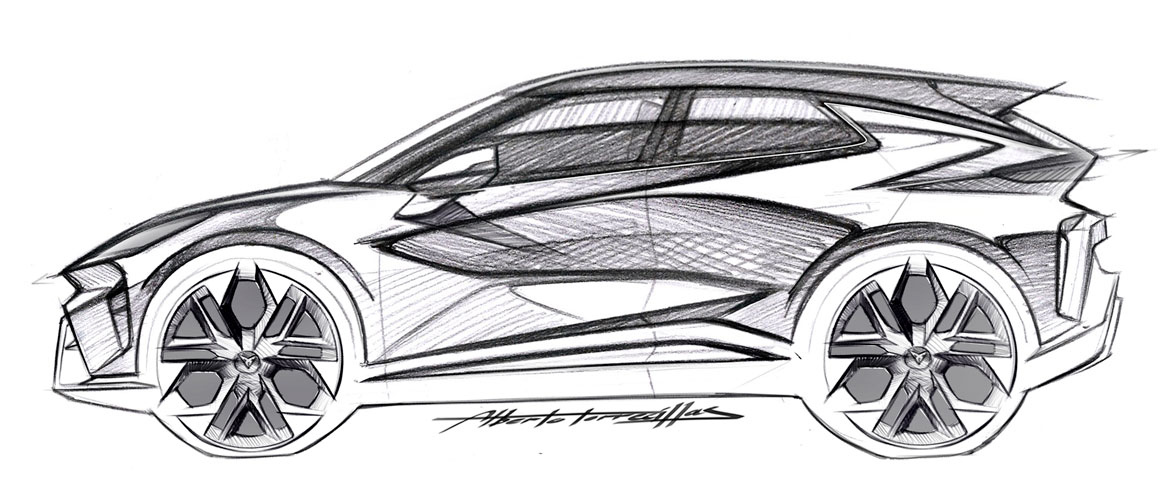
That determination is written into a silhouette that defies the physical limitations and roof lines typically dictated by electric platforms. “From an engineering standpoint, we worked hard on the proportions”, continues Díez. “The production Raval sits 48 millimetres lower than the Urban Rebel Showcar, which runs counter to standard industry practice. To achieve an aggressive, muscular silhouette we worked on the lower body surfaces, introducing cladding defined by a taut, angular line that lends visual stability and a purposeful stance within a compact footprint.”
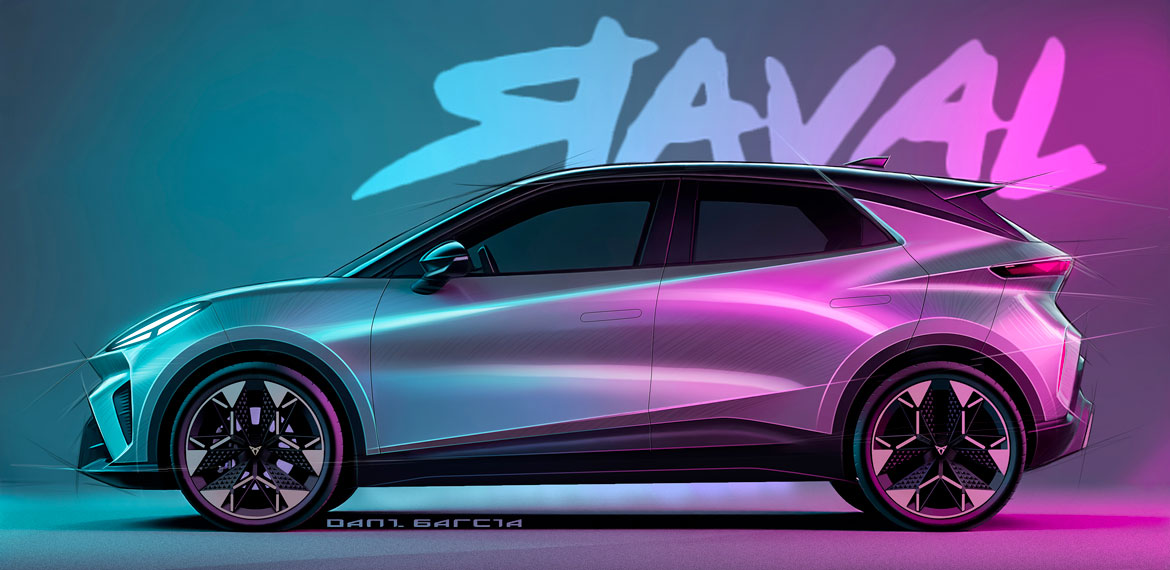
The triangle motifs
The Raval’s visual language is governed by iconic geometric motifs. “We wanted a signature that was recognisable from a distance,” says the Chief Design Officer. “Where the square conveys solidity and is suited to SUVs, and the circle reads as friendlier, we chose the triangle as the brand’s defining element. For us, the headlights are the eyes of the car, and we sought a humanistic approach inspired by muscular anatomy: when they activate, the illumination starts from the inside outwards, as if the car were waking up.”
Aerodynamics solutions
Aerodynamic efficiency is woven in as a sculptural opportunity too. “Managing airflow is always a complex challenge,” admits Díez. “We integrated solutions such as the rear spoiler, which creates graphic tension whilst optimising flow separation, and the front air intakes that channel airflow through the wheel arches. The wheels feature enclosed lenticular surfaces to reduce turbulence. We have kept the emotional character of Cupra’s DNA intact, delivering a car with a total range of 446 kilometres.”
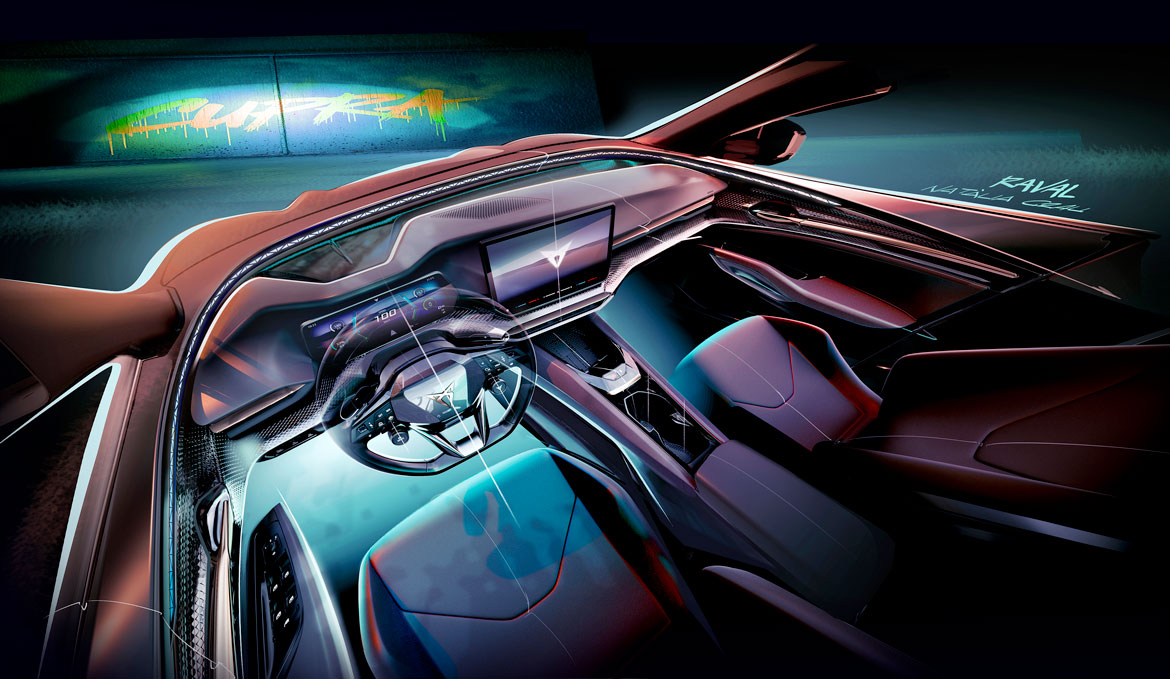
A three-dimensional cabin
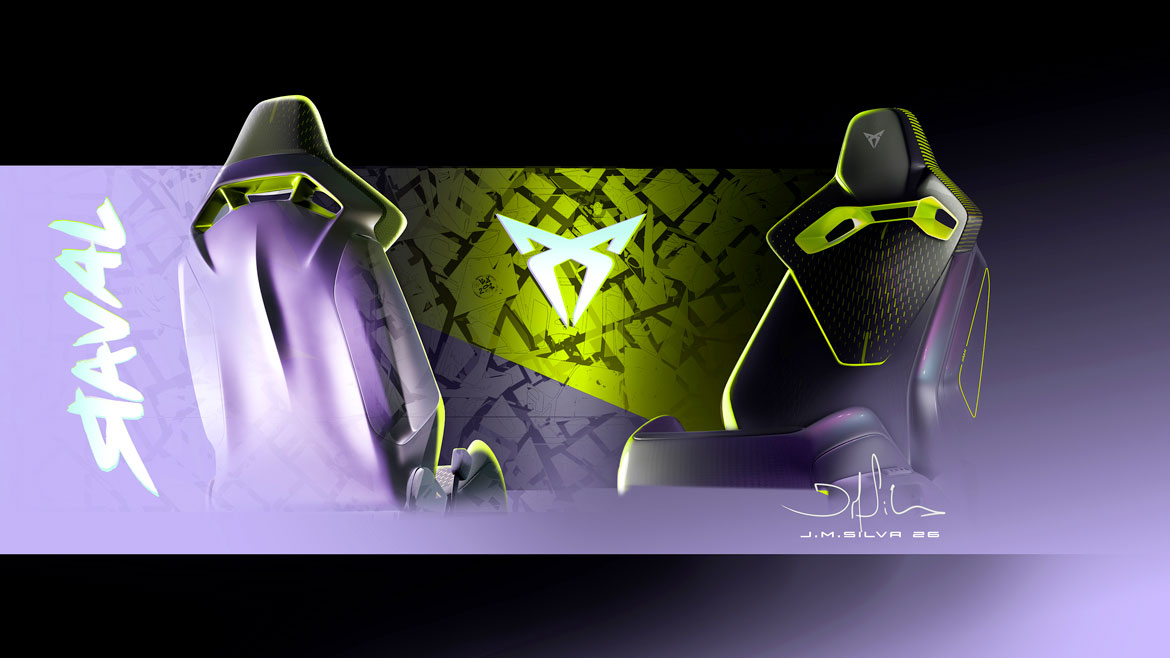
The dynamism of the exterior finds its answer in an interior layout designed to wrap around the driver. Francesca Sangalli describes the development of the cabin: “Everything orbits around the architecture of the cockpit, conceived to enclose and focus the driver’s attention. When you design a driver-oriented dashboard to communicate control, the materials have to follow that logic. On the Raval we established a material hierarchy: the upper section of the dashboard is soft, whilst the lower section is structural, rigid, and dominated by parametric patterning.”
(Full article in A&D no. 279)