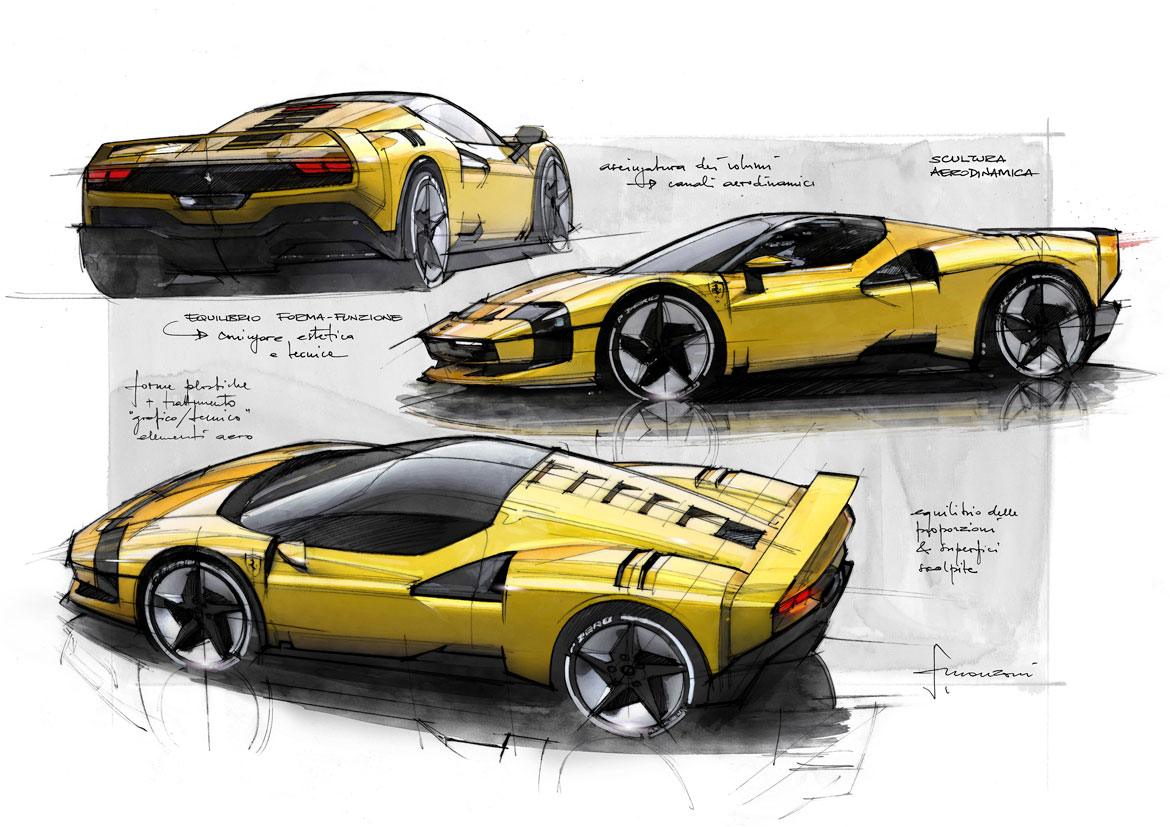
A one-off that reinterprets Ferrari’s heritage without nostalgia. Flavio Manzoni and his team describe a project that mixes up sculpture, graphics and technical discipline. A potential ambiguity underlay the SC40: evoking the F40 without becoming a replica of it. “There was no way we could pay tribute to an icon like the F40 for just one client”, Flavio Manzoni says. “It would have looked like an exercise in nostalgia. Instead, we chose to work on a few evocative elements – the fixed wing, the embossed lettering, the kevlar – while building a totally new language”.

Consistency with the brand
According to Ferrari’s Chief Design Officer, the project does not consolidate a style, but challenges it. “I am interested in creating a fusion between sculptural form and graphic elements. This contrast generates something fresh, almost disruptive”.
Johann Lemercier, Head of One-Off Design Projects, sets out the role of custom-built cars: “The one-off is an outsider. It is not intended to preview the future lineup, but to explore a very personal vision together with the client”. This freedom does not mean isolation: “We work with the same team at the Style Centre precisely because these cars must remain consistent with the brand”.
Solids, voids and performance
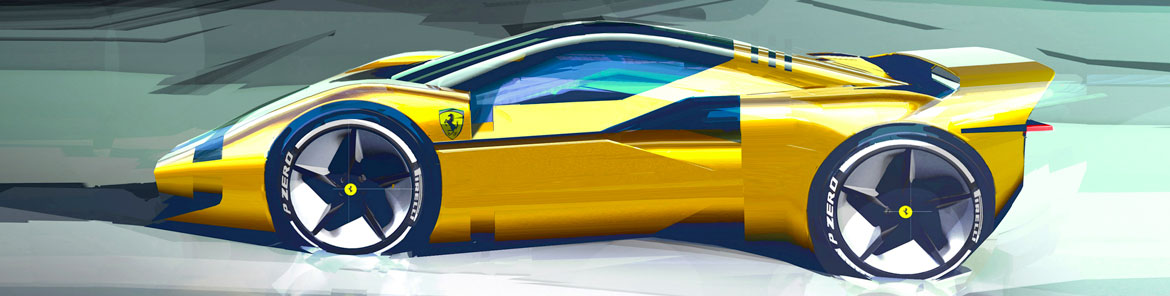
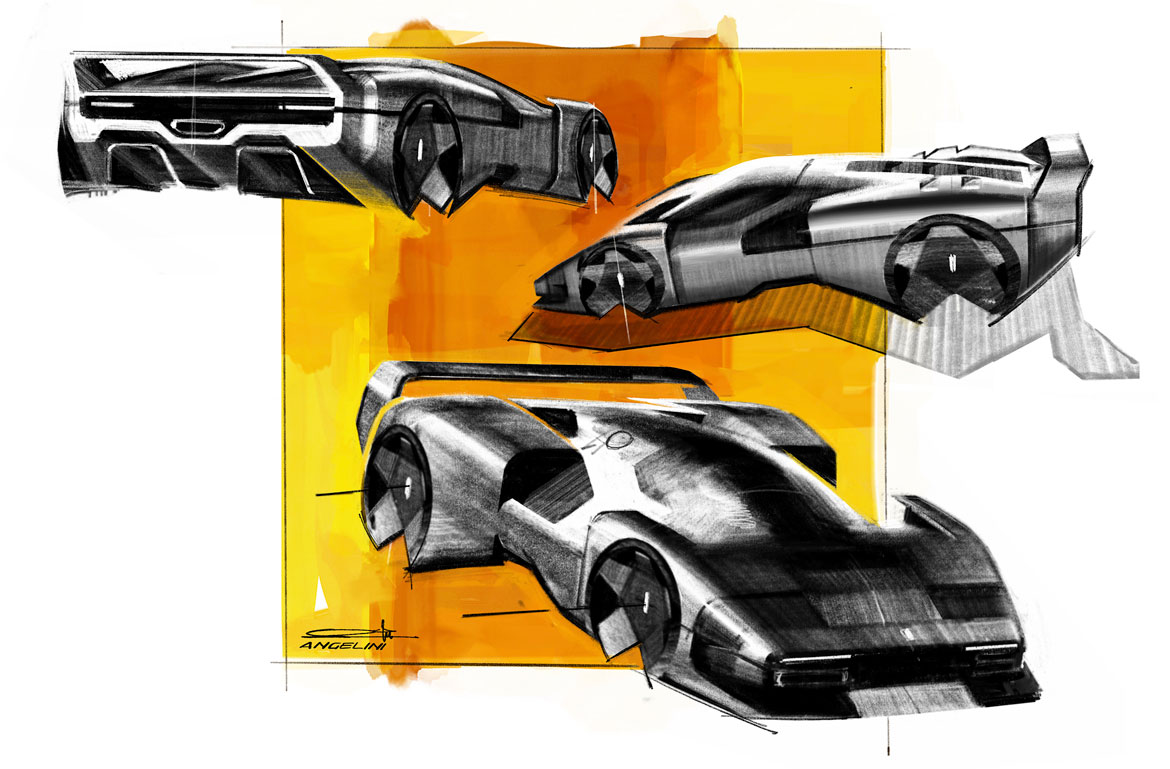
In formal terms, the SC40 works by subtraction. “We start with solid volumes, almost fused together, which we then hollow out”, explains Riccardo Angelini, Exterior Lead Designer. “The air intakes, the side NACA ducts and the rear louvres are not decorative details: they arise from specific cooling and flow requirements”.
Intuition and simulation
The most obvious compromise involves the rear wing. “In the early sketches, it was lower”, says Manzoni. “But aerodynamics requires a certain distance from the car body to work best. These are compromises that we accept, because performance is part of Ferrari’s identity”. On the relationship between intuition and simulation, Manzoni is uncompromising: “It is correct to say that a Ferrari is designed by aerodynamics, but that does not mean styling is sacrificed. Even on extreme projects such as the 499P, we have demonstrated that beauty and performance can go hand in hand”.
Material, memory, identity
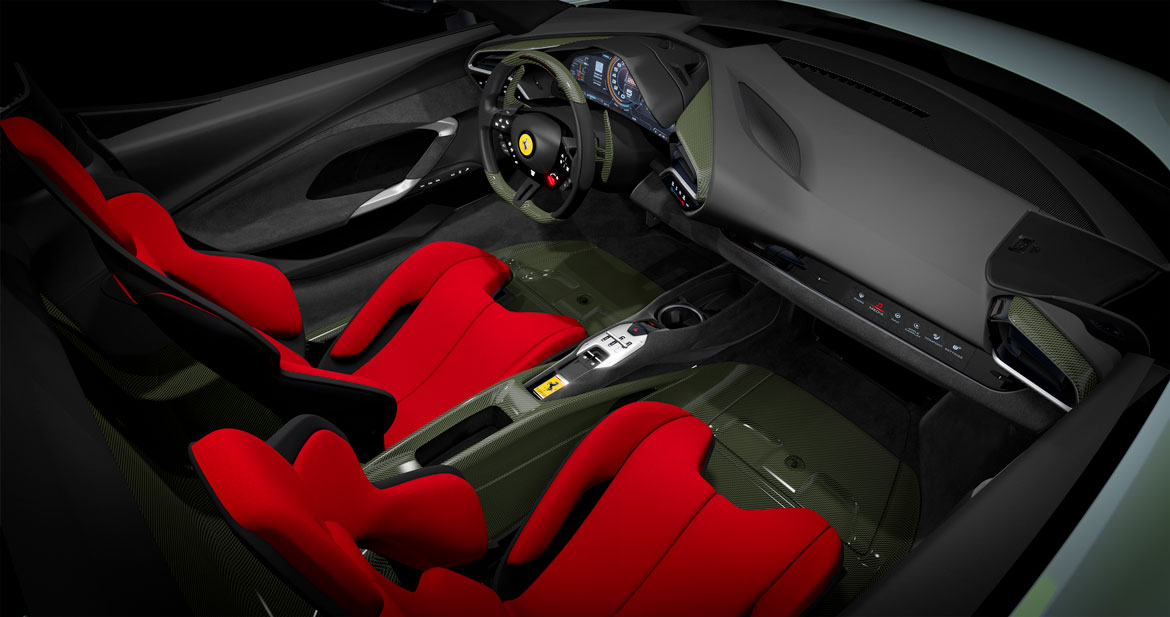
In the interior, creative freedom has a free rein but is still regulated. “A one-off is not a showcar”, Lemercier points out. “It is a real Ferrari and must comply with safety, durability and homologation standards”. Cristina Fiò-Bellot, Colour & Trim One-Off Designer, explains what approach was used for materials: “We have fewer constraints than with the standard production lineup, but we only use validated content. The difference is that we can develop ad hoc solutions”. Carbon kevlar, for example, has been reinterpreted. The red jacquard fabric also recalls the F40 without copying it. “We are inspired by the past, but we translate it with contemporary technologies”.

The team that worked on the Ferrari SC40, led by Flavio Manzoni together with the project managers: Johann Lemercier, Riccardo Angelini, Francesco Avesio, Cristina Fiò-Bellot, Enrico Gatto.
A postmodern project
If the SC40 were to become a benchmark in twenty years’ time, what would make it representative? Manzoni chooses a precise definition: “Postmodern, in the most elevated sense of the term. Recovering elements of tradition and recombining them, breaking certain dogmas of car design”. The identity of the SC40 plays out in this tension between memory and experimentation: not a nostalgic exercise, but a statement of method. Exploring, daring, without ever ceasing to be Ferrari.
(Full article in A&D no. 277)