MG Motor is planning a single launch for 2026 – but with a double impact. With the new MG4 2026 and MG4 Urban, the British brand now controlled by China’s SAIC Group is strengthening its position in the core EV market through two compact models that share the same name, yet differ significantly in concept and character. The MG4 returns with a series of updates largely shaped by customer feedback, as explained by Lorenzo Cereda, Head of Product Marketing at MG Motor Italy: “We listened carefully to customers and to the constructive criticism, especially regarding the interior quality – considered functional but somewhat lacking in touch and feel – as well as the onboard technology updates. We can now offer a car that is much closer to customer expectations.”


Concerning the style, the changes are subtle but targeted. The sporty front end and full-width rear light signature remain, while one of the car’s most distinctive elements has been redesigned: the split rear spoiler with its aerodynamic channel at the base of the rear window has been replaced by a cleaner single-piece solution, said to be both simpler and more efficient. New wheel designs and exterior colours also join the range. Inside, the cabin is still dominated by the large 15.6-inch central display, now running on a new operating system developed together with Oppo. Physical controls remain limited, with a rotary gear selector and integrated air vents contributing to a dashboard designed to improve perceived quality. Driving dynamics have also been refined, although the decision to manage regenerative braking and driving settings through infotainment menus rather than dedicated controls may still divide opinions.


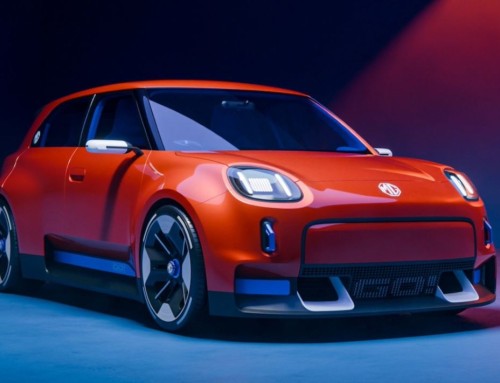
As for the MG4 Urban, despite its name it is neither a derivative of the MG4 nor a particularly small car. It is based on a dedicated platform optimised to maximise interior space, with a cell-to-body battery structure integrated directly into the chassis. The result is a compact hatchback measuring 4.23 metres in length – around 10 centimetres longer than the MG4 – while sitting below it in terms of price, battery and power output. Its main strength lies in the design, which Cereda describes as “mainstream: it means being more immediate and easier to understand, with some references to the Cyberster in the headlights, grille and wheel design.” Its urban-focused character emerges through compact proportions, softer rear surfaces integrating tail lights with a subtle Union Jack-inspired graphic, and handling enhanced by a particularly tight turning radius. The interior layout closely follows that of the MG4, especially around the infotainment area and dashboard architecture, while introducing driving controls directly integrated into the steering wheel.