Audi presents the Nuvolari, the most powerful road car it has ever designed. The Nuvolari is the first production car based on the new design philosophy of the Four Rings, defined by Massimo Frascella’s team, and combines the character of a supercar with a deeply distinctive style. Its taut lines, seamlessly integrated technical solutions, and active aerodynamics help define its appearance. The mid-engine layout determines its proportions, creating a monolithic body and lending it an extraordinary personality.
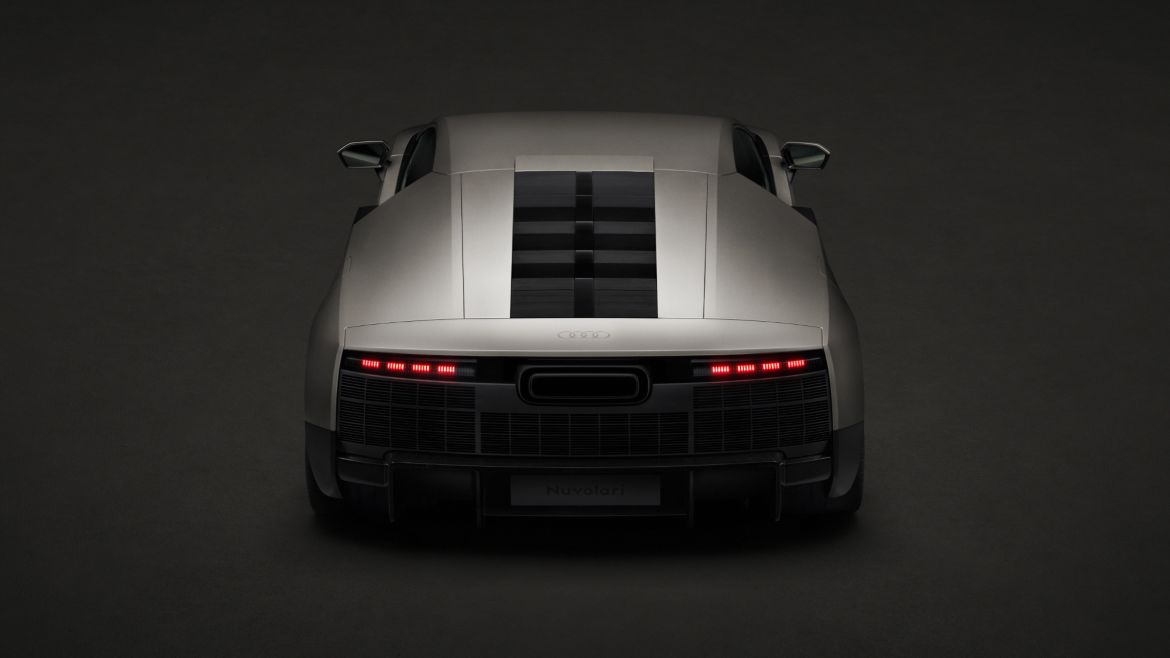
The “Titanium” paint finish, warm and captivating, draws inspiration from the luster of the metal of the same name, an emblem of lightness and strength. A feature shared with both the Audi Concept C and the Audi R26 F1 single-seater, which, combined with numerous carbon fiber elements, further enhances the car’s style. The Audi Space Frame architecture, which ensures lightness and high torsional rigidity, is paired with a body made entirely of composite fibers, specifically CFRP (carbon fiber reinforced thermoplastic polyurethane): an absolute first for Audi.
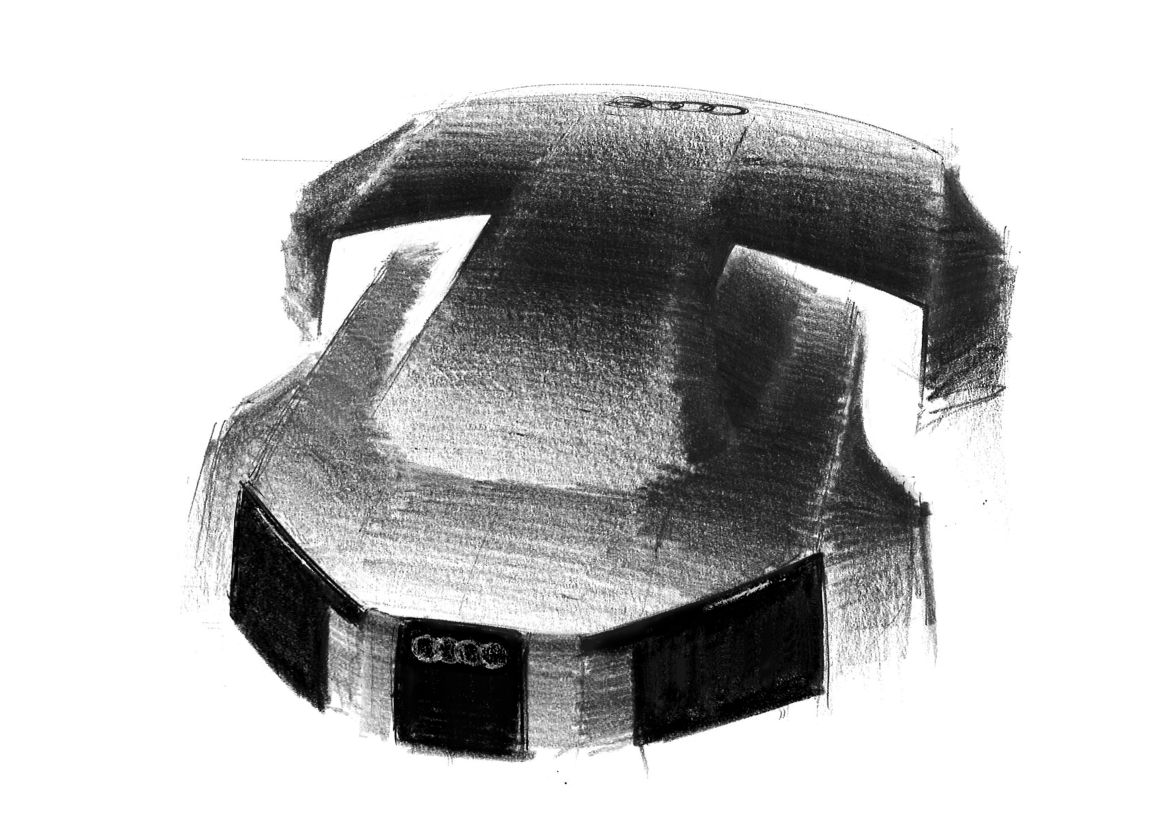
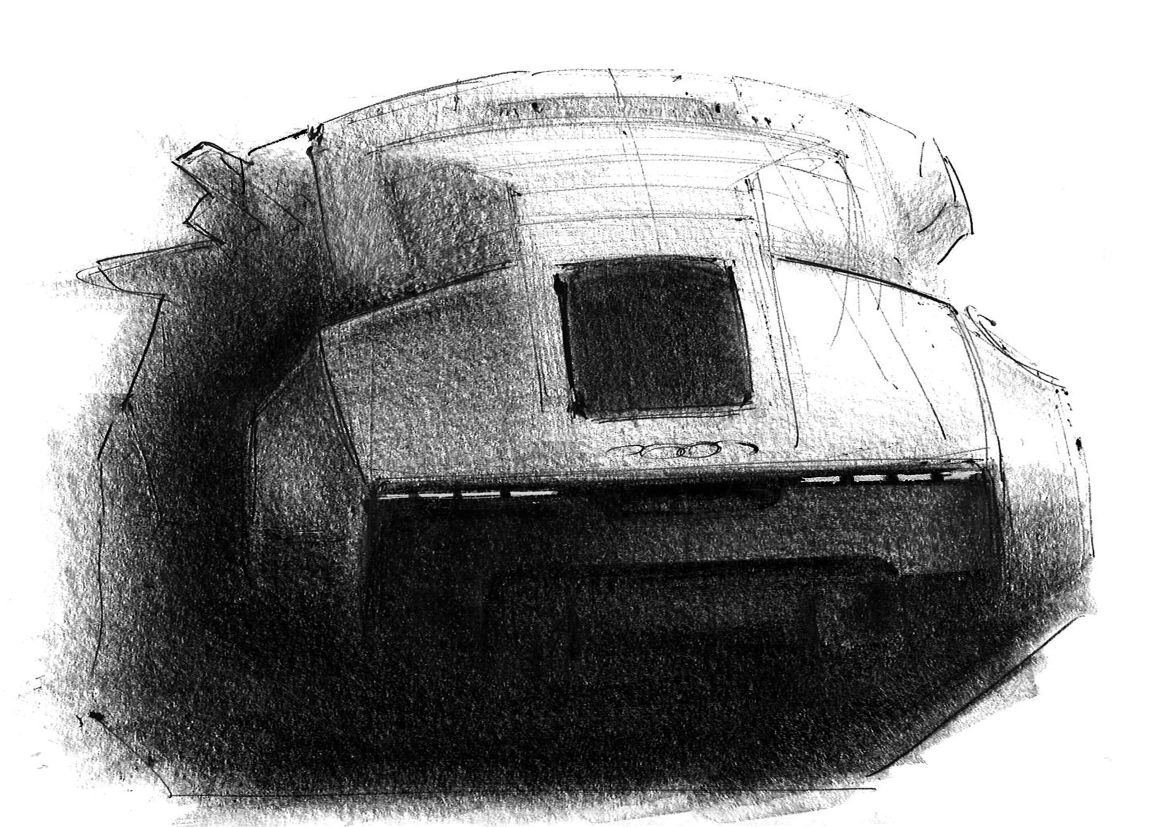
The Audi Nuvolari employs active aerodynamics to combine performance and efficiency. The system adjusts downforce, aerodynamic drag, and consequently the supercar’s dynamic balance in response to driving conditions, ensuring stability and precision. The front air intakes ensure effective brake cooling and efficient thermal management of the hybrid components, while the S-duct—the S-shaped channel that directs airflow from the lower section of the front end to the upper part of the body—provides additional downforce, especially at high speeds, while also aiding powertrain cooling.
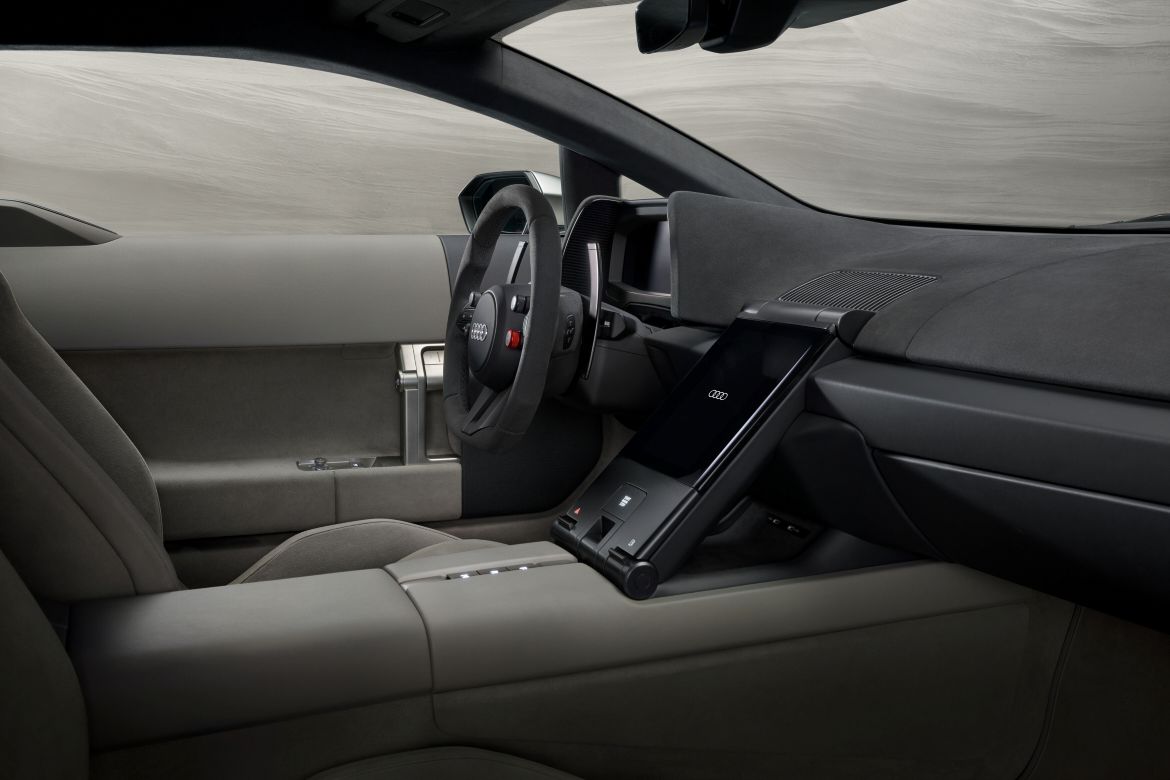
The interior of the Audi Nuvolari is entirely focused on the driving experience. The minimalist control concept is geared toward managing core functions. The key elements of the human-machine interface, all within the driver’s field of vision, prioritize the most relevant information. Digital displays and physical controls allow for natural interaction, while color accents pay homage to the legendary Auto Union Type C race car of the 1930s. The functional use of color is reflected in the interior concept, which ideally “divides” the cabin into two zones. The front section features a dark hue to promote concentration, while the rear section is characterized by a lighter shade, called Shadow Dune.