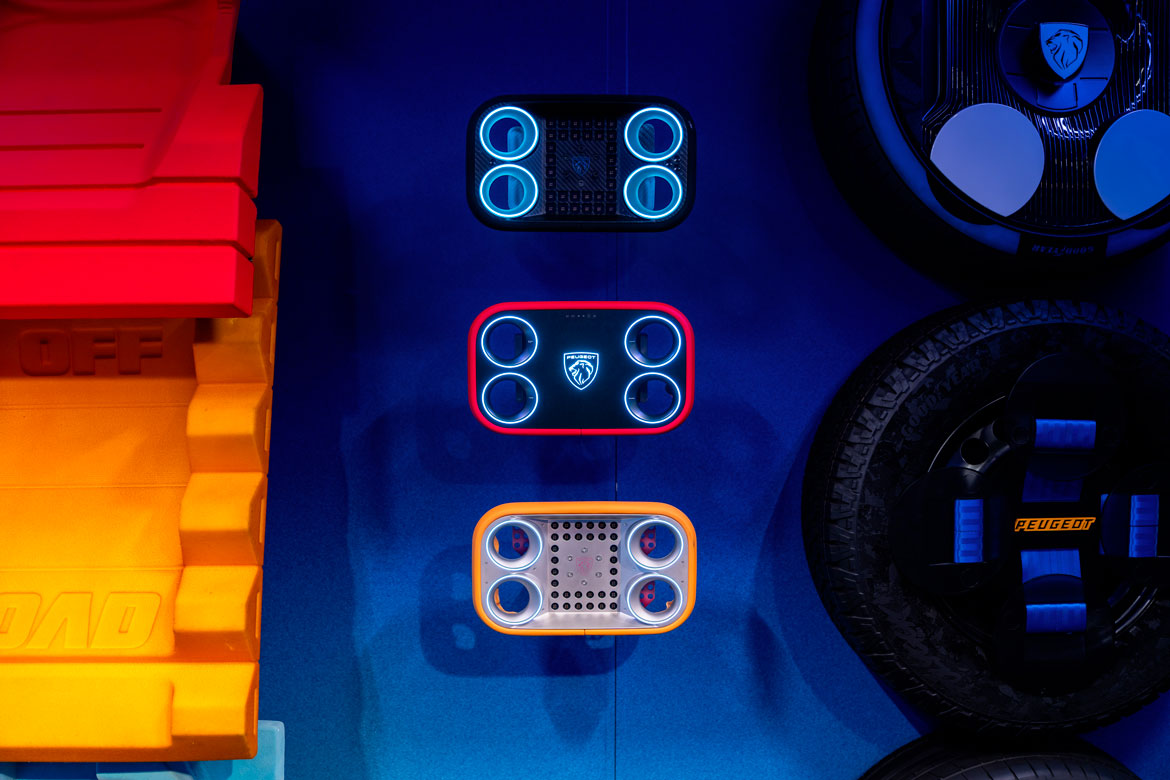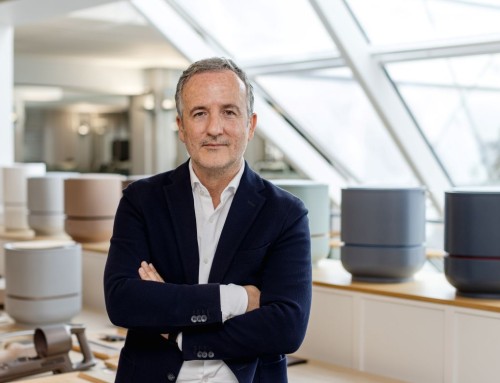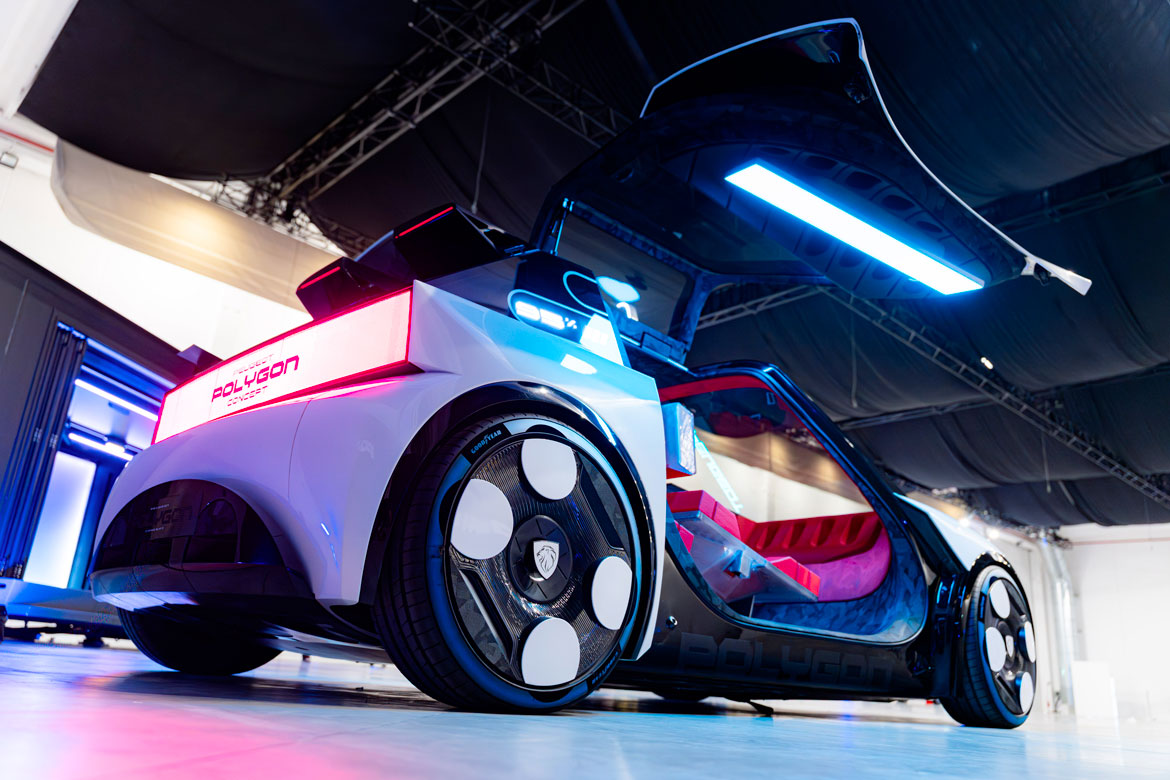
Matthias Hossann, Peugeot’s head of design, explained in Auto&Design no. 278: “We built this concept car around the Hypersquare steering wheel, with the future of small cars in mind.” Upon seeing it in the flesh on a day in Milan, the aim is more than achieved: beneath an extremely compact and futuristic shell, capable of evoking the 205 without any nostalgia, lies an interior that appears to be a direct consequence of the black ‘panel’ in front of the driver.
The distinctive shape, of course, catches the eye and offers immediate functional benefits (“more compact in height, it improves visibility and simplifies adjustment”). But above all, the absence of mechanical linkages to the wheels results in much smaller steering angles (a maximum of 170 degrees compared to the traditional three turns or so), ensuring that the hands are always in the ideal position. And this is where the innovative design concept comes to the fore: as the fingers move much less, four rings can be incorporated at the corners of the ‘rectangle’, along which multiple physical buttons can be placed, finally within fingertip reach.
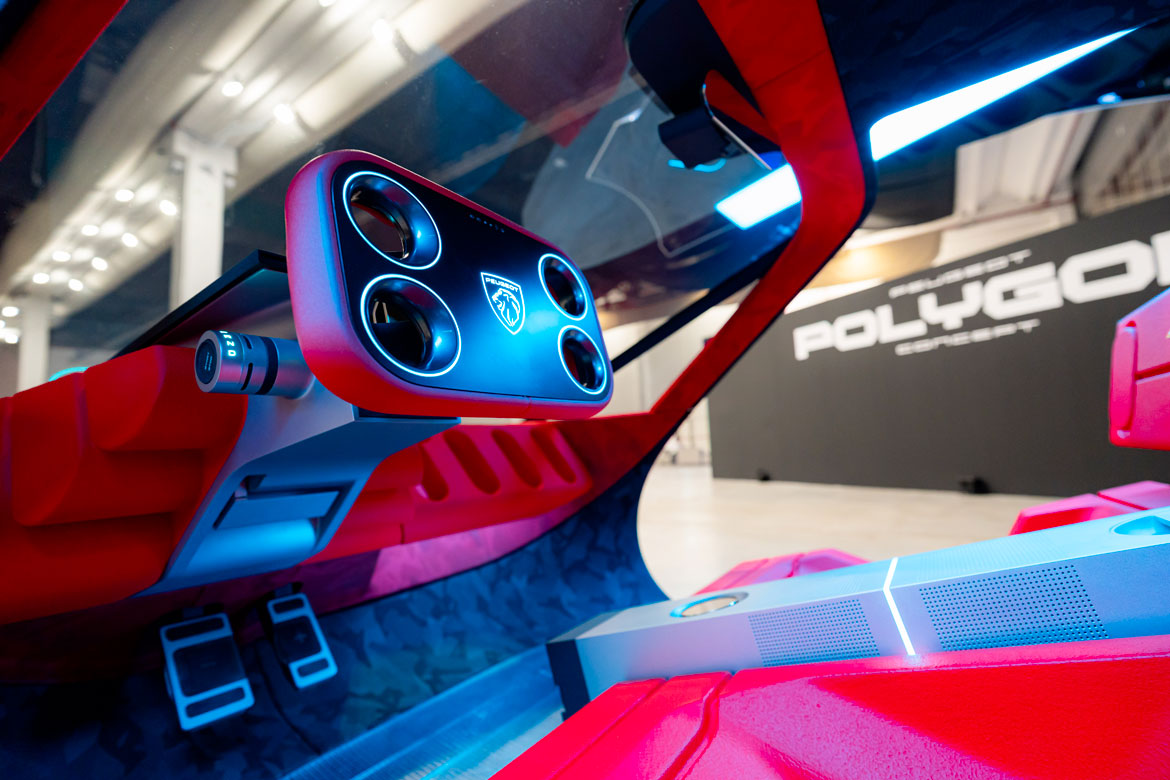
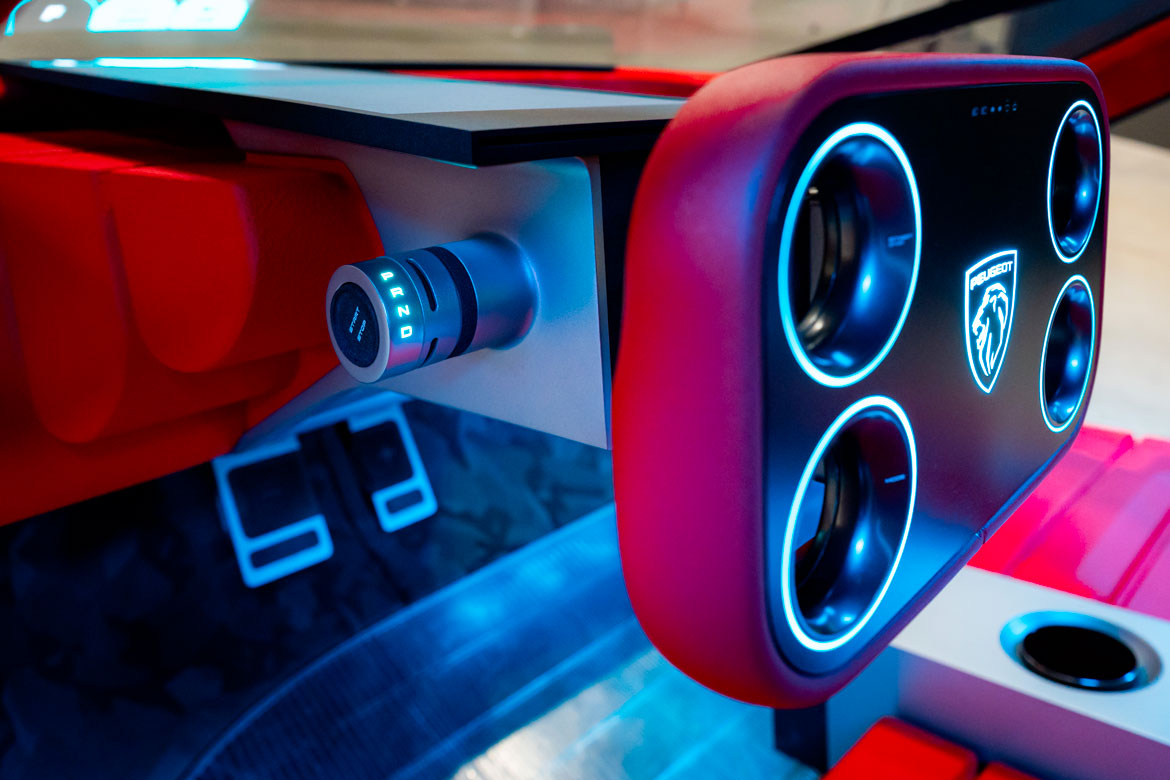
From this design concept, steeped in prototypical 1980s influences, comes a dashboard entirely devoid of buttons, whilst the very idea of a centre console is transformed into a pure horizontal form, upon which a storage compartment—both functional and stylised—is built. Only a metal partition remains to suggest the tunnel between the seats. The ergonomics are thus completely reimagined.
As if that were not enough, the central screen vanishes in favour of a huge head-up display projected onto the windscreen in front of the driver, which also incorporates the instrument cluster (in line with an increasingly widespread trend) and offers an unexpected cost saving as it requires no projector. A modern, effective and exceptionally clean design: “We’re working hard on the in-car experience […]. We don’t want cold interiors […], we focus on fabrics and materials that convey warmth and emotion”. The only real limitation: the exclusion of the passenger from any role, which will certainly need to be addressed in future production iterations.
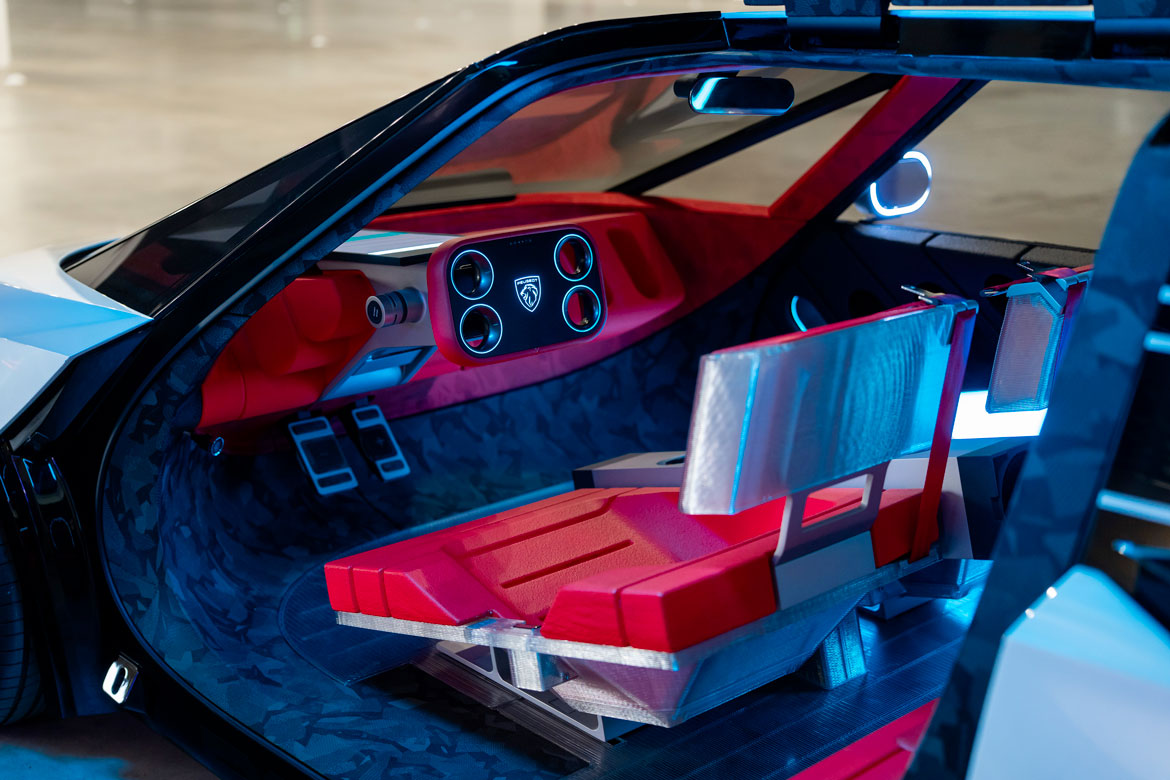
For now, the Polygon remains a fascinating experiment and doesn’t shy away from yet another touch of innovation in its seats, which are assembled using a minimal number of components. During testing, they would even prove to be comfortable and supportive, were it not for… a fault preventing them from being used whilst the car is in motion. Fortunately, the by-wire steering is also featured on a ‘concept’ Peugeot 2008 on display at the event: the coexistence of traditional controls, including the indicator stalk, feels a little jarring, but on the other hand, it gives a better idea of how the setup would work on a real car.
When we finally get behind the wheel, manoeuvres such as tight bends or parallel parking prove to be extremely simple and intuitive, far less fiddly than usual, and the manufacturer also reassures us regarding precision at speed, as well as the obvious absence of vibrations in the steering wheel when driving over bumpy surfaces. “It’s no coincidence that we’ve decided to bring the Hypersquare into mass production, and on a small, affordable model at that, as early as 2027,” says Hossan happily.
Overall, it is striking how closely the feel resembles that of a traditional steering wheel, as if the physical connection to the wheels were still in place. One question remains, however: what happens when technology mimics reality so faithfully? Will we one day reach a point where we can no longer distinguish the real from the illusion – not just in the digital world of artificial intelligence, but even within the physical realm of cars?