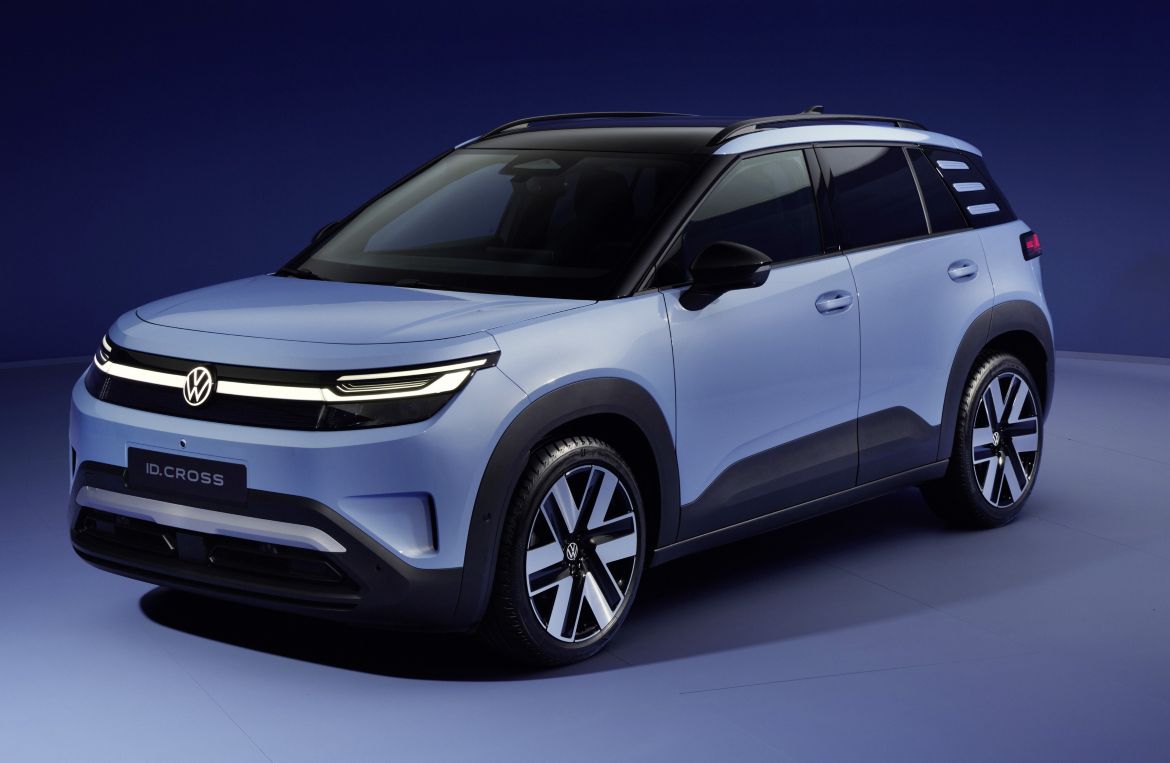
Volkswagen is shining the spotlight on the ID. Cross, the new zero-emission compact SUV set to hit the European market in the fall of 2026. Built on the MEB+ platform, it brings the concept car unveiled at the Munich Motor Show in 2025 into series production virtually unchanged, placing design at the center: the motto is “Pure Positive,” a design language created by Head of Design Andreas Mindt, based on stability, appeal, and a “secret ingredient” made up of surprising details.
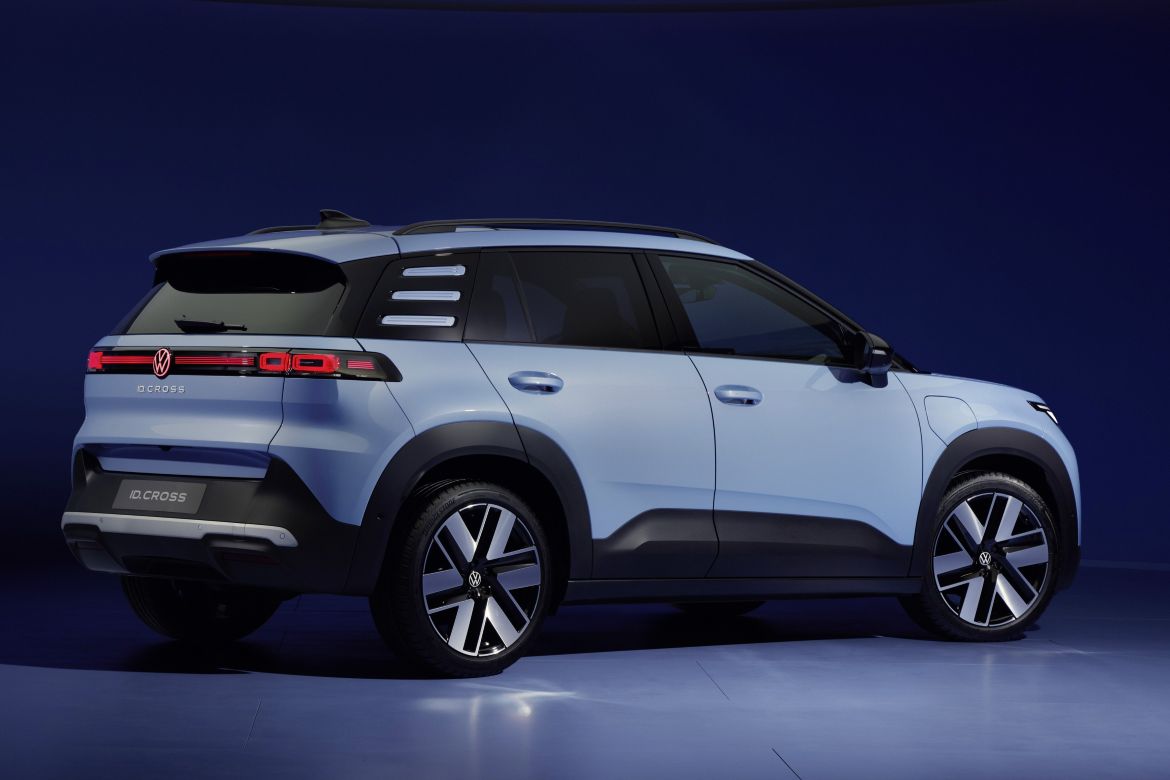
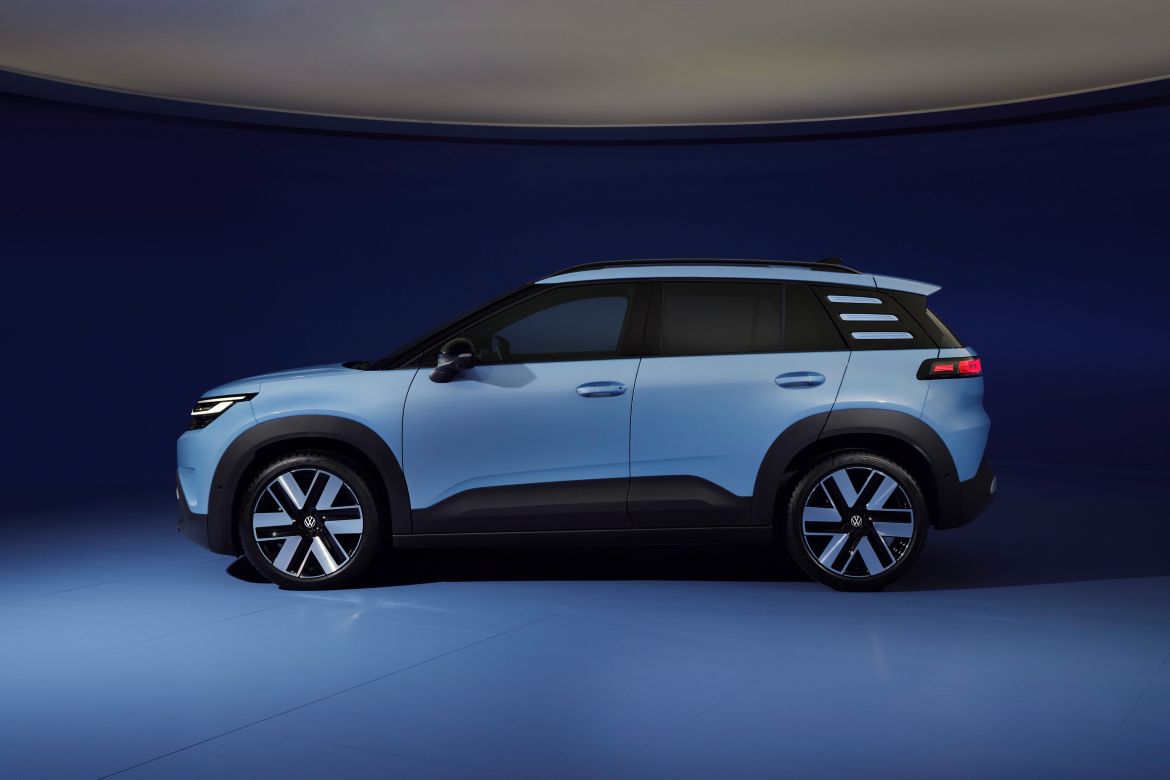
The front end is the most recognizable feature: slim, horizontal headlights that converge into two overlapping light bars, with the illuminated VW logo in the center. The high hood and the horizontal line below the bumper create a stable surface, while the pronounced fenders and wheel arches lend the car visual weight. In profile, the body design unfolds across three levels: the roof with its greenhouse—suspended by the Flying Roof and glossy black A- and B-pillars—and the two lower sheet-metal bands, whose convex surfaces evoke a sense of solidity. The forward-sloping C-pillar pays homage to the first Bulli and Giorgetto Giugiaro’s Golf, echoing its “tensioned arch” shape. At the rear, the LED light bar with a glass surface—and, in the IQ.Light version, the two 3D light clusters that appear to float above the body—complete a clean and recognizable rear end, which Volkswagen claims is unprecedented in the compact SUV segment.
Inside, the horizontal layout of the dashboard reflects the same design philosophy as the exterior. The 10.25-inch Digital Cockpit and the 12.9-inch infotainment display, aligned along the same visual axis, are complemented by dedicated physical buttons for climate control and key functions—a design choice that prioritizes user confidence over relying solely on touch surfaces. The most evocative detail is the “Retro View”: by pressing a button on the steering wheel, the digital instrument cluster transforms into the graphics of a first-generation Golf, with the speedometer and “tachometer” reinterpreted as a power indicator—a nod to the past that coexists with contemporary functions.
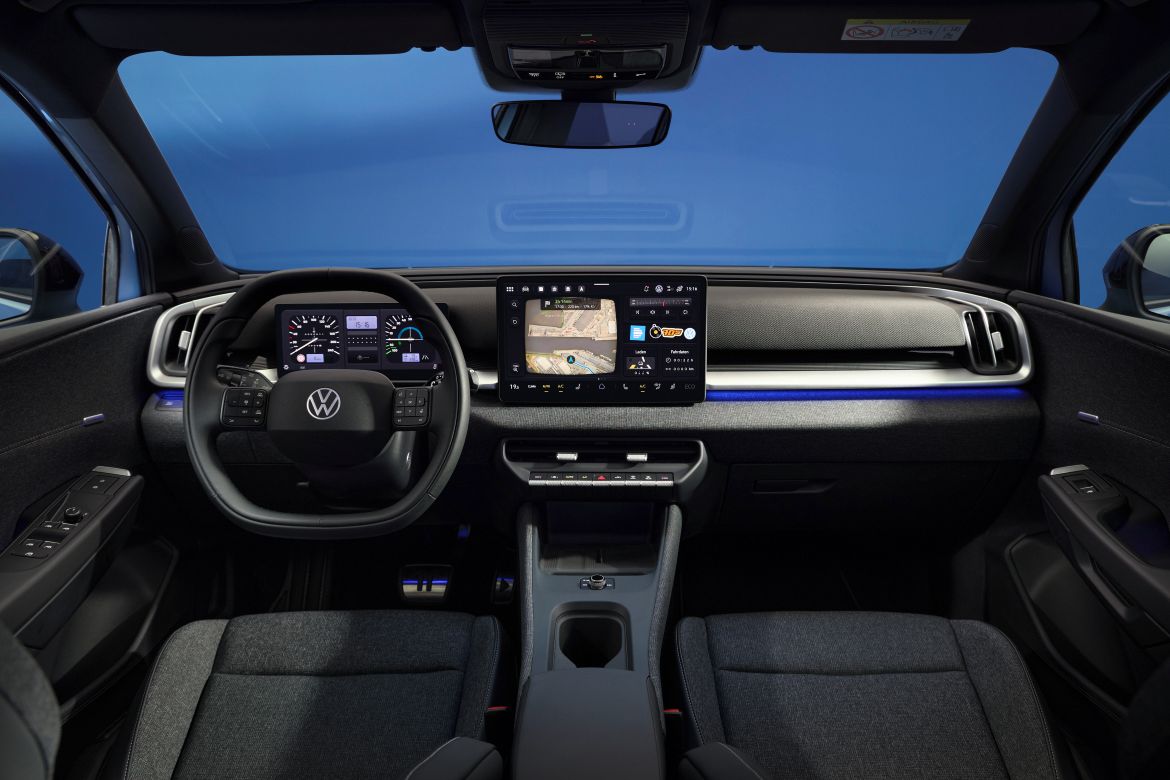
The quality of the materials aims to be above average: a fabric-covered dashboard, ergonomic door handles borrowed from the T-Roc, decorative stitching on the doors, and—for the first time on one of the brand’s compact models—12-way power front seats with pneumatic massage and memory functions. The ID.Light system, which extends to the doors, and the 740×905 mm panoramic sunroof round out an interior designed with long trips in mind.