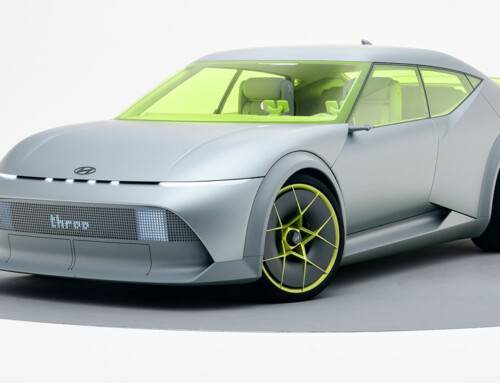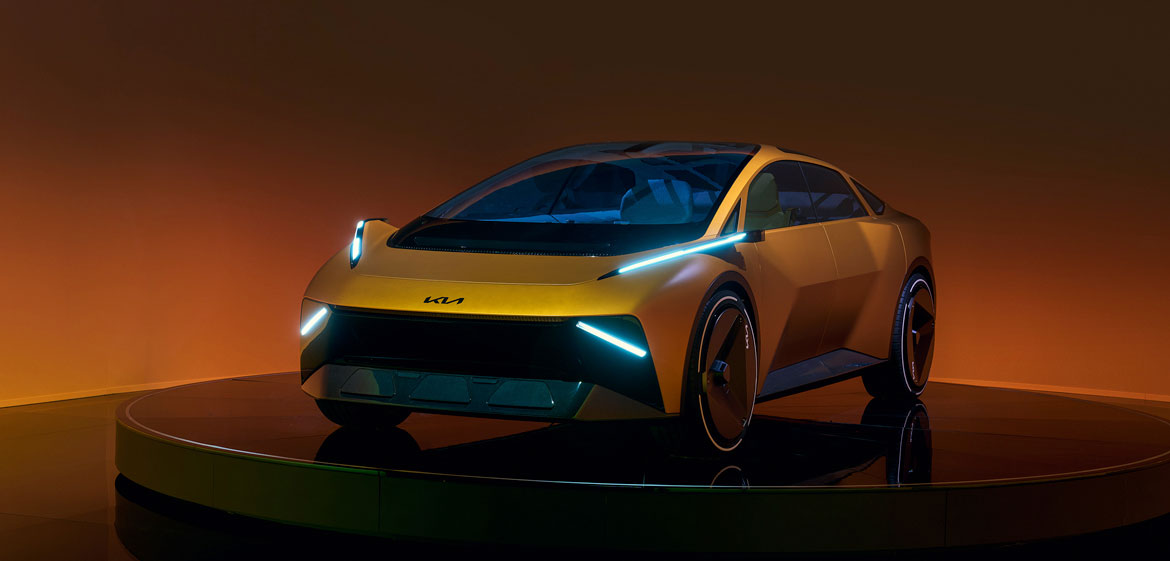
Sleek and low-slung, in a styling blend that blurs the lines between saloon, coupé and MPV, the Vision Meta Turismo seems to be the perfect choice for the brand’s 80th anniversary celebrations (in December 2025) as well as the glamorous backdrop of the Milan Design Week (last April). However, Kia’s latest concept reaches far beyond this, offering a profound glimpse into a future of ideas that are masterfully concealed by the exterior.
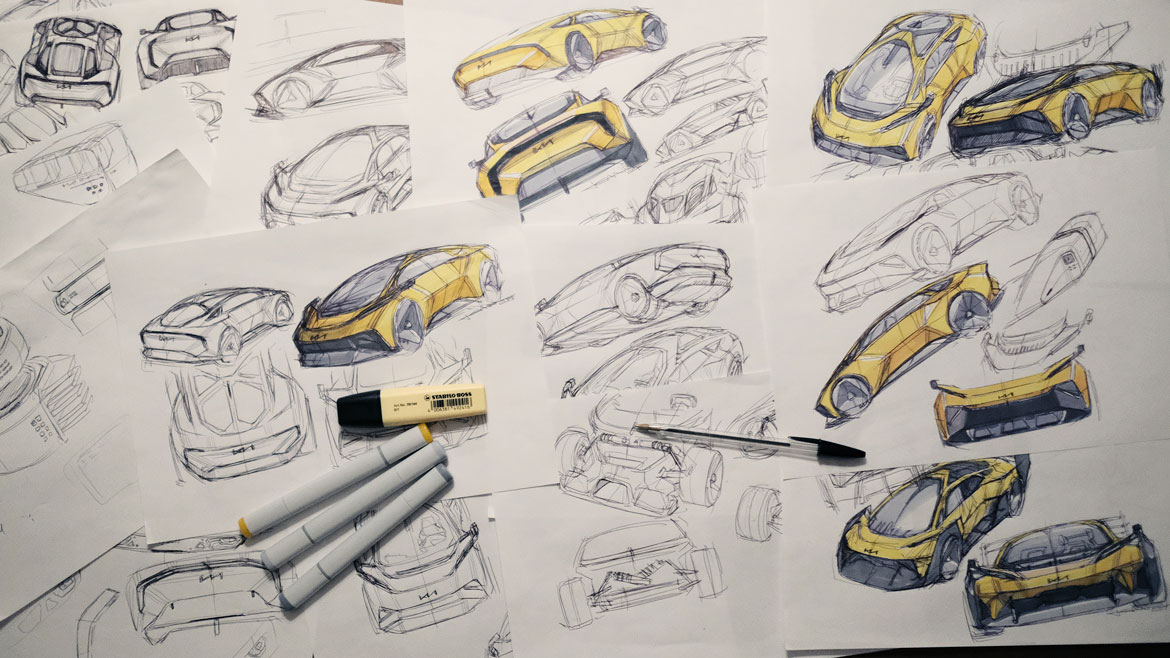
Inspiration from video games
“We began by focusing on the aspirations of young people, those who have grown up in a fully digital world”, explains Jochen Paesen, Vice President of the Future Design Group. “The challenge was to engage with a generation that may not yet have established consumption habits and may not even like cars. We found our inspiration in video games, which offer new forms of expression and help counter the short attention spans and boredom that readily arise today”.
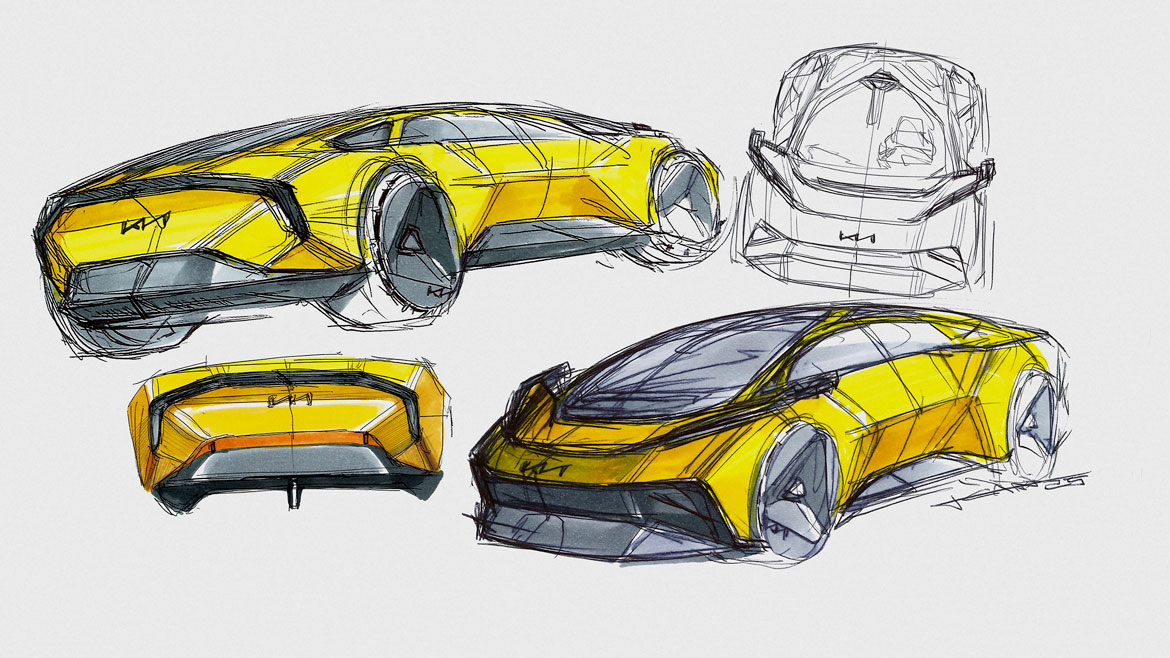
Progressive mobility device
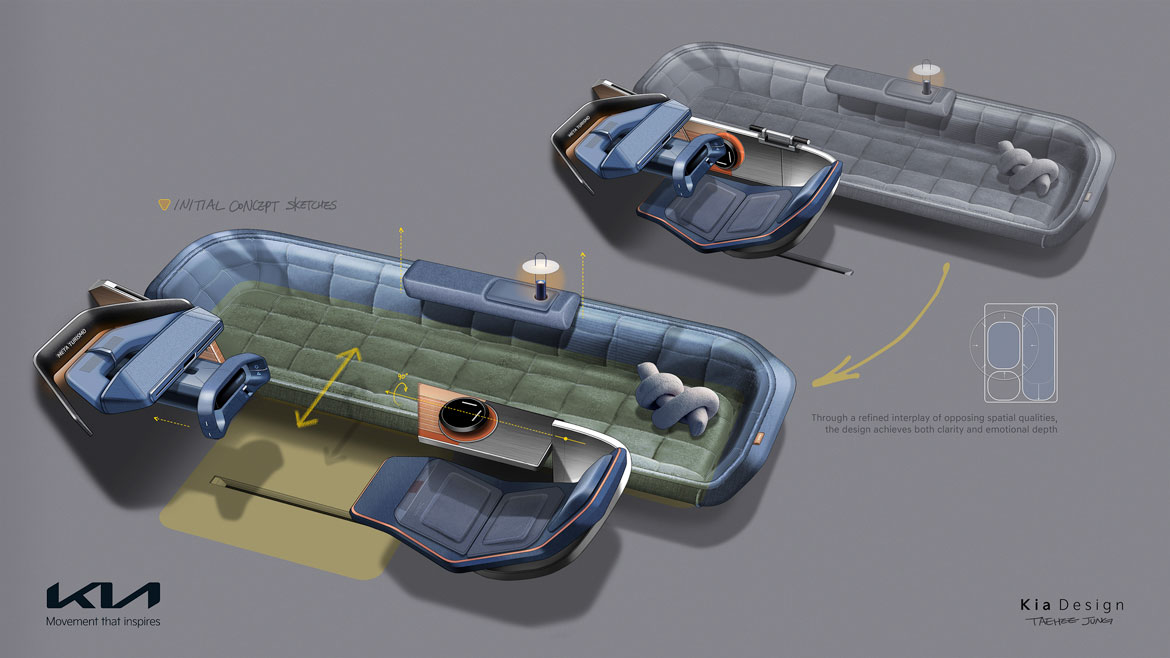
The result is a vehicle that combines the familiar concepts of autonomous driving and driver-focused operation with a third, deeply immersive experience. At the heart of this vision are extensive glass surfaces that double as interactive screens, creating a digital environment that remains functional even when the vehicle is parked. “We wanted to create a “progressive mobility device” capable of looking towards the future and reinterpreting established conventions”, continues Oliver Samson, head of Kia Design Europe.
Real and digital world
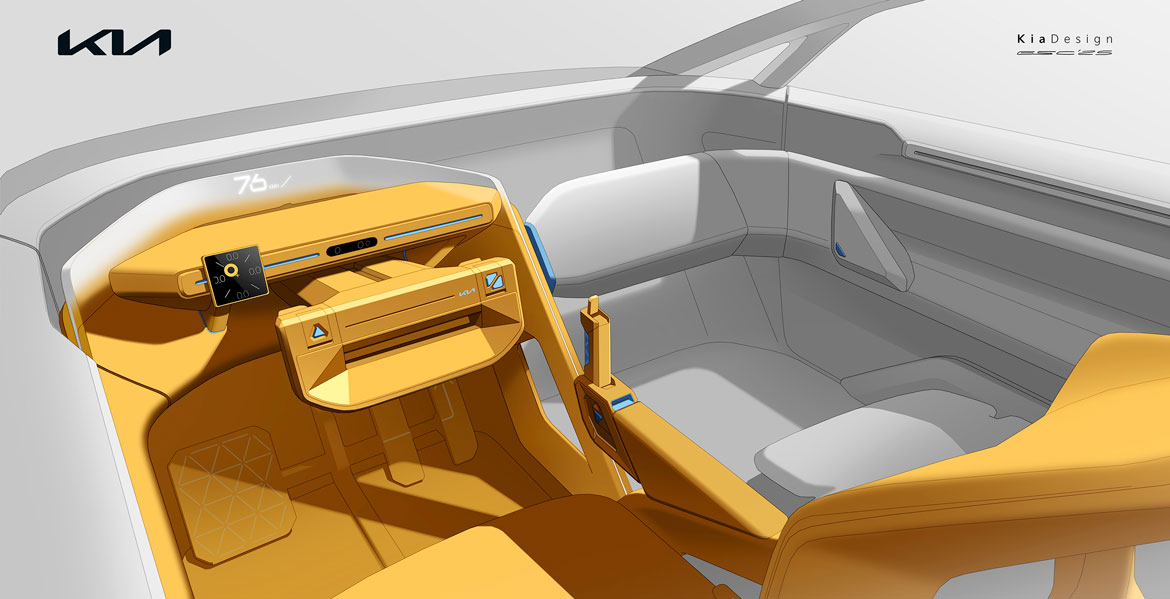
The generous four-door layout is paired with a highly liveable cabin for all passengers, as well as being tailored to the driver, with carefully designed seating and a deliberate emphasis on physical controls. “The young tend to draw a sharp line between the physical and the virtual”, says Paesen, “so we’ve offered both worlds, specifically through a lever that simulates gear changes and multiple buttons for managing, among other functions, lightning-fast starts, bursts of power and engine noise”.
Stop at a “game room”
Not to mention a steering wheel with a grip reminiscent of a video game controller, through which three “digital experiences” (Speedster, Dreamer and Gamer) pivoting around augmented reality can also be selected: “The latter makes use of dynamic images displayed on both the windscreen and the side windows, transforming the interior into a sort of “games room” during stops, or offering a discreet yet effective navigation system for quick use”.

Reconnectin with the road
In other words, true “immersion” sometimes consists of limiting visual clutter and reconnecting with the road, carefully balancing the countless practical aspects of technology. As the conversation proceeds, the designers’ need to manage complexity becomes abundantly clear.
(Full article in A&D no. 279)