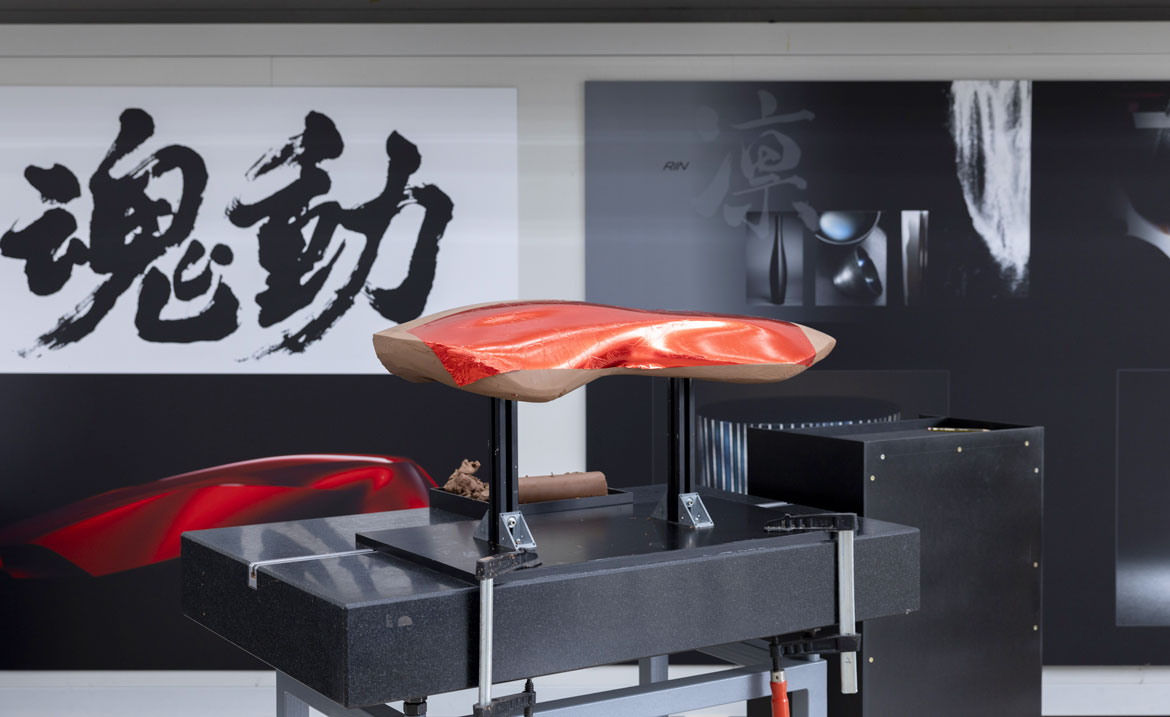
The Temple of the Golden Pavilion is Yukio Mishima’s masterpiece and one of the cornerstones of Japanese culture. Among its themes, the almost spiritual quest for the perfect form stands out, beauty seen not as something static but as something alive, in constant motion, reacting to light. I mention this because it was constantly on my mind during my visit to the Mazda R&D Centre in Oberursel, near Frankfurt, the brand’s European design hub. It wasn’t my first visit, but it was one of the most memorable: the pursuit of movement in a stationary object is part of Mazda’s philosophy. Jo Stenuit, Design Director at Mazda Motor Europe, explains this. “Our aim is for a car to give the impression of moving even when stationary”.
©Photos by Nathalie Zimmerman
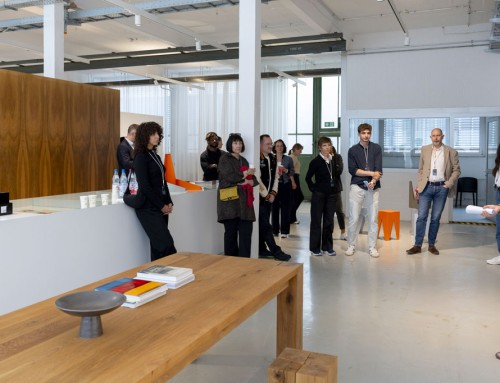
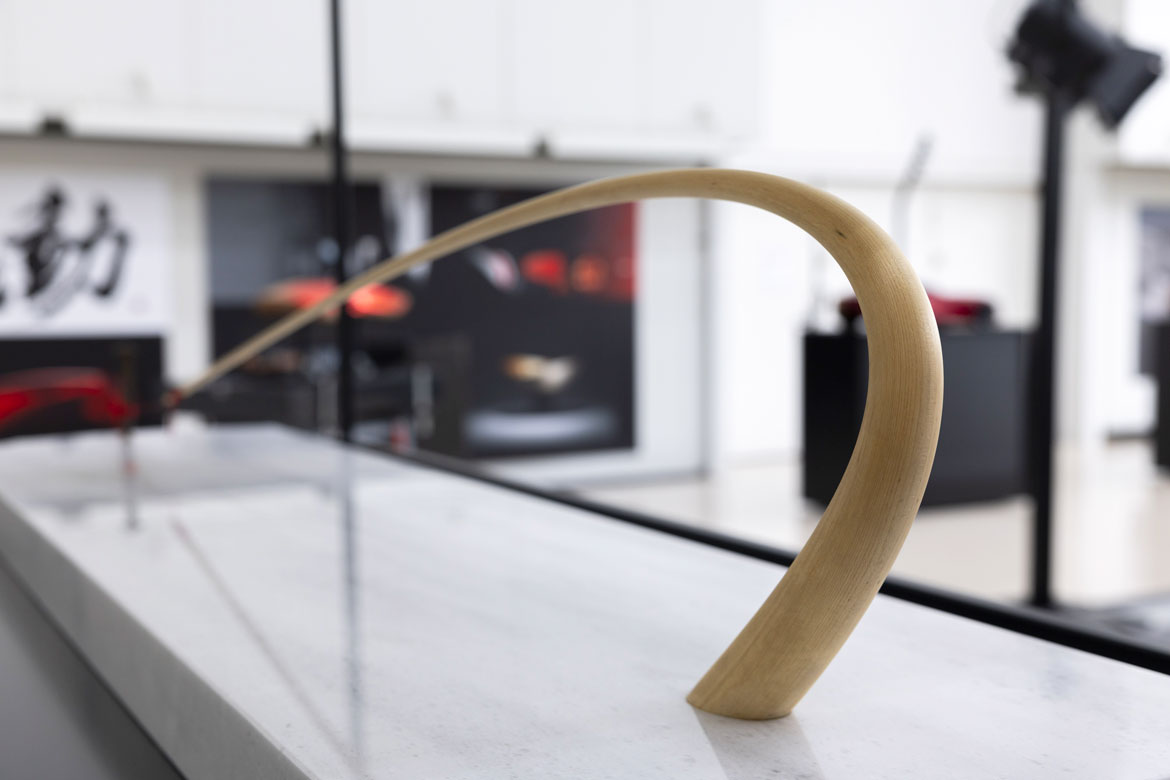
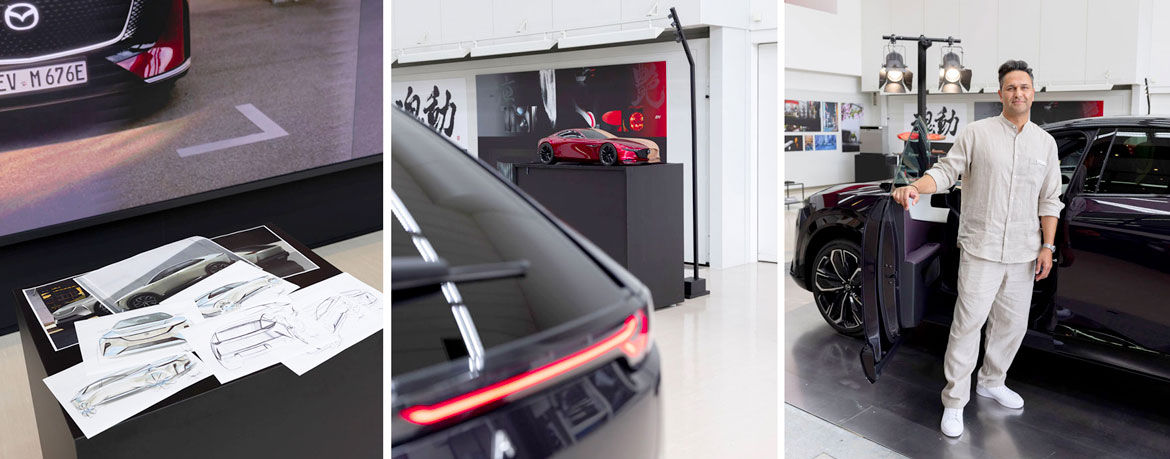
Mazda is one of the very few manufacturers not to have abandoned modelling (it had done so, but has reintroduced it), and above all to continue experimenting. Upon entering the centre, you are immediately met by sculptures that represent tension and movement. “We are independent, free from the constraints of large conglomerates and often ahead of the curve. That’s why my team of 21 people has the time and freedom to experiment”. The designers work on blocks of various materials, sketching out shapes that evoke the car’s key features.
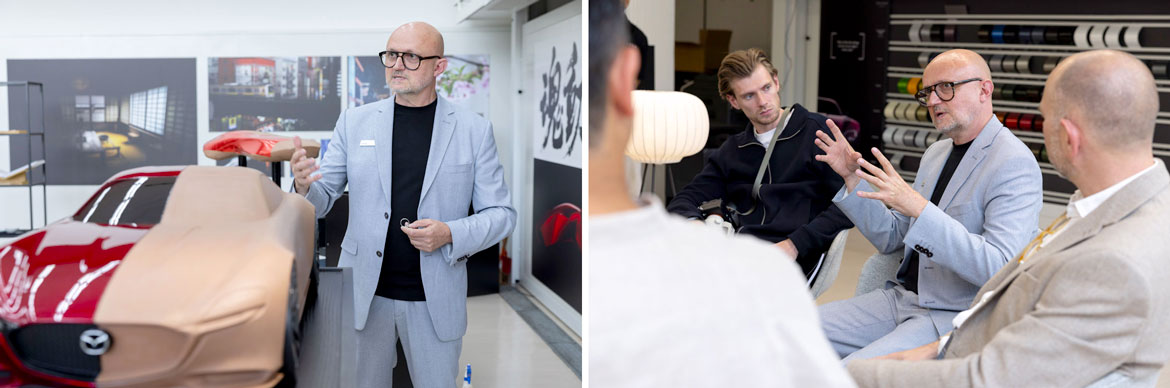
This approach is embodied by Kodo (“soul of motion”), the philosophy that has guided the brand for 16 years. Previously, Mazdas had more taut and angular lines, inspired by the cheetah’s sprint; Kodo has given way to sensual, flowing surfaces, allowing “reflections to dance” as the car moves.
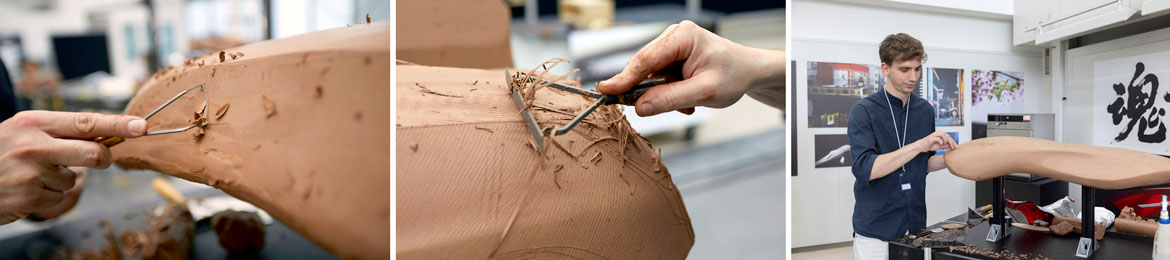
Stenuit himself came to the car industry as a digital modeller, yet the department has brought manual work back to the fore: milling, clay modelling, painting and four modellers working by hand. Making them by hand, he reflects, gives them a personal touch and offers something that digital methods cannot provide. Technology remains invaluable, but it is the human hand that sets the standard which the machine then refines.
Spectrum
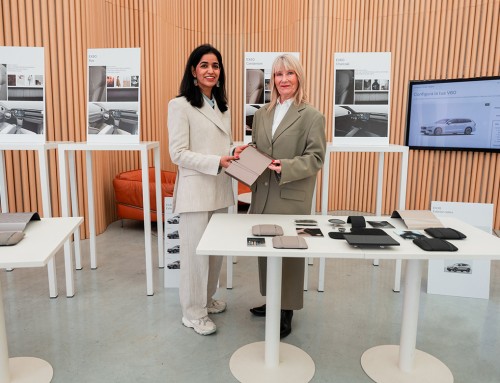
Another hallmark of Mazda is its research into materials. The CMF (Colour, Materials and Finish) team was present at the studio; they investigate visual and tactile sensations and which colours and materials are in vogue or have already passed their prime – which is why they attend events such as Milan Design Week.

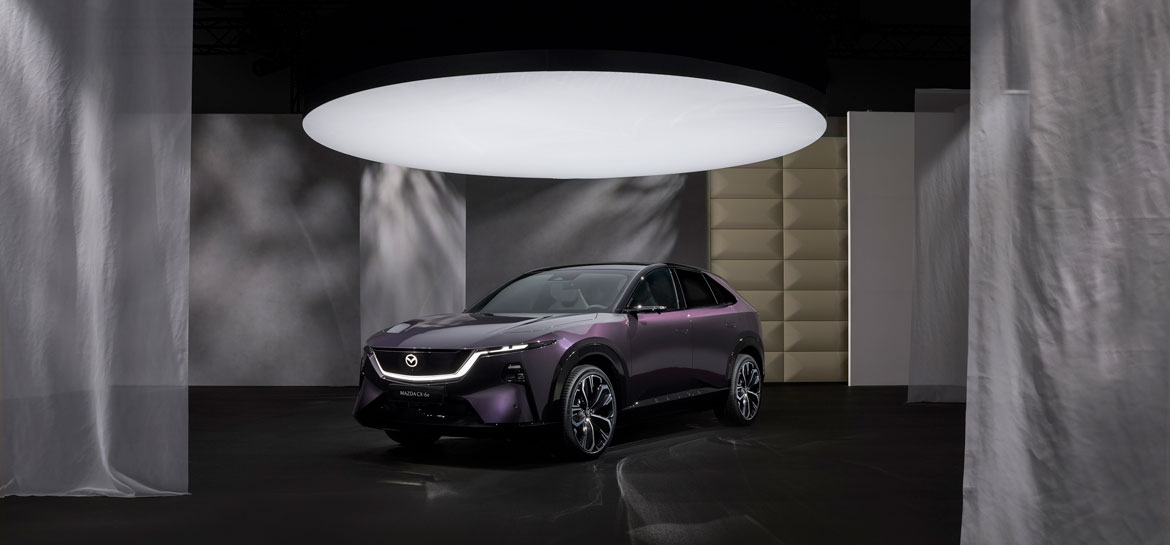
When it comes to colours too, the common thread remains the brand’s Japanese roots: indigo, ceramics, washi paper. Mazda is famous for Soul Red Crystal, a colour introduced not without some hesitation (red inevitably invites comparisons with Ferrari) but which is deeply loved. However, research has always continued: following discussions with Japan, a blue shade developed in-house gave rise to the Navy Blue Mica of the latest CX-5, a choice rooted in heritage rather than trends; the CX-6’s Nightfall Violet Mica, on the other hand, shifts from black to violet depending on the light. A colour, they say, must be viewed at an angle and in sunlight, because when viewed flat it conveys something entirely different.