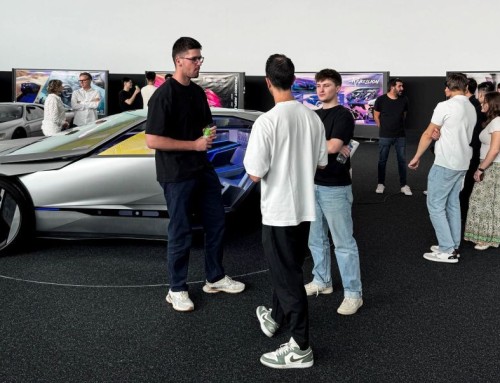
Ferrari inaugurates the 2026 season, which will see the Prancing Horse return to the track in the FIA WEC defending the Constructors’ and Drivers’ world titles won in the unforgettable and already legendary previous year, presenting the updated livery of the 499P of the official Ferrari – AF Corse team at an event at the Enzo Ferrari Museum in Modena. The world championship laurels awarded by the FIA to the reigning world champions are evocative symbols and, at the same time, a further incentive for the team to give their utmost in the pursuit of the best possible performance. The laurels are clearly visible on the front wheel arches, below the Scudetto with the Prancing Horse, of the two Sport Prototypes entrusted to crews reconfirmed for the fourth consecutive year.

The livery of the 499P continues to pay homage to the 312 P, which dominated the endurance scene until 1973—the last year Ferrari competed in the overall classification before returning in 2023—while evolving in the spirit of continuity. The livery of the 499P, designed by the Ferrari Style Center, features a predominant Rosso Scuderia color, this year in a new glossy finish rather than matte – the color and treatment are identical to those of the Scuderia Ferrari HP SF-26 single-seater for the Formula 1 World Championship. The unmistakable red, emblematic of the racing history of the company founded by Enzo Ferrari in 1947, once again dialogues with Giallo Modena, the shade used to outline the lines of the bodywork, which in the 2026 season particularly emphasizes the volumes of the cockpit.

Compared to previous versions, the 2026 edition of the 499P stands out for the direction of the yellow diagonal lines that form an arrow (an iconic stylistic feature since the car’s debut in 2023), which this year is no longer drawn in the direction of travel but in the opposite direction, with the tip of the arrow pointing towards the rear wing. This choice by the Ferrari Style Center aims to further enhance the centrality of the cockpit: not only as a structural and physical element located in the center of the car, but also as a highly symbolic area for a competition car.