Imagining the future and cultivating new talent. This is what drives the SAIC Design International Challenge, the competition organised by the Chinese giant and now in its thirteenth edition. Shao Jingfeng, Chief Design Officer of SAIC Motor R&D Innovation Headquarters, highlighted how almost half the young creatives now working for the company began their journey through this contest. “Our ultimate ambition? To elevate Chinese design into a global benchmark for the next hundred years of our company’s history”, Shao says. Over 200 projects were submitted to this year’s challenge, created by designers from over 60 universities around the world.

Gu Xirao, Luxun Academy of Fine Arts – First place
The first prize went to Gu Xirao from the Luxun Academy of Fine Arts. This rising talent won over the jury with a project that translated the theme “Diversity and Symbiosis”, and the spirit of the Roewe brand, into a compelling narrative. Gu Xirao presented two concept vehicles: the Wen Tian, designed for astronauts on space missions, and the Tan Lu, designed for those who spend much of their daily lives on the road. The interior of the Wen Tian is based on the idea of a second home in orbit, with sweeping glass surfaces for stargazing, and interior finishes inspired by galactic patterns: the aim was to transform the astronauts’ workplace into a comfortable space while preserving a visual connection to the Earth.

Xin Fengming, Jiling University – Second place

Chen Hao, Shanghai Jao Tong University – Second place tied
The Tan Lu project, by contrast, takes the opposite approach, merging aerospace imagery into urban mobility. The vehicle features textures reminiscent of the lunar surface and an infotainment system that allows passengers to follow space operations live. Its aim is to make technology more accessible and engaging, transforming the daily commute into an experience symbolically linked to the concept of exploration.
European winners

Hanil Kim, Coventry University – First place

Joseph Metni, RCA – Second place

Will Howells, Coventry University – Third place
Second prize went to Xin Fengming of Jilin University and Chen Hao of Shanghai Jiao Tong University, the honour being presented by Zhang Liang and Yu Jingmin Board Members of SAIC Passenger Vehicle. Their project – focusing respectively on the coexistence of autonomous vehicles and pedestrians, and on new modular spaces for shared mobility – explored the role young designers play in addressing issues of sustainability, safety and social transformation.

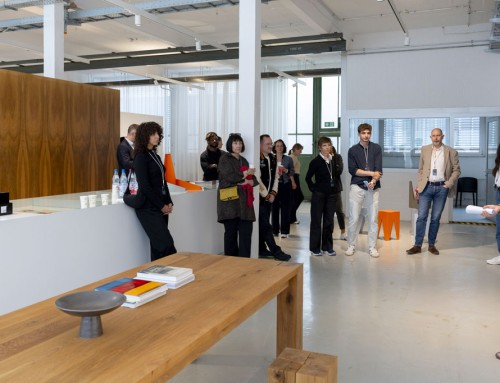
CeCentre photo, Shao Jingfeng, Chief Design Officer of SAIC Motor R&D Innovation Headquarters; on the right, Jozef Kaban, Vice President of SAIC Design; Carl Gotham, Design Director SAIC Advanced Design London, left.