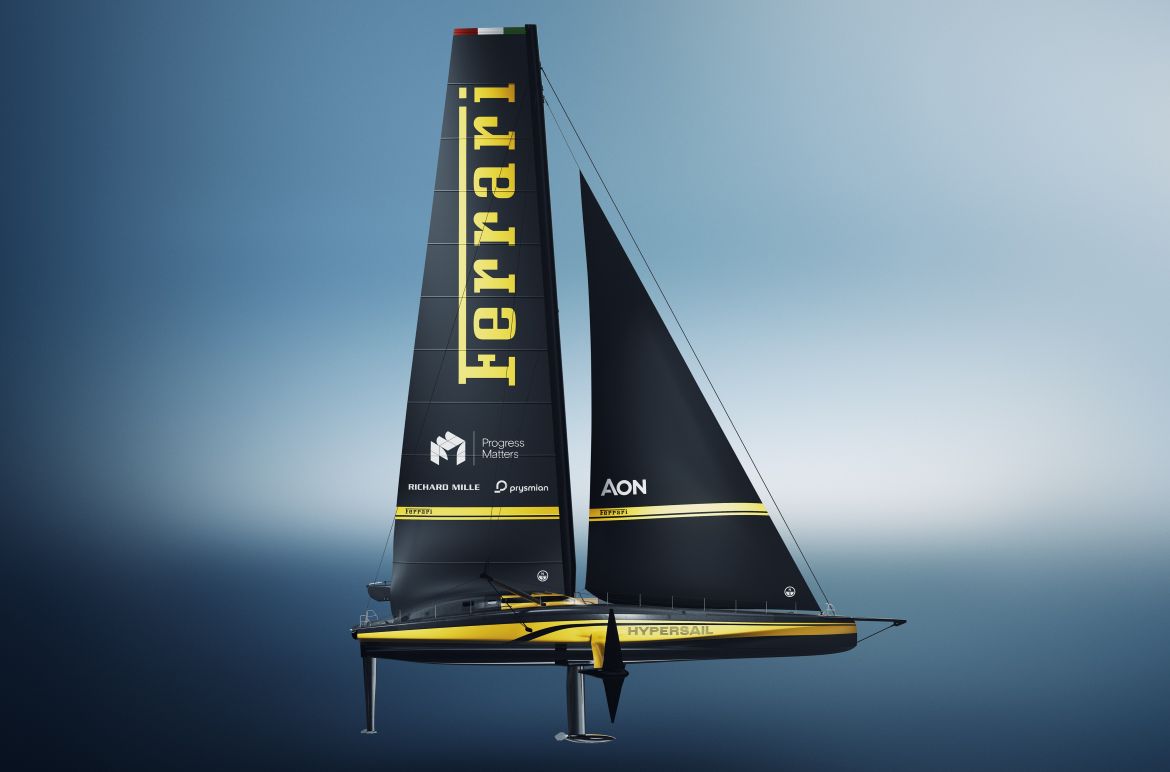
An unprecedented convergence of expertise, destined to glide across the water like a swift bird, admired for its elegance as well. In the formal context of Maranello’s first offshore venture—an extraordinary debut aimed at infusing nautical competition with automotive excellence—the technical expertise of two key corporate divisions comes together: Team Tech (led by Matteo Lanzavecchia and Marco Guglielmo Ribigini) and the Design Studio (under the direction of Flavio Manzoni for over fifteen years). Joining this team is naval architect Guillaume Verdier.
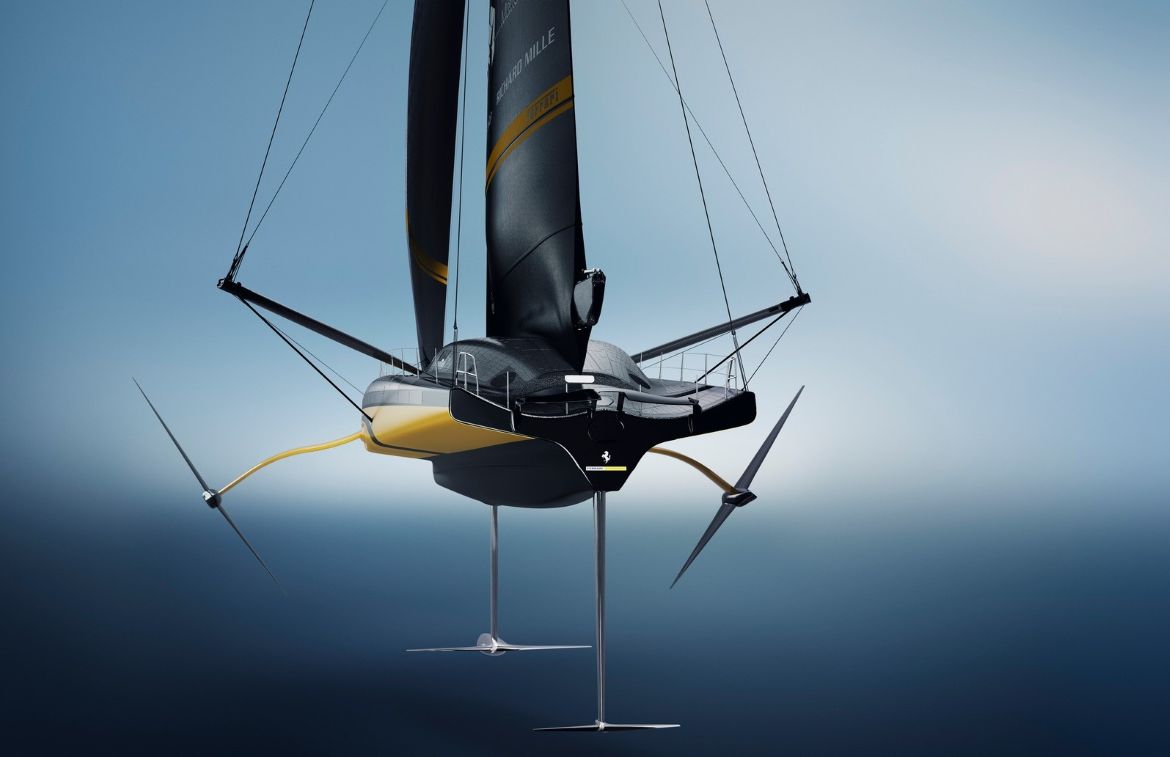
The result is a sleek, tapered monohull sailboat, painted in the evocative Fly Yellow hue to symbolize both tradition—since the name derives from the 1964 275 GTB—and the ultra-contemporary act of rising from the sea’s surface. The sensual profile of the hull is, of course, shaped by the invisible aerodynamic and hydrodynamic demands of ocean crossings. “Hypersail represented an unexpected opportunity for us, a perfect challenging goal to expand our creative exploration,” Manzoni says with satisfaction. He is keen to emphasize that, just as with cars, once again the threads of aesthetics are dictated by function: “When the ultimate performance goal is required, technical and structural constraints become unavoidable. That’s why the project proved so complex and interesting!”
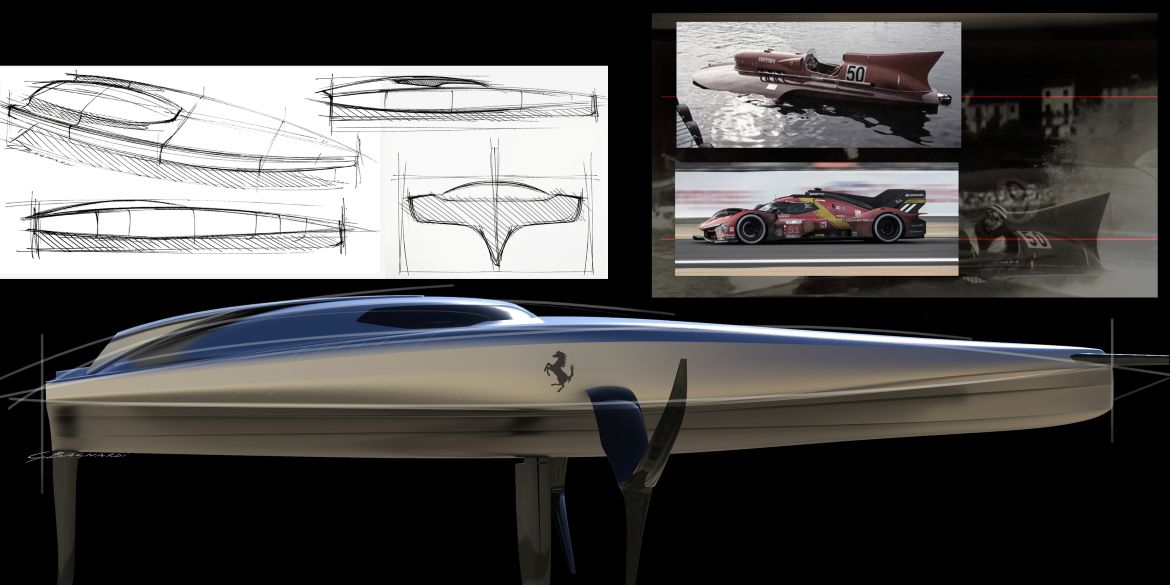
Among the most significant features are the solar panels installed on the deck and sides: they are walkable (thanks to careful friction analysis to prevent accidents), oriented to maximize sunlight exposure, and—as could be seen at the Flagship Store during Milan Design Week—seamlessly integrated into the boat’s dark sections. These dark sections, moreover, result from the use of carbon as the primary structural material, ultimately creating a striking chromatic contrast.
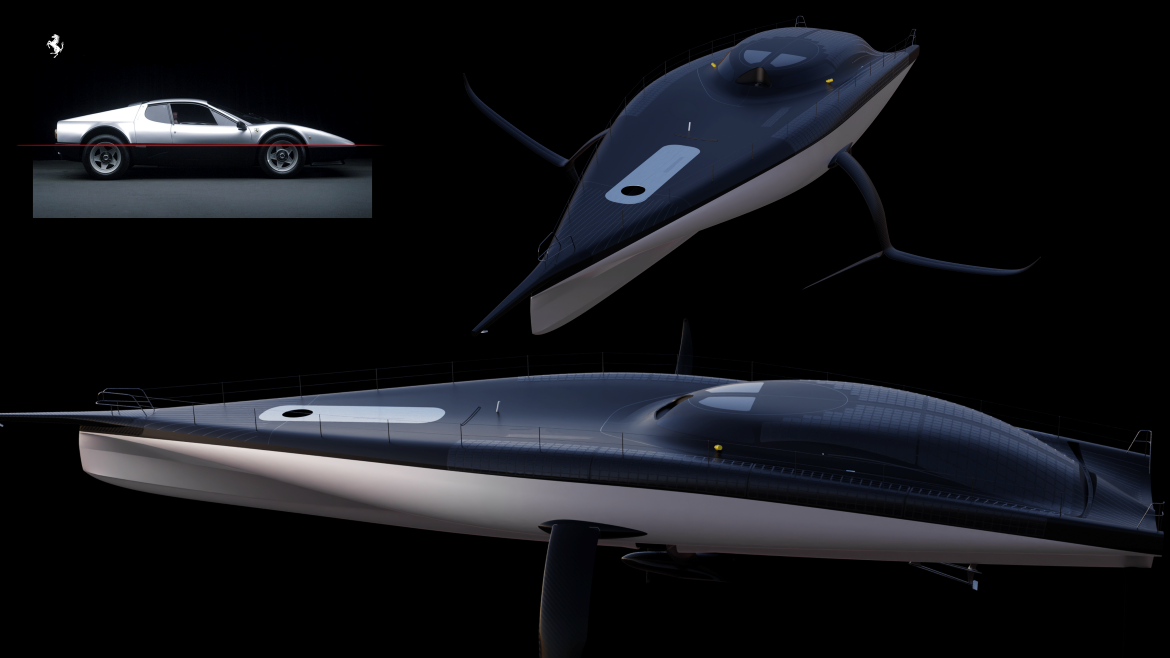
Finally, while the upper bodywork occasionally hints at “the architecture of the Le Mans-winning 499P” in the way its various sections are arranged, overall the livery conveys a seamless pursuit of perfection comparable to the “purity of the Monza SP1/SP2.” Beyond the formal design, however, the unprecedented “marine” element will give rise to technological interactions with the road surface in the future, as Manzoni explains: “We have developed a true laboratory, with a strong focus on sustainability since there are no on-board generators. Therefore, energy is produced through wind or, indeed, solar devices. Undoubtedly, this approach will be reflected in the car in terms of ecology and ‘clean power’.” In what ways? The journey has only just begun…