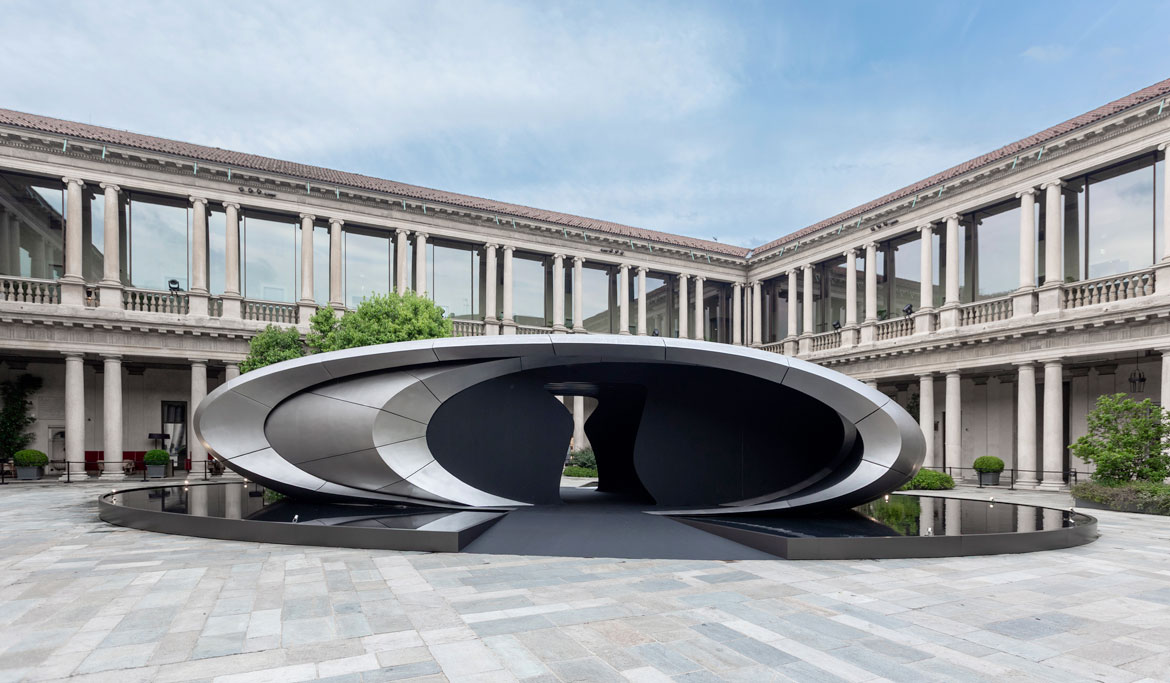
A sort of metallic-shimmering cocoon, resting on a sheet of water, welcomed the many visitors to the Audi Design Hub during Milan Design Week, in the public square of the Portrait Milano, where the car manufacturer was co-producer of the exhibition-event curated by the magazine Interni as part of the FuoriSalone. The Origin installation was created in collaboration with Zaha Hadid Architects with the idea of visualising a portal into Audi’s future, represented by the presence of the first single-seater of the Audi Revolut F1 Team, which made its début in March at the Formula 1 World Championship, and the new Audi RS 5, Audi Sport’s first plug-in model.
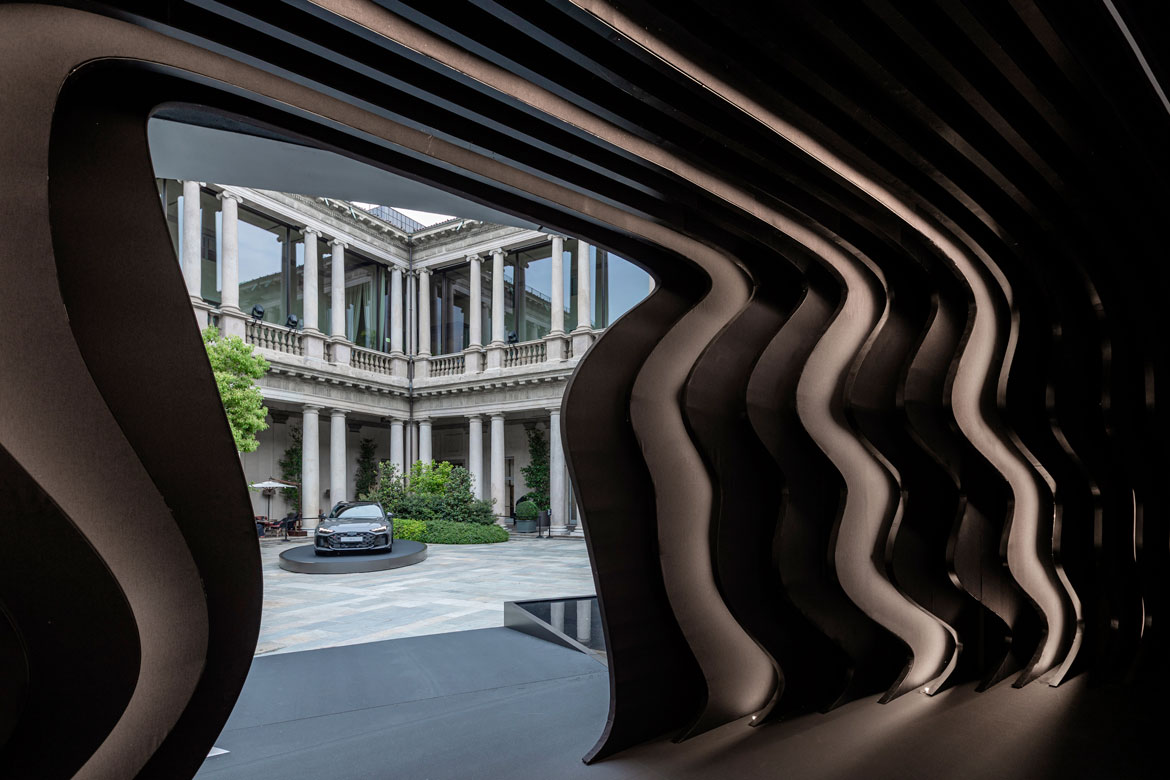
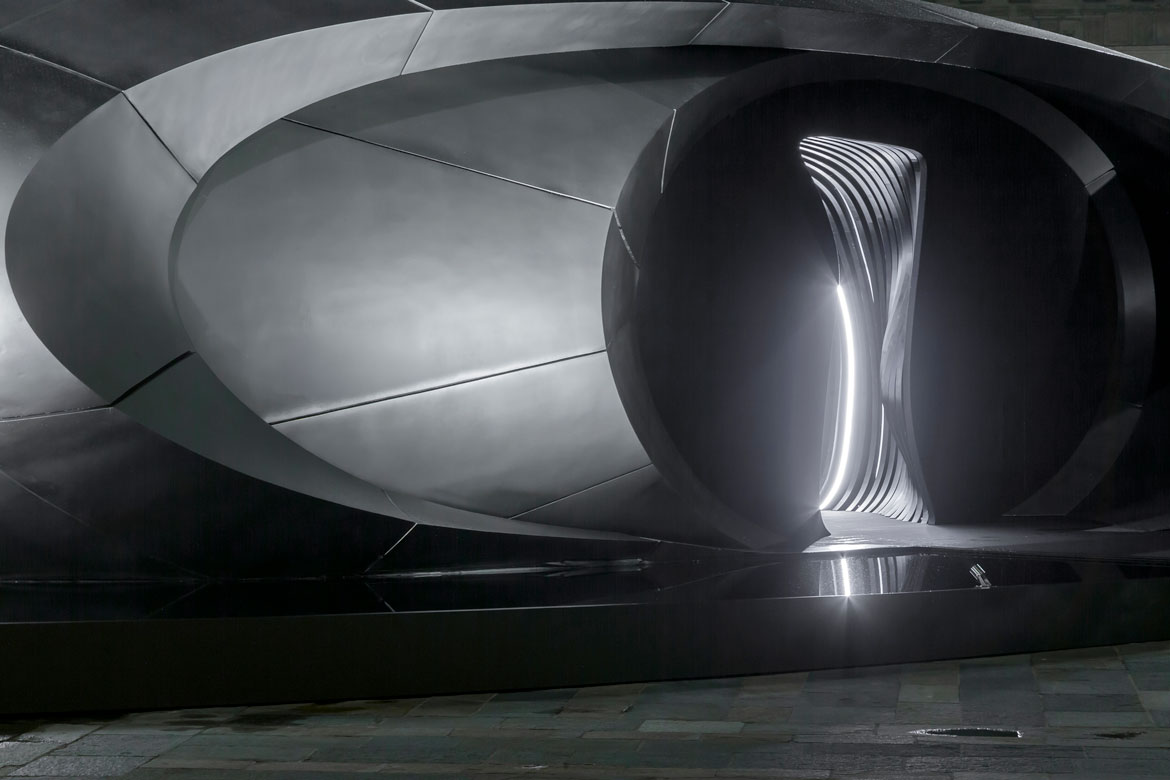
The pavilion appeared as a walk-through space animated internally by lights and sounds that enveloped visitors within the small gallery. “We conceived this micro-architecture,” explains Michele Pasca di Magliano, Director at Zaha Hadid Architects, “solicited by an invitation to convey the concept of emotion. Despite the limited time available, we pushed ourselves to the very limits of constructive performance to tangibly create the image of a metal bubble floating on water.”
The matt metallic “skin”, made from resin yet evoking technical materials such as titanium, absorbs and reflects the chromatic tones of its historic setting, the courtyard of the former Archbishop’s Seminary, suggesting an enveloping bodywork in dialogue with the surrounding space.
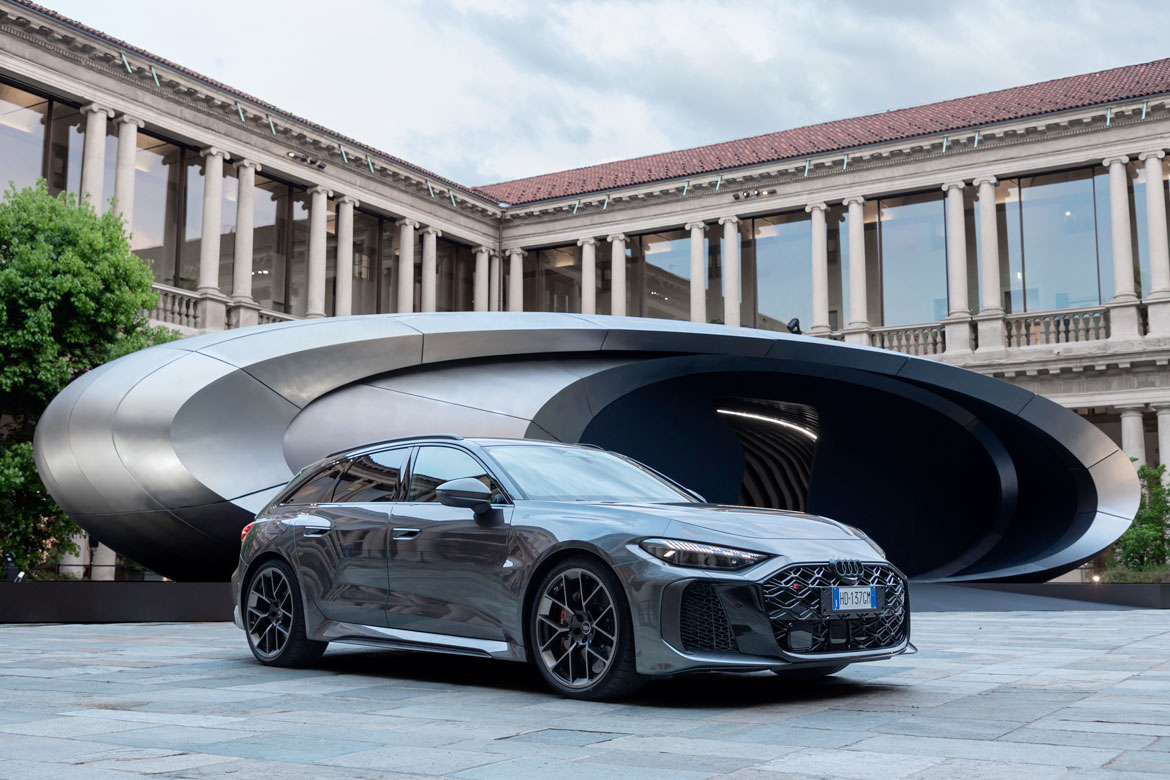
The studio’s London team worked closely with local companies (including those responsible for the lighting design and sound design), driven to create something new and innovative compared with what had been achieved in previous years, and to complete the project in the record time of just six months, from concept to installation. “The level of difficulty,” notes architect Pasca di Magliano, “lay in segmenting the façade into assemblable elements on a concealed modular steel structure that creates the form. As a studio, we engage constantly with technologies, and, just like in the automotive world, we test materials and prototypes, as indeed happened with the pavilion.” “We sought,” the architect concludes, “to integrate our design philosophy and conception of space with that of Audi, and the interesting aspect was doing so at a moment when the Brand itself was changing its approach to design, as is visible in the two models on display, and thus working through a phase of evolution. A challenging undertaking for everyone.”