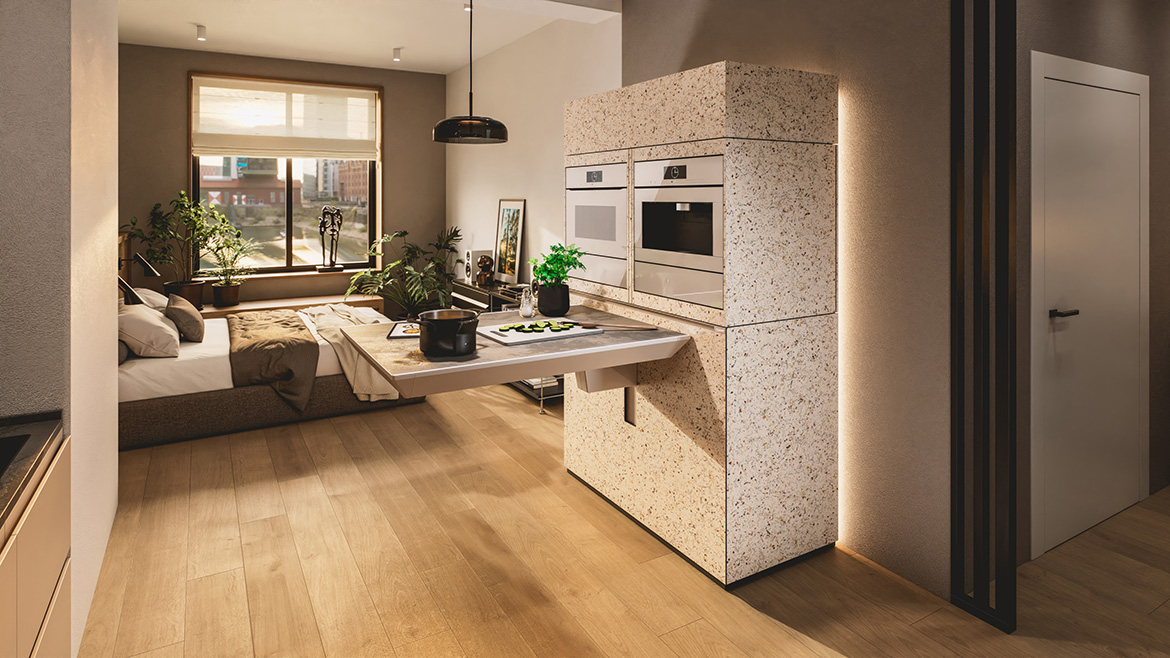
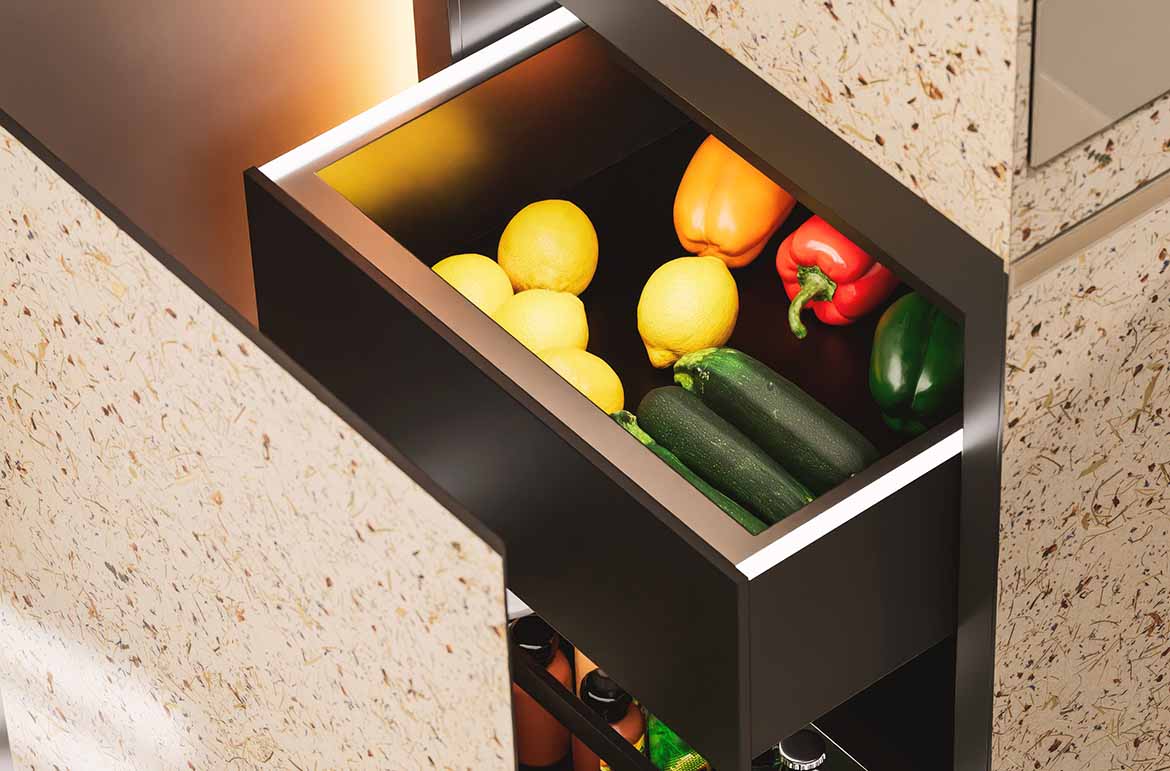
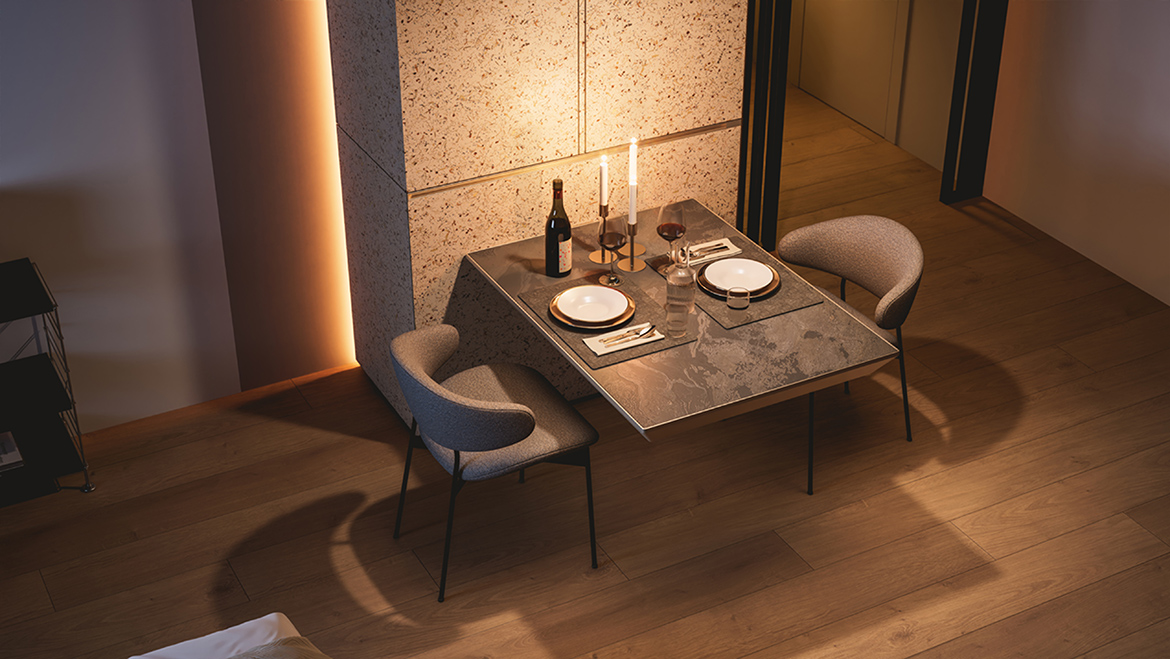
During Milan Design Week, Miele unveiled its innovative “Miele Compact Living: Kitchen Unit powered by Hettich” concept at its Experience Center in the Brera Design District. The idea, developed in collaboration with Hettich—a long-standing German manufacturer of hardware and motorized accessories for furniture—is to address the trend toward smaller living spaces with a multifunctional unit (kitchen, pantry, and living functions) suited to daily life and remote work. This sort of equipped cabinet can change its appearance from morning to night, transforming—via an app—from a workspace in the morning (possibly featuring a microwave oven) to a kitchen with a cooking surface for lunch, and then, with appliances concealed, into a pleasant corner for dinner and conversation.
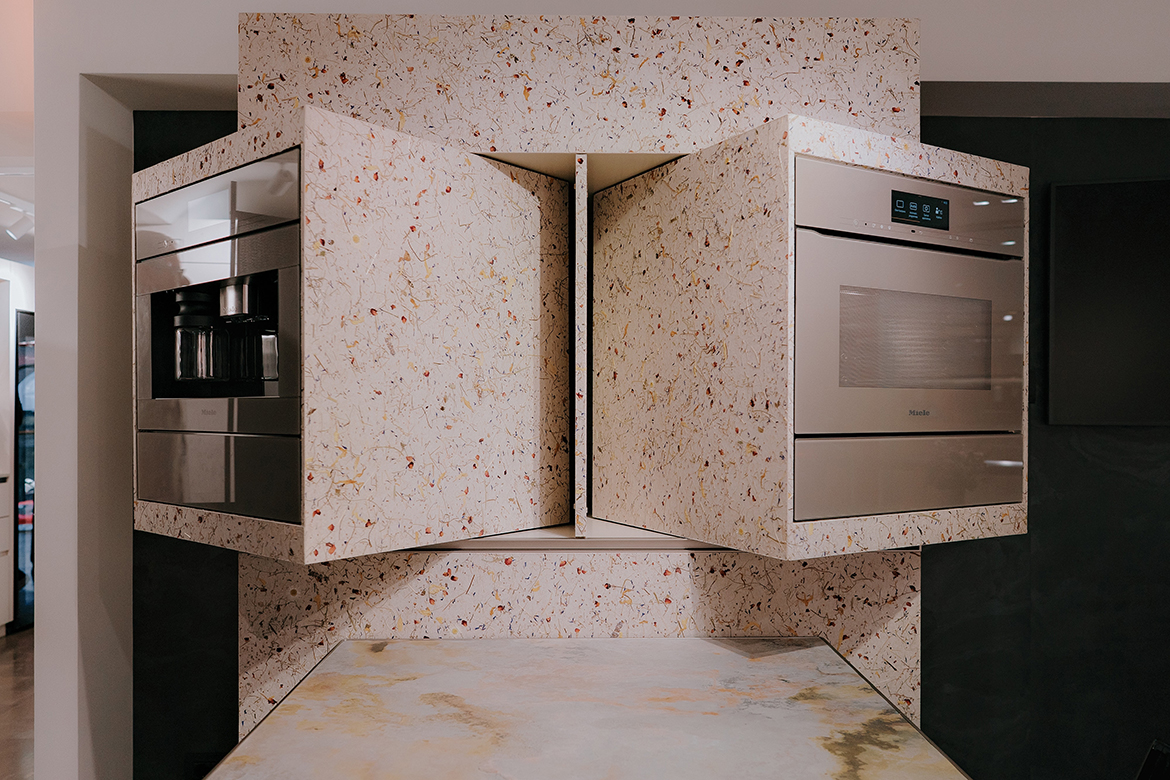
Miele already offers appliances designed for compact spaces, such as combination ovens with microwaves, or a steam cooking drawer (available starting in March 2027) that can be installed in a standard 60-centimeter niche, as shown in this concept study, where the two modules can rotate until they disappear into the niche that houses them. We asked a few questions of Janina Forberger, Vice President of the Miele Design Center, a truly interdisciplinary team where some fifty designers work alongside specialists in product design, colors, and materials, as well as user experience experts.
What inspired this concept? “We addressed the growing trend of urban settings with limited space. Those who live primarily in large cities are familiar with the problem of the high costs associated with having large spaces, where even the kitchen area is sacrificed. With this versatile unit, featuring large side cabinets that enclose a cooking space within just a few square meters, we didn’t want to compromise on the cooking experience, demonstrating that it’s possible to cook—and cook well—by concentrating various functions into a single space.” The principle is simple: instead of separating spaces, functions intertwine, and thanks to flexible and adjustable elements, the spaces adapt to daily life rather than to the home’s layout.
The texture of the furniture evokes nature and is particularly intriguing… “Of course, we’re interested in sustainability, but in this case the idea was to create an oasis of relaxation, a pleasant vacation-like feeling, even through the color and decor. That’s why we chose a covering that stimulates the senses—touch and smell—with this extremely natural wallpaper that incorporates daisies and Austrian mountain grass into the paper.” Digital assistance is obviously an integral part of the concept, where digital features accompany the entire cooking process while the app plans workflows, synchronizing the appliances. We ask what the evolution of the kitchen will look like in the coming years: “The kitchen environment today is truly very smart, but I believe we’ll need to combine this aspect—which is certainly important—with a sense of tangibility. In this scenario, technology can even disappear (as in this case) while continuing to offer a genuine experience tied to the cooking process and its rituals. After all,” concludes Janina Forberger, “people have always gathered around a fire.”