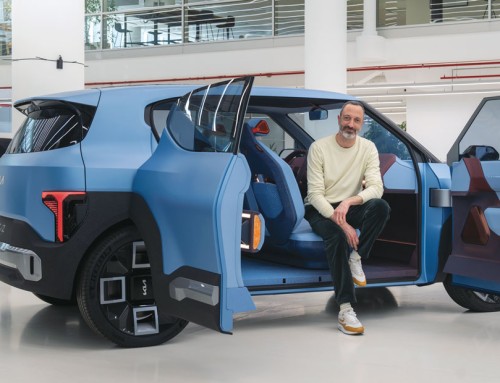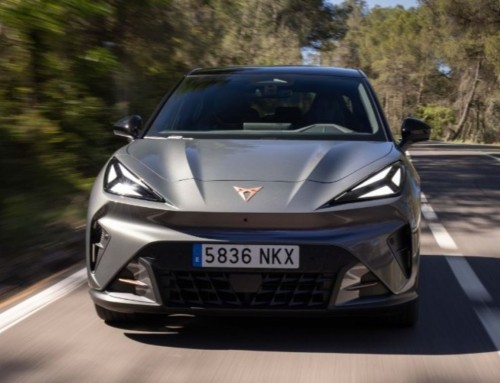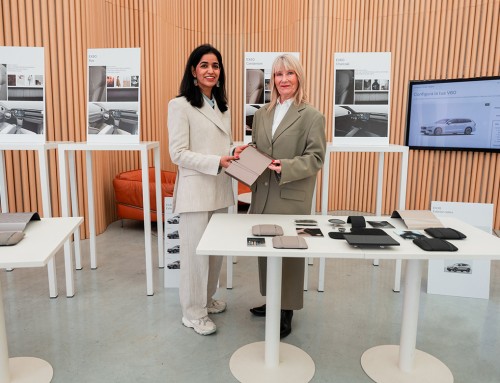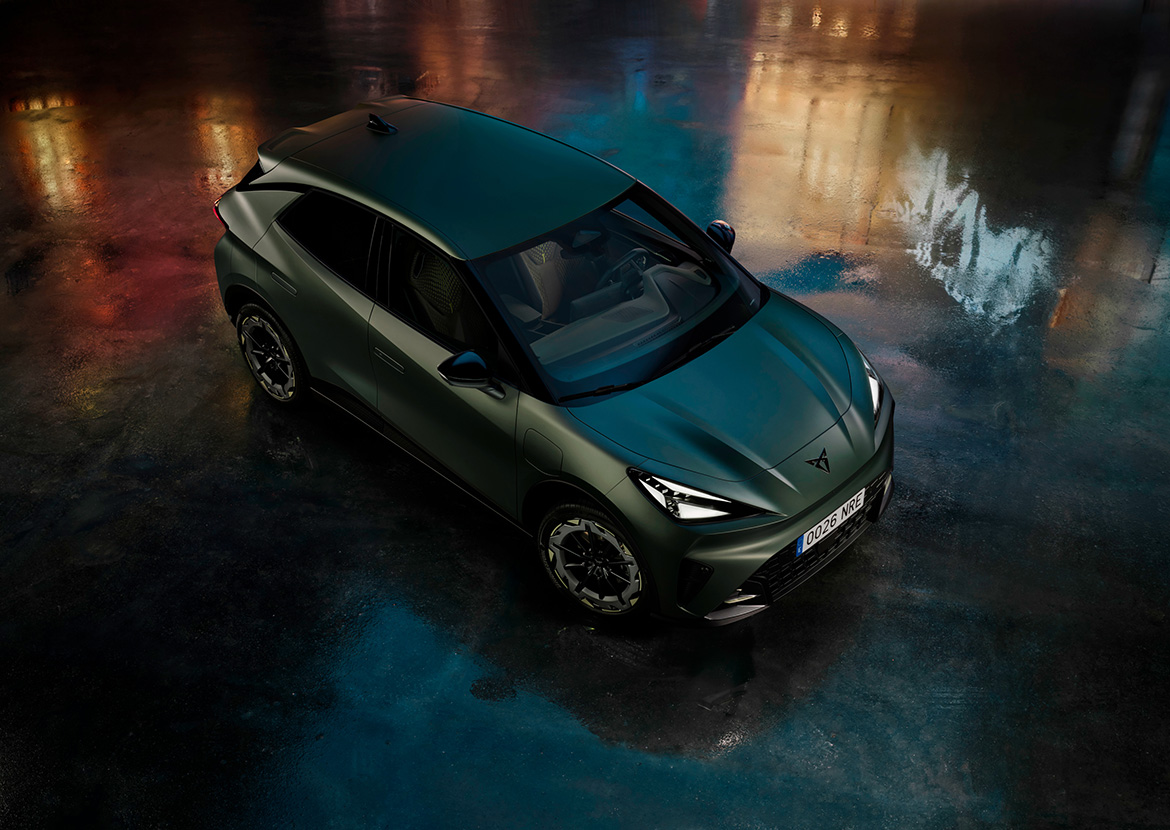
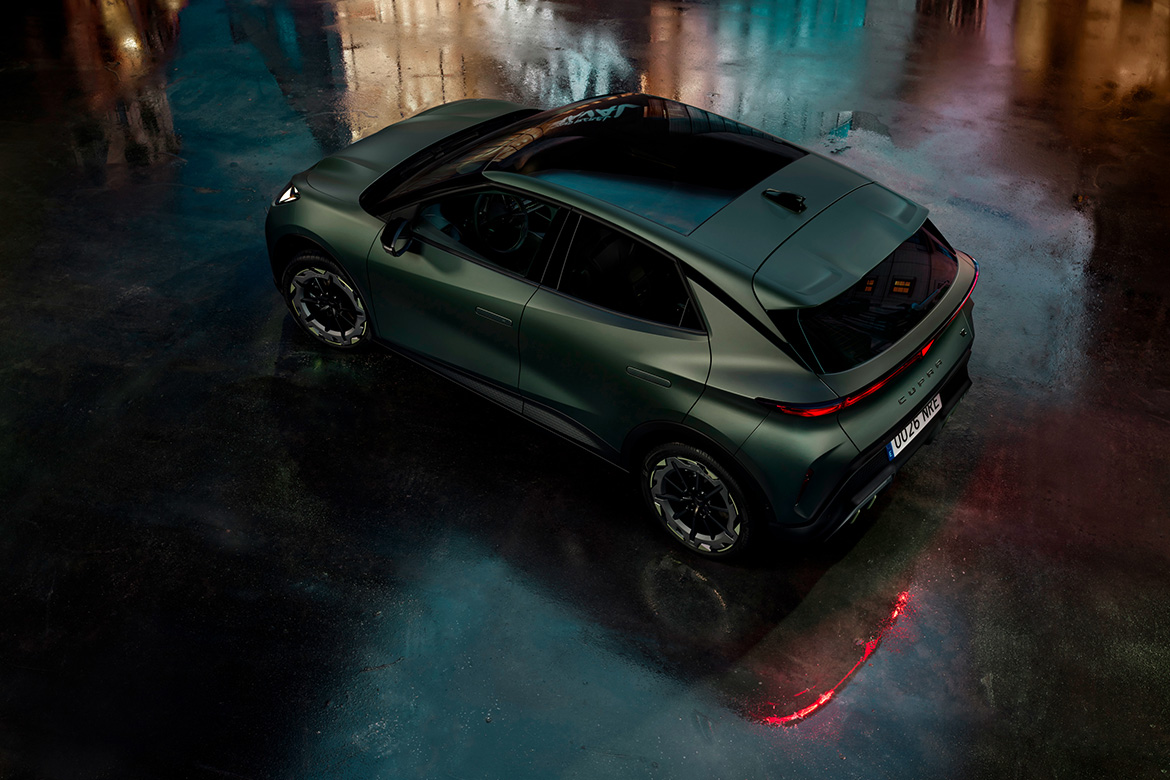
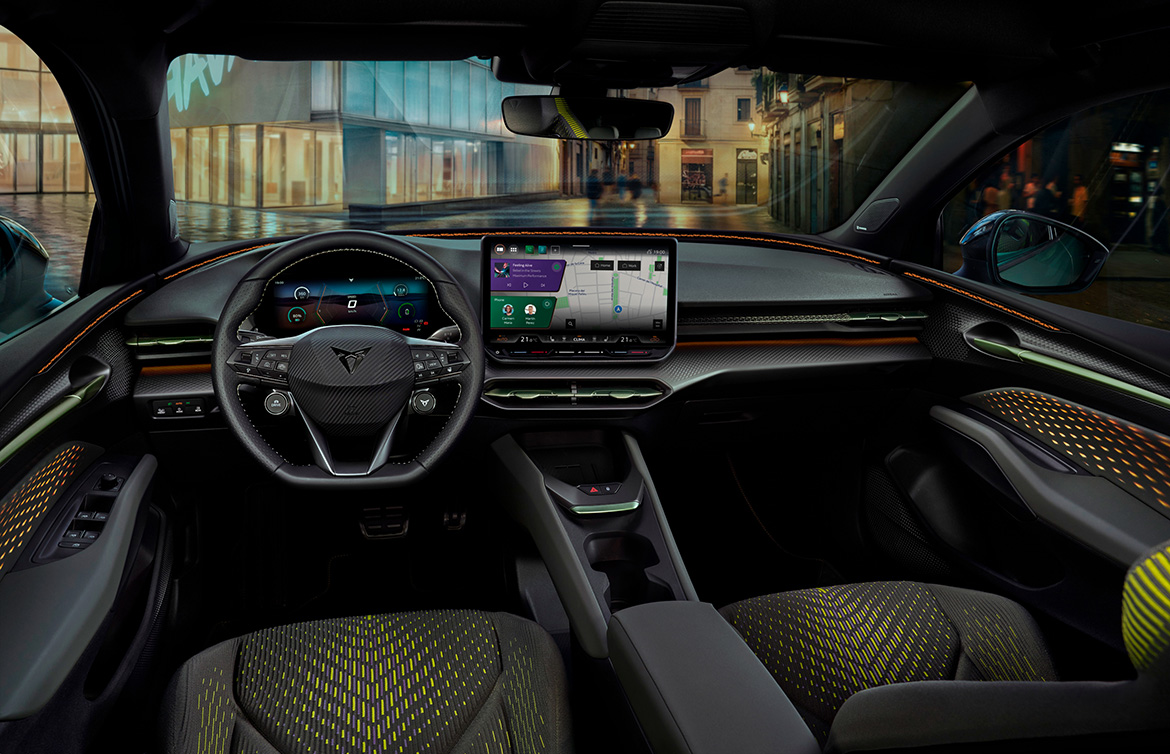
The Cupra Raval isn’t just a new electric compact car; it’s a manifesto of how the brand intends to translate its philosophy of sportiness into an urban and sustainable context. The starting point remains driving pleasure, reflected in an interior architecture that puts the driver at the center. Francesca Sangalli—Head of Color & Trim at Cupra—explains the creative approach: “It all starts with the architecture itself, which brings us back to the driver-pilot. This means building a structure where the human-machine connection is expressed at the highest level. The chosen materials also play a role in this.” For this reason, “you’ll see a dashboard where the hierarchy of elements is defined by different material treatments: we have a soft section in the upper part and a more structural one in the lower part, which enhances support through a parametric design.”
Materials and Design in Dialogue
Customization and variety are fundamental pillars of the Raval, with the goal of offering a car that is never bland or monotonous, but capable of expressing different personalities through the skillful use of technology applied to materials. “It’s a genuine dialogue,” continues Sangalli, “this interplay of graphic design and materials is what gives the interior its sophisticated look. In fact, you’ll see four types of interiors, four different trims, and each one uses technology to highlight a distinct aspect of the car’s character. They aren’t all the same; they’re very distinct, yet they all share that Cupra spirit.”
The Challenge of Premium Sustainability
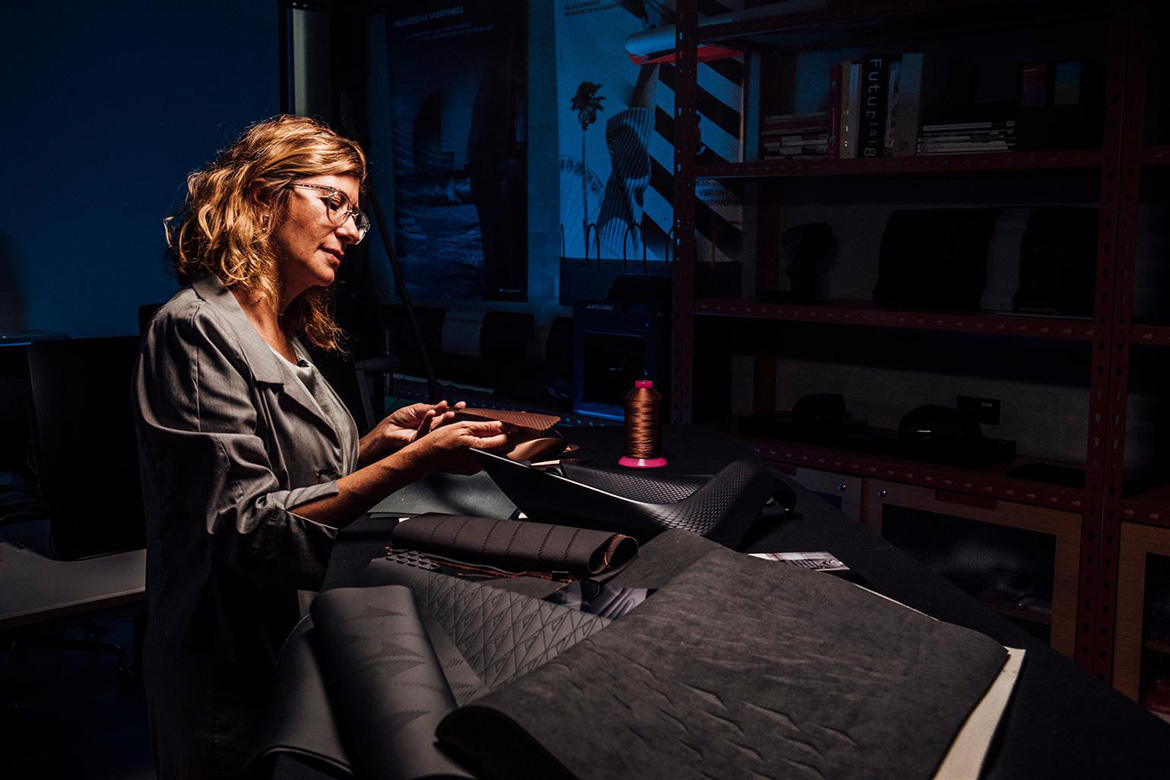
One of the central issues in contemporary design is the tension between sustainability and the perception of quality. For the Raval, Cupra chose not to compromise, seeking solutions that eliminate environmental impact without sacrificing the brand’s sophisticated aesthetic. Francesca Sangalli approaches the issue pragmatically: “Sustainability and premium design are often at odds with each other, because even the quality of materials isn’t necessarily sustainable; in fact, leather isn’t sustainable at all. The solutions we’ve adopted to make Cupra interiors more sustainable without sacrificing quality involve a completely new method. We’ve used seats made entirely of 3D-knitted fabric: the covers are created through a digital design. We’ve gone into defining the very structure of the piece, which comes straight out of the machine.”
Zero-impact manufacturing innovation
According to Cupra, the future of manufacturing lies in additive manufacturing, a technology that drastically reduces waste and supply chain complexity while delivering a striking aesthetic result. “Generally, when building a seat, to give it sophistication you have to add layers of craftsmanship, such as perforations or embossing, and this involves many suppliers,” concludes Sangalli. “With additive manufacturing techniques like 3D knitting for seat covers or 3D printing, everything is done with a single machine. The result is a complete seat with a very striking aesthetic, without involving numerous production processes and with zero impact in terms of waste and carbon footprint.”