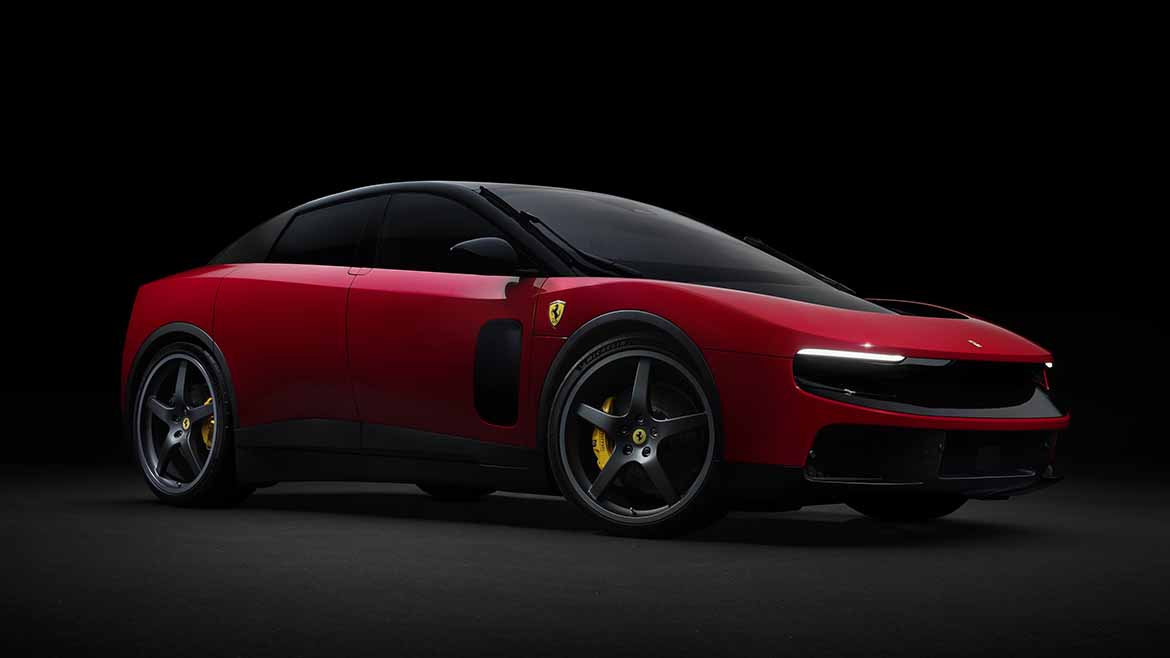
Forget the classic Ferraris crafted by Italian coachbuilders, the sinuous lines drawn by Pininfarina in the 1950s and 1960s, or the wedge-shaped forms of the following decades. It bears no resemblance even to the creations produced by Ferrari Design, the company’s in-house design center, over its more than 15 years of operation. With the Luce, the watchword is “disruptive.” A new chapter is opening for aesthetic and design research, breaking away from established conventions and as entirely unprecedented as the car itself: the Prancing Horse brand’s first all-electric model and first five-seater, featuring all-wheel drive, four motors, a 122 kWh battery pack, and built on a dedicated platform, with every single component designed in Maranello, where the Luce will be produced in the coming months.
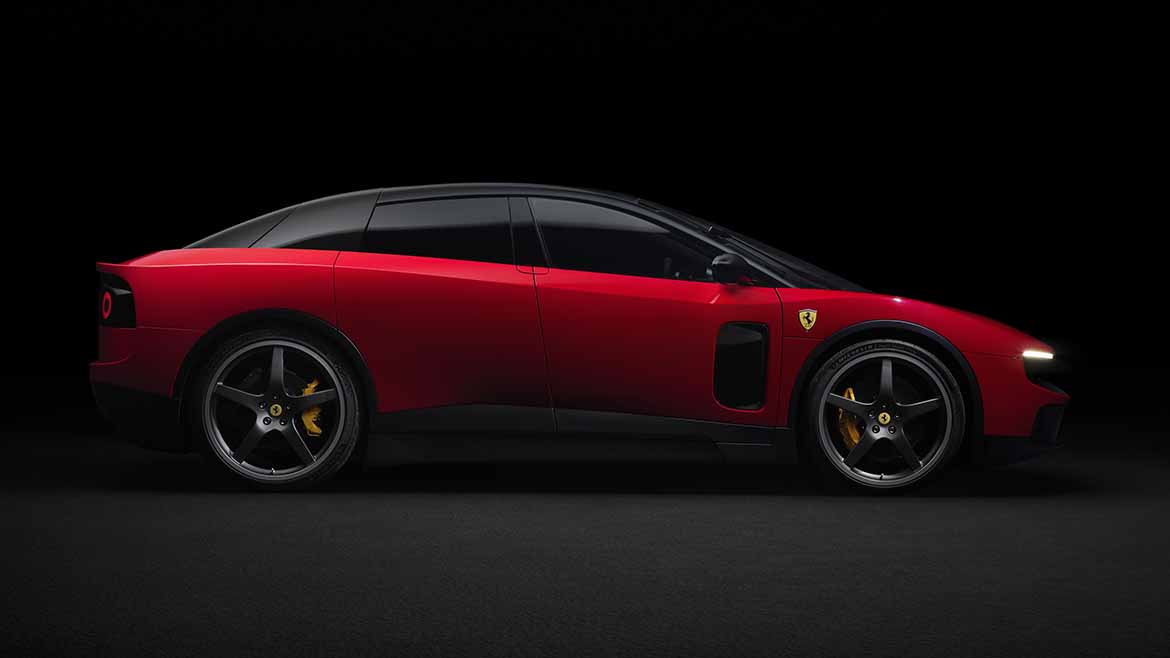
The design, however, originated much further afield, entrusted to the LoveFrom studio led by Jony Ive and Marc Newson, with offices in San Francisco and London—a collective that brings together creatives from various disciplines, ranging from architects to product, graphic, and interaction designers. And the product design approach—rather than an automotive one—is clearly evident on the Luce, in an unexpected silhouette consisting of two parts: a large “glass house” that extends from front to rear, encased in a monolithic aluminum body whose front and rear ends act as floating spoilers. The tall, massive rear volume is striking, emphasized by the 24-inch rear wheels (23-inch front wheels).
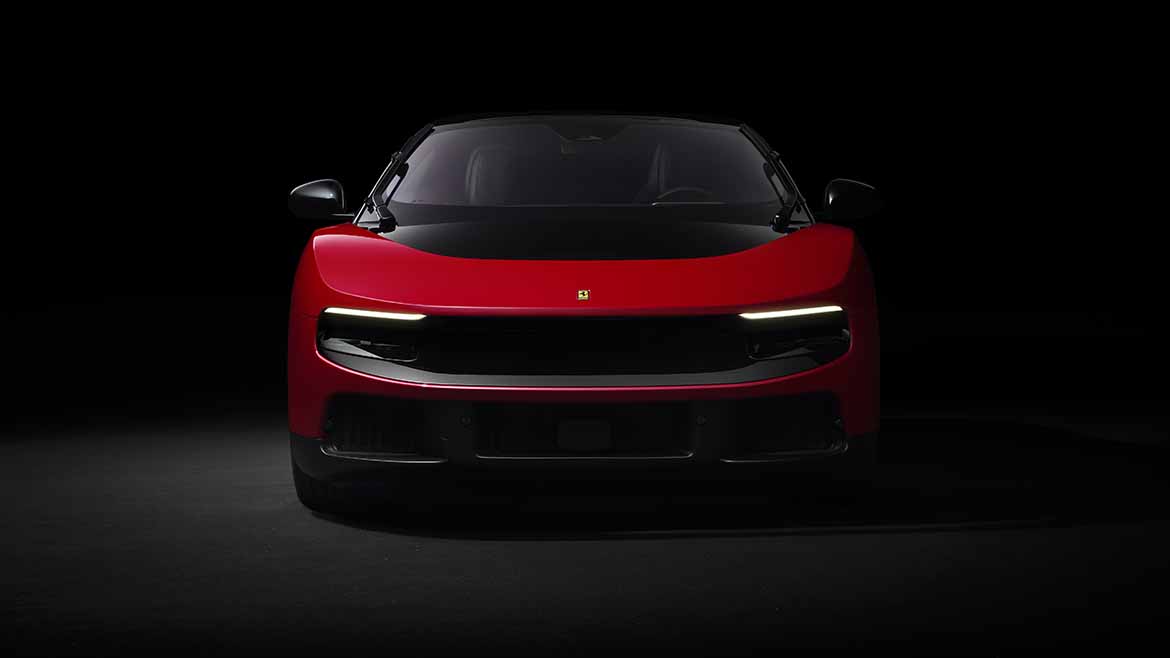
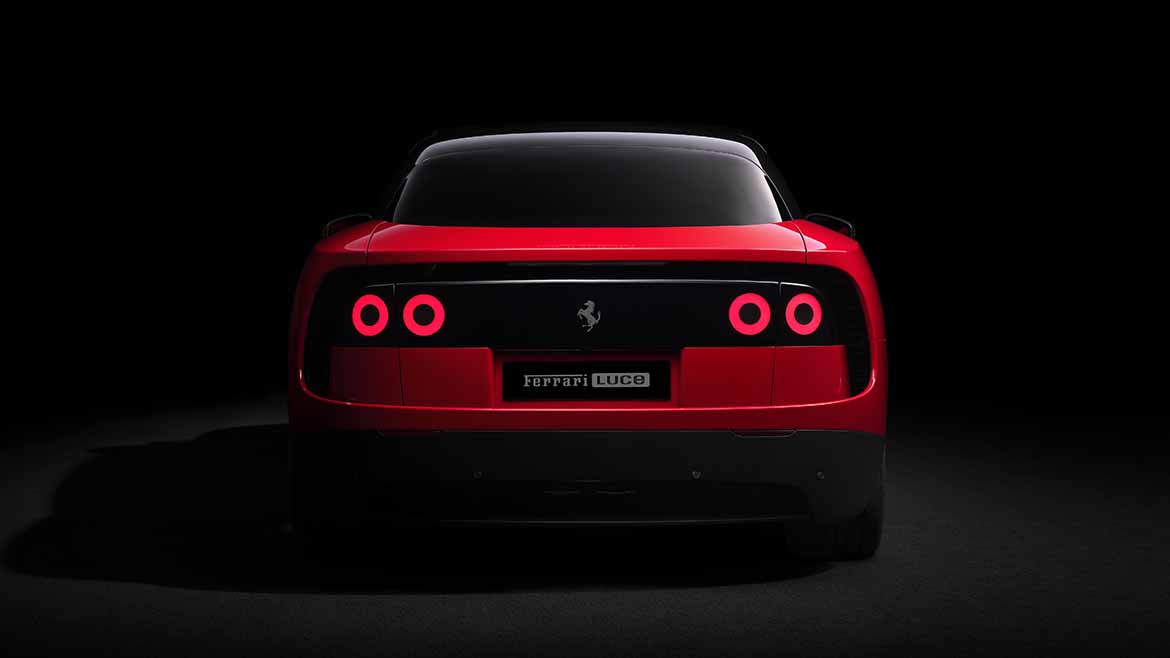
“When we received the project brief for a four-door, five-seat electric car, we took on the challenge by choosing to separate the elements,” explained Marc Newson at the unveiling in Rome (who, incidentally, had already worked on an automotive project in the past, the 1999 Ford 021C concept car). “We wanted a spacious passenger compartment that was clearly distinct from the exterior bodywork, and this presented a series of problems to solve, such as the windshield wipers, given that the glass area extends forward all the way to the top of the radiator.” Together with Ferrari’s engineers, a vertical arrangement along the front pillars was devised, which does not significantly disrupt the vehicle’s aerodynamics. “I’d like to dispel the misconception that designers and engineers are always at odds; we, too, have an engineering-oriented approach, and the collaboration to achieve the final result was excellent.” Aerodynamics is precisely one of the aspects on which Ferrari’s specialists worked most intensively, with 6,000 hours of wind tunnel simulations using scale and full-size models—more than double the time dedicated to the Purosangue project at the time, the engineers note.
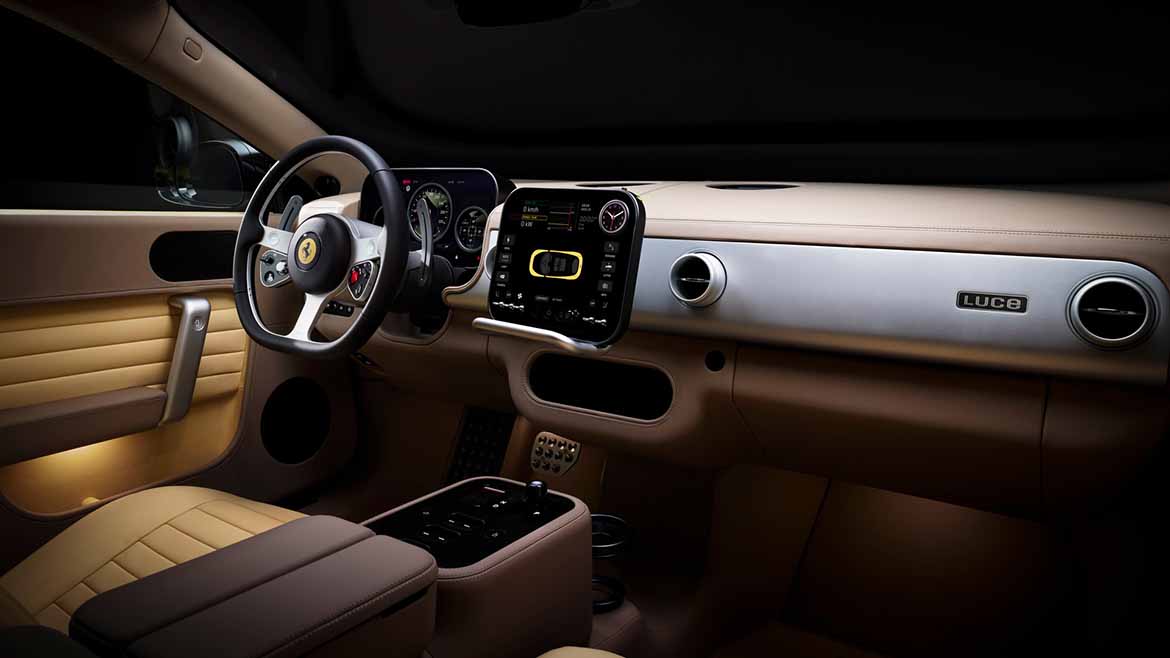
LoveFrom’s product design approach is best expressed in the interior, in the instrumentation and user interface (the “multigraph” is particularly impressive, with physical hands and a virtual dial that transforms from a clock to a stopwatch to a compass), where physical controls inspired by precision mechanics and digital graphics come together in elements that are deliberately kept—here too – well-separated. A successful way to distinguish the Luce’s “full electric” identity, which is activated by inserting the key—a glass rectangle—into a dedicated compartment in the center console, next to the gear selector, bringing the vehicle to life. Essential information for the driver is housed in a “binnacle” integrated with the steering column so that it remains visible at all times regardless of steering wheel adjustment; this too is a well-designed element in its organization of control modules. The two side paddles are made of anodized aluminum, as are the three spokes that evoke the past without replicating it, much like many of the graphic choices throughout the interior. The control panel is a separate element, mounted at the center of the dashboard on a swivel joint that allows it to be adjusted via a handle at the base, while the overhead control panel housed in the roof lining features an additional set of controls, including Launch Control, which initiates the performance launch procedure.
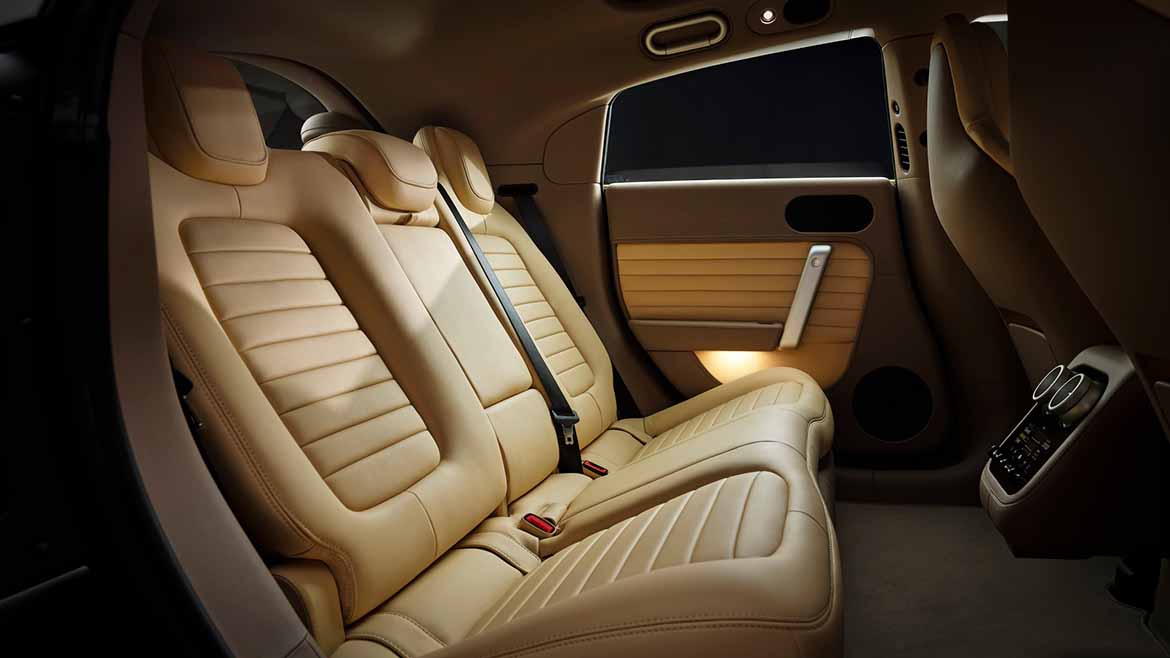
For Ferrari, however, the key focus was on integration, keeping the driver at the heart of the project and prioritizing functionality. While the results achieved in terms of efficiency are impressive (see the 1,050 horsepower of maximum power), what mattered was not the absolute value of each technical specification but rather how the Luce responds to commands, within a system designed to work in synergy for maximum driving pleasure while always maintaining control of the vehicle. For both the R&D division and industrialization, Ferrari engineers had to tackle uncharted design and manufacturing territory, involving new suppliers and experimenting with solutions and methodologies unprecedented for the company. This know-how goes beyond the Luce experience and is invaluable for future projects.