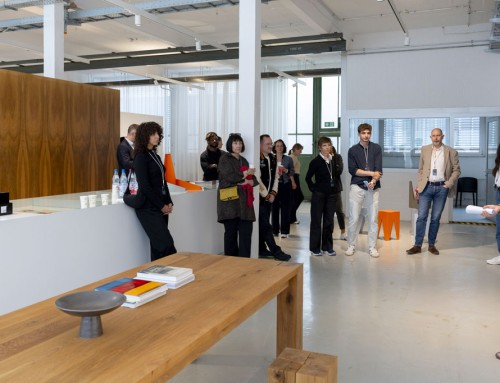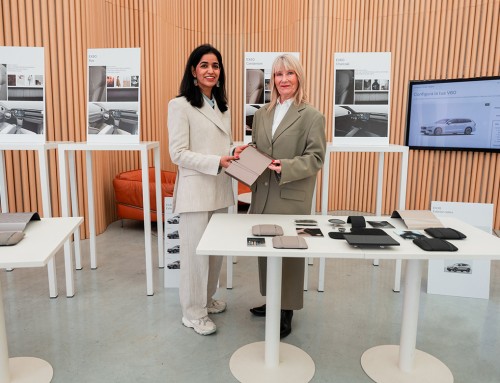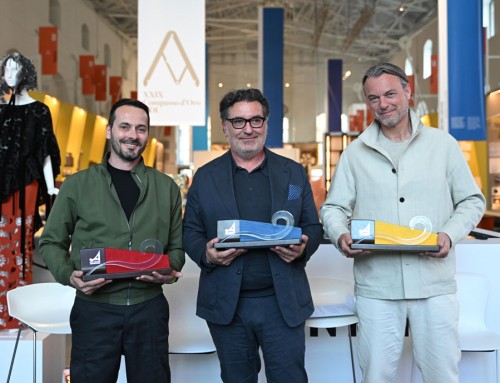
In the prestigious setting of the ADI Design Museum in Milan, the Car Design Award celebrated its 2026 edition, reaffirming its status as one of the most anticipated and significant events for the global creative community. On this occasion, Auto&Design organized a moment of collective reflection on the monumental challenges the sector is facing, caught between the advance of artificial intelligence and the urgency of sustainability that is authentic and not merely declared.
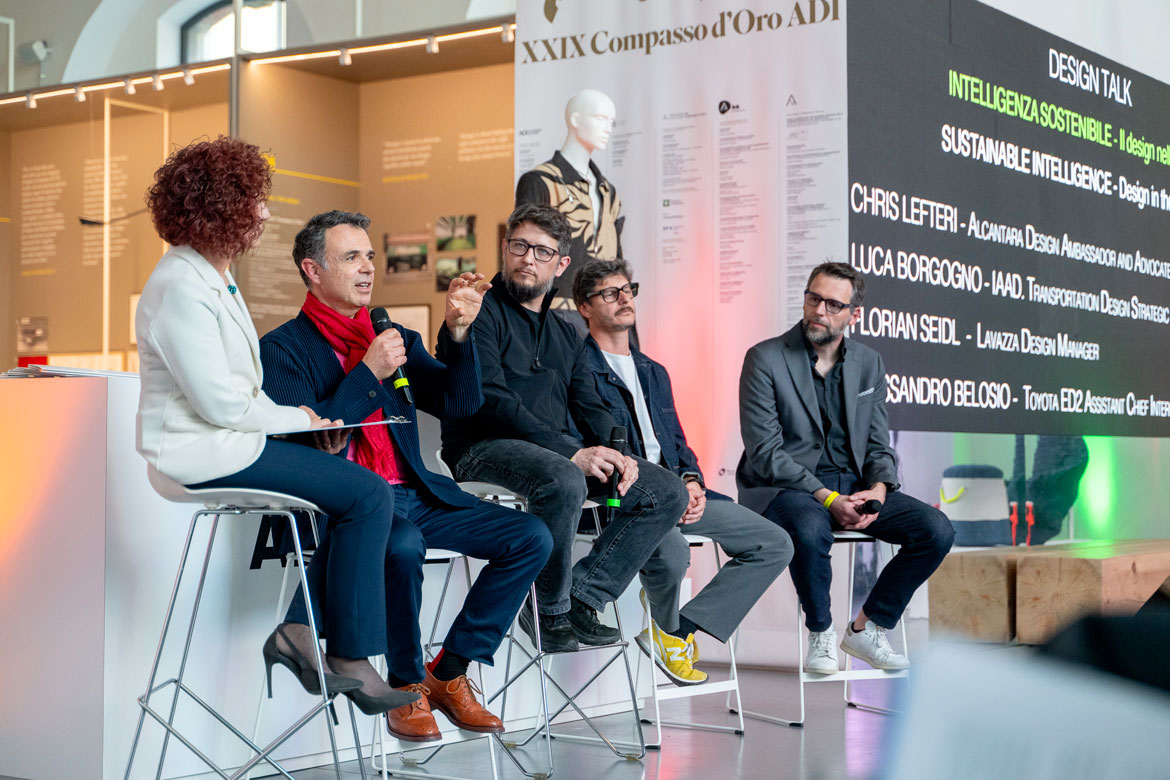
The design talk, titled “Sustainable Intelligence: Design in the Age of AI” featured: Chris Lefteri, Design Ambassador at Alcantara; Luca Borgogno, Strategic Director of Transportation Design at IAAD; Florian Seidel, Design Manager at Lavazza; and Alessandro Belosio, Assistant Chief Designer at Toyota ED², moderated by Silvia Baruffaldi, Director of Auto&Design.

The Three Intelligences of Contemporary Design Education According to IAAD.
Luca Borgogno, Strategic Director of IAAD, outlined the pillars for tomorrow’s designers during his presentation. The first is manual intelligence: “Physical know-how, from drawing to sculpture, remains the essential foundation for managing the relationship with form.” Next comes social intelligence, which requires “designing with full responsibility for the environmental and human impact that every new object will have on the community.”
Regarding artificial intelligence, Borgogno clarified that the goal of the school’s internal observatory is to train professionals capable of using this tool consciously: “We must master AI with a critical eye to prevent automation from replacing the designer’s creative thinking.” A call for practicality that also touches on digital ecology: “Being responsible also means reducing the energy footprint of the digital processes and servers required for the project.”

Material as a bridge between technical data and aesthetic appeal
Chris Lefteri, Alcantara’s Design Ambassador, explored how algorithms can accelerate the use of circular raw materials. “AI is essential for transforming complex data into aesthetic predictions, helping us create low-impact materials that are also visually compelling.”
The challenge, according to Lefteri, is to transform sustainability from a duty into a pleasure, moving beyond the “poor” aesthetics of the past: “The designer’s task is to make eco-friendly materials so extraordinary that they are desirable for their beauty, not just because they are good for the planet.” In this new vision, the success of clean technology depends on its ability to generate a genuine “emotional and sensory experience for those who use it.”

Analog Rituals and new digital tools
Florian Seidl of Lavazza shifted the discussion to the realm of everyday life, where the user experience is “rooted in the naturalness of the gesture and the tactile pleasure of physical interaction.” Despite the rapid pace of progress, Seidl calls for a pragmatic evolution: “New digital tools are available to everyone: today, it’s no longer enough to know how to design well; you have to know how to integrate these technologies to innovate production processes.” One example is the Tablì project, where sustainability becomes an industrial reality: “We’ve eliminated plastic and aluminum by creating a machine that uses only pressed coffee, completely reinventing the capsule system.”

The Challenge of Sustainable Modularity
In the automotive sector, Alessandro Belosio of Toyota ED² reiterated the centrality of the cabin as a space for physical contact, where “emotion must guide every design choice.” Belosio warns, however, of the risk of standardized design driven solely by data: “The designer must maintain creative control to avoid flat, characterless interiors, always retaining a strong provocative edge.” The true opportunity of AI lies in managing technical complexity: “We can finally integrate intelligent modularity that makes cars more premium, easier to update, and simpler to repair, drastically increasing their longevity.”