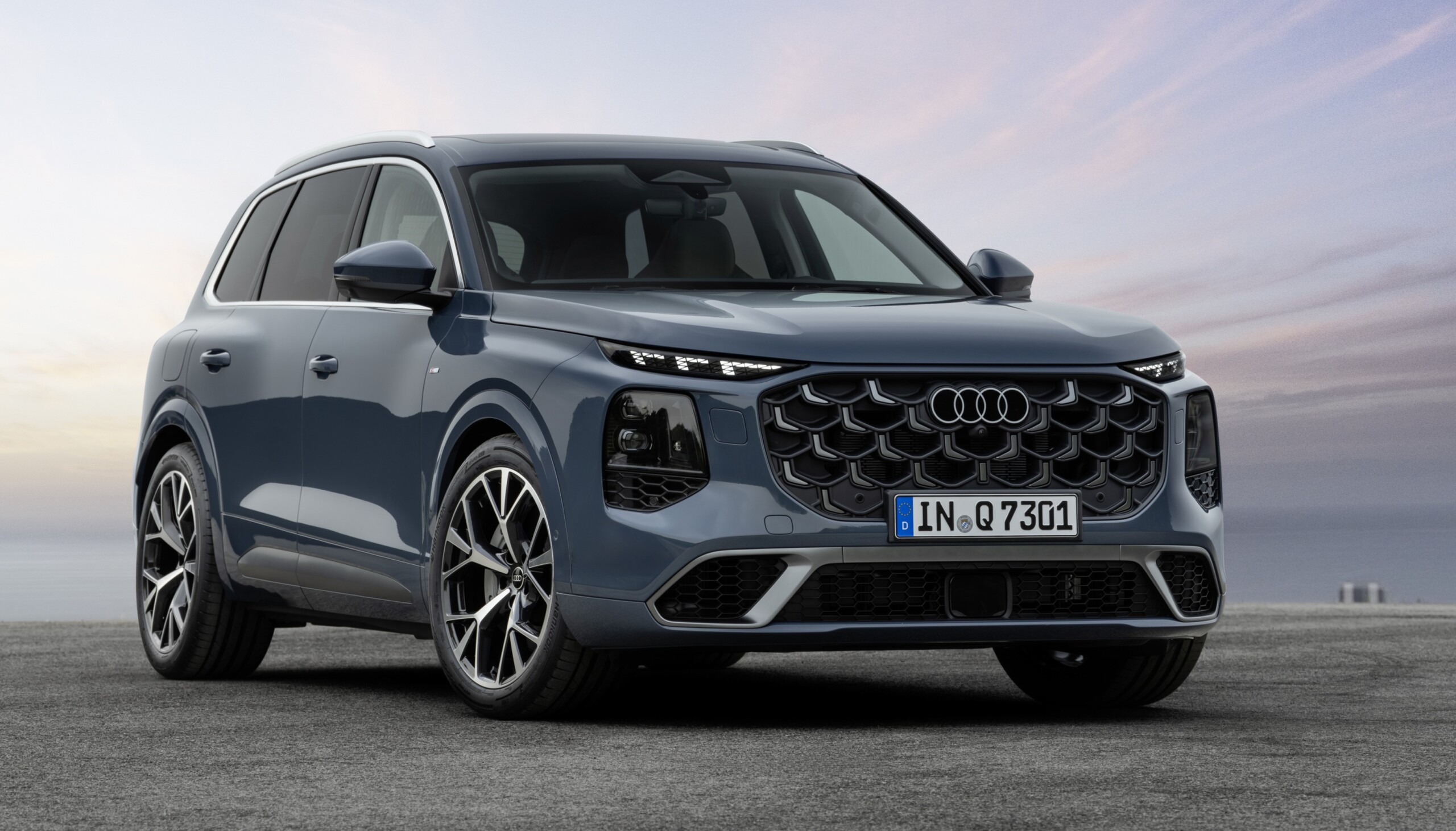
With the new Q7, Audi is writing a new chapter in the history of a model that first hit the market twenty years ago. The third generation of this SUV combines striking dynamism and the ability to tackle any terrain with comfort and ample interior space, comfortably accommodating up to seven people. At first glance, the 5.06-meter-long vehicle stands out for its significantly sportier design compared to the previous model. The side view is characterized by a rising beltline, accompanied by an overall height that is 5 centimeters higher than before.
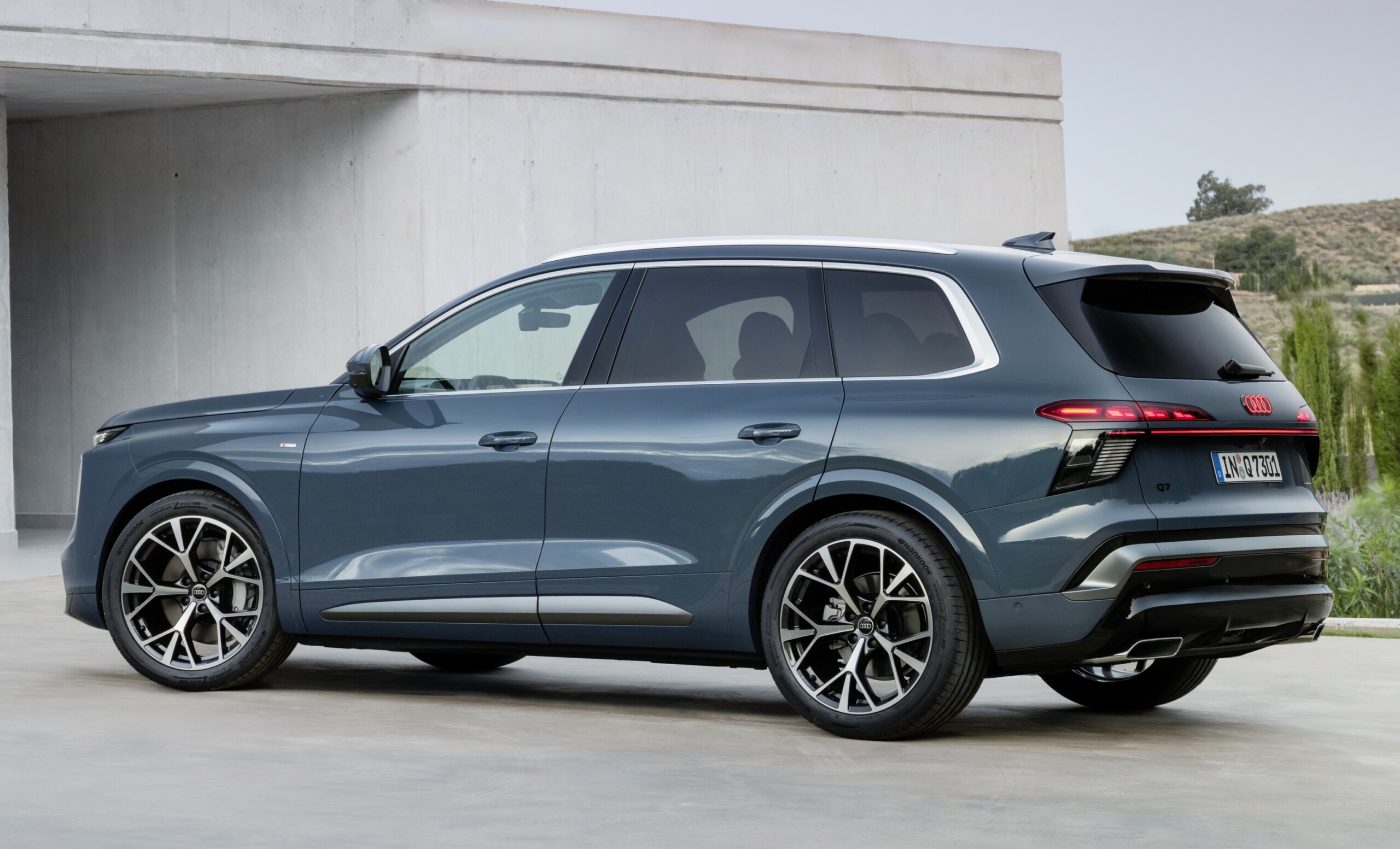
The front end is dominated by the wide single-frame grille—raised higher than on the previous generation, much like the four-ring logo—with a three-dimensional honeycomb structure. The vehicle’s stance makes a strong impression, influenced by the pronounced four-spoke wheel arches—evocative of the four rings’ all-wheel drive—and the more vertical D-pillar, which results in an almost horizontal roofline, enhancing interior space. The short overhangs and long wheelbase—3 meters—are complemented by redesigned bumpers and air intakes, while the rear end stands out for its clean lines, the sporty diffuser, and the new light strip that seamlessly connects the taillights. Further new features include lighting for both the single frame and the rear rings, as well as automatic doors with electric opening and closing, which can also be controlled remotely via the myAudi app.
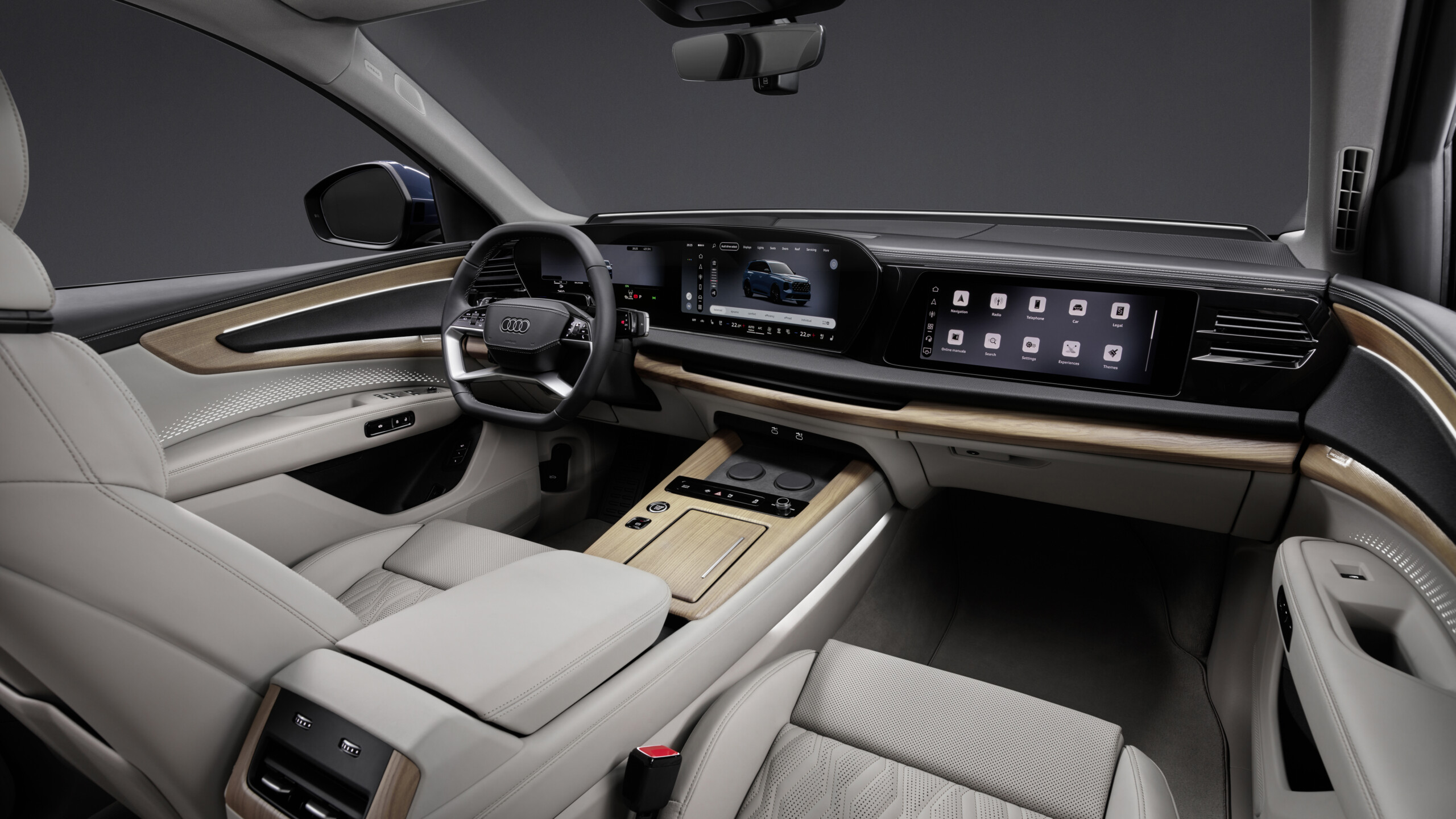
The interior of the new Q7 stands out for its clean design and generous amount of space. For the first time, the vehicle is available with three seating configurations. The five-seat configuration comes standard, while the six- and seven-seat setups are optional. In the six-seat configuration, the second row features two individual seats. This solution is designed to enhance the model’s lounge-like atmosphere and comfort. The interior layout is strongly defined by the Audi Digital Stage: a first for the Audi Q7. The digital stage consists of the 11.9-inch Audi virtual cockpit and the 14.5-inch curved OLED display of the MMI system, as well as the passenger screen (standard). The dash cam, integrated into the base of the rearview mirror (optional), records video in 4K and captures everything happening in front of the vehicle.