After winning the 2026 Car Design Award in the Brand Design Language category, the Jeep design team sought to explain the brand’s key stylistic principles that enabled the designers to win the award. “Ours is a unique brand with 85 years of history: we design every model with humility and great attention to customer needs, offering our interpretation with deep respect for the DNA we’ve inherited. Evolution must always keep in mind the values that make Jeep what it is, and our history is the running start that allows us to leap into the future,” said Daniele Calonaci, Head of Jeep Enlarged Europe.
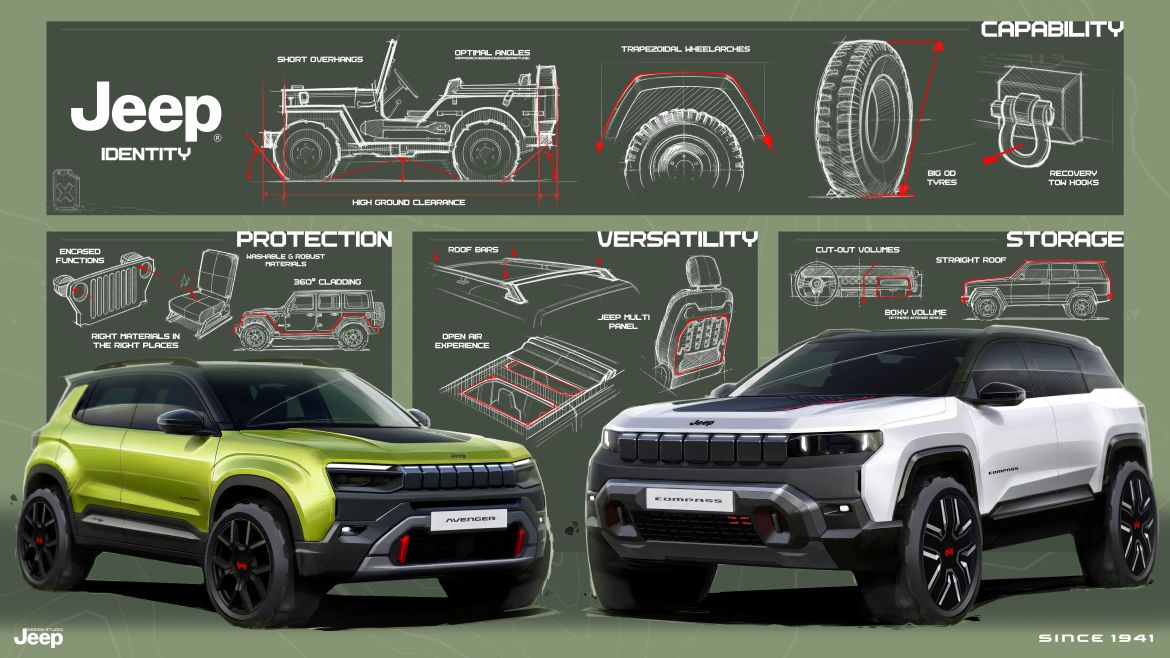
The guiding principle of Jeep’s design philosophy is “Design to function”: every line, every detail is designed to serve a purpose for the vehicle and its customers. In pursuing this fundamental goal, the design integrates timeless aesthetics with lifestyle. The Jeep brand identity stems from many elements that, when skillfully combined, define what a Jeep truly represents. The sketch created by Daniele Calonaci and his team reveals the entire “recipe” and its ingredients.
Off-road performance is fundamental to the development of every model. The first Jeep was conceived to “take you where other vehicles can’t go”—and every model today still lives up to this ambition. All Jeeps can tackle the most challenging off-road obstacles, as well as the difficulties of everyday life. Their capabilities are ensured by short overhangs to optimize off-road angles, high ground clearance to clear rocks and fords, wide trapezoidal wheel wells with large tires, and a tow hook for recovery when needed.
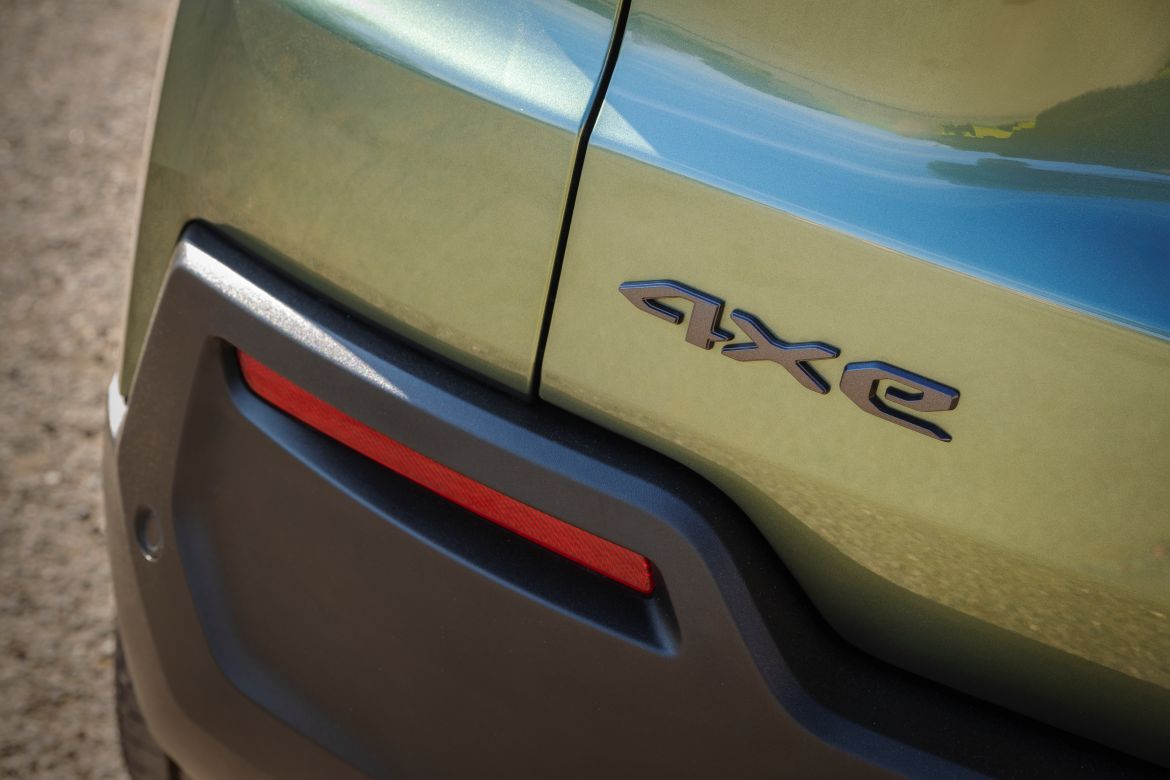
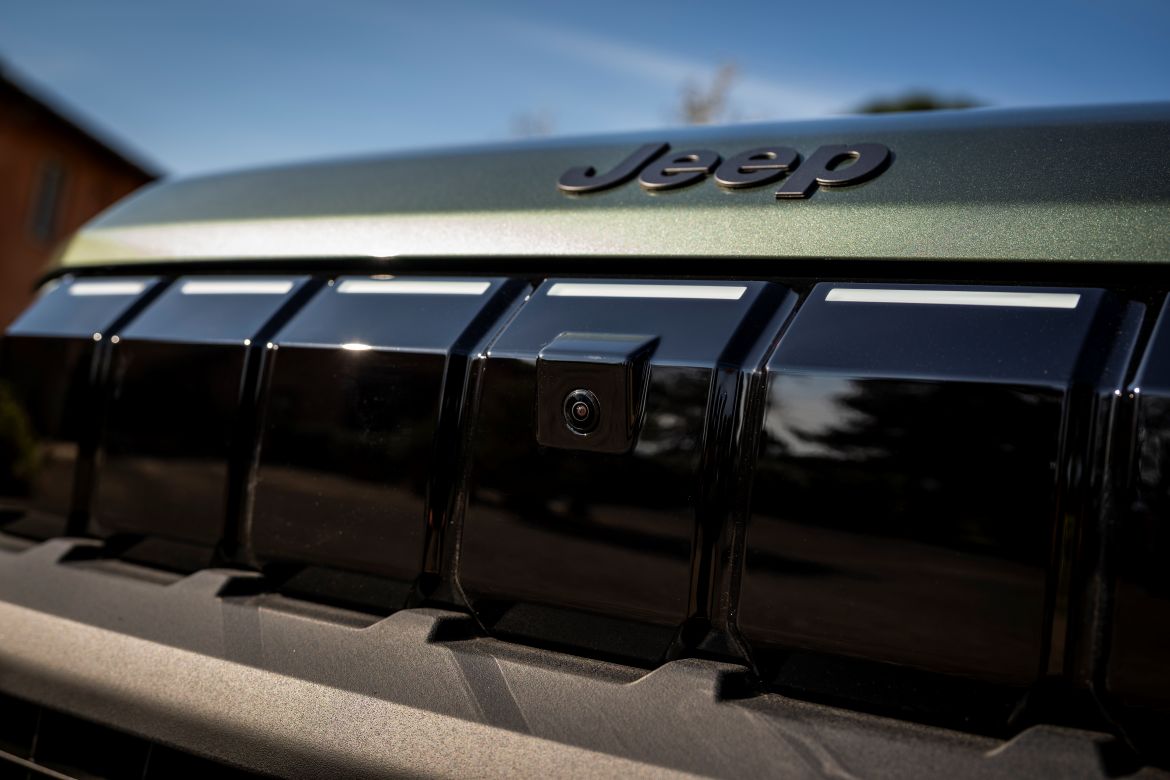
To deliver on its promise of safety, sturdiness, and durability, every Jeep SUV is fully protected. A thick, 360-degree protective coating shields the underside of the body. Black mold-in-color bumpers—meaning the color is integrated into the material rather than applied as a surface coat—and aluminum components help preserve the paint; scratch-resistant materials have also been used for the Jeep Shield on the Compass and Avenger 4xe. The vehicle’s radar is positioned to prevent damage in tight spaces or around obstacles. Headlights, rear reflectors, and front fog lights are recessed to protect them from minor impacts. Appropriate materials are used in strategic locations to reduce wear, such as durable, washable fabrics and protective covers on the backs of the front seats.
The traditional boxy shape of Jeep SUVs optimizes interior space. The split-folding rear seatback allows for various cargo configurations, with a total capacity that, in the case of the New Compass, reaches 1,560 liters with the seats folded down. Jeep SUVs offer space everywhere: the dashboard is contoured at the top, and the interior is designed—both stylistically and engineering-wise—to create additional storage compartments.