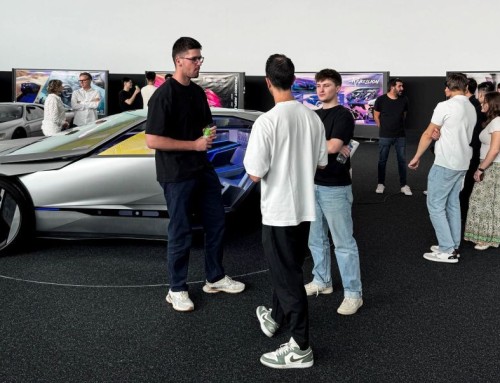
There is a turning point in the present where design is no longer called upon merely to shape new vehicles, but to explore new ways of experiencing time, space, and movement. It is within this perspective that TIME was born, the self-driving concept car developed by students in the Master’s in Transportation Design program at IED Turin in collaboration with Tesla: a thesis project that interprets, through design, a radical reflection on the transformations introduced by new self-driving scenarios. A vision that finds expression in the exhibition TIME. A Manifesto for Future Mobility, scheduled in Turin at the Mauto – National Automobile Museum from March 26 to May 3, 2026, conceived as an immersive experience that guides the public through the questions, tools, and trajectories that have driven the entire research process, intertwining the physical and digital dimensions to convey the complexity of the design process.
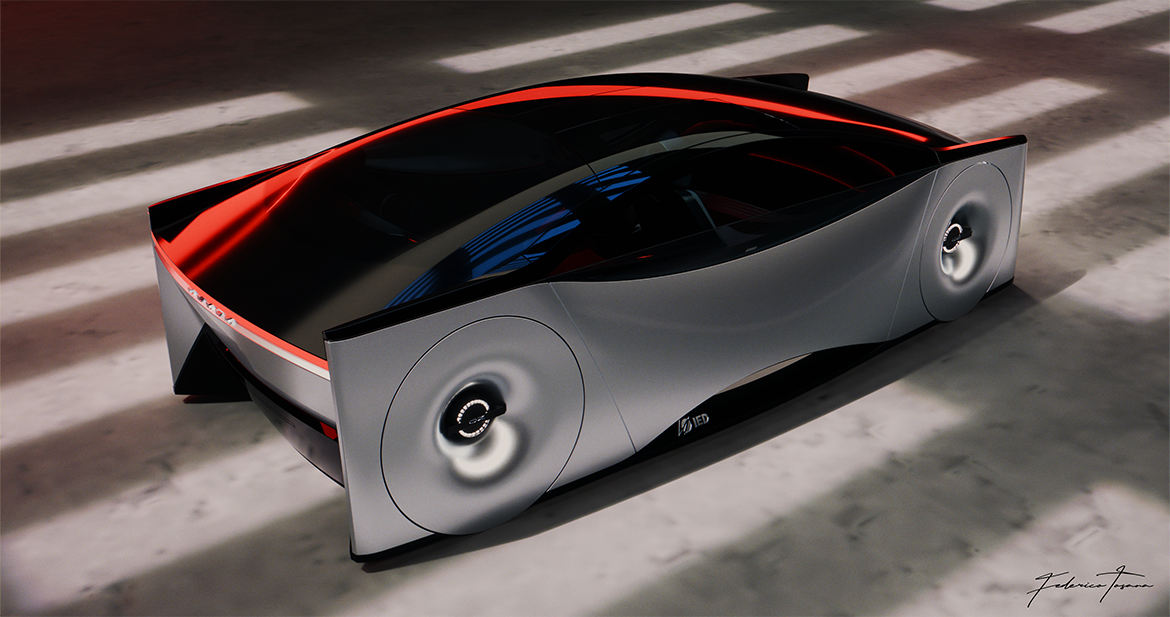
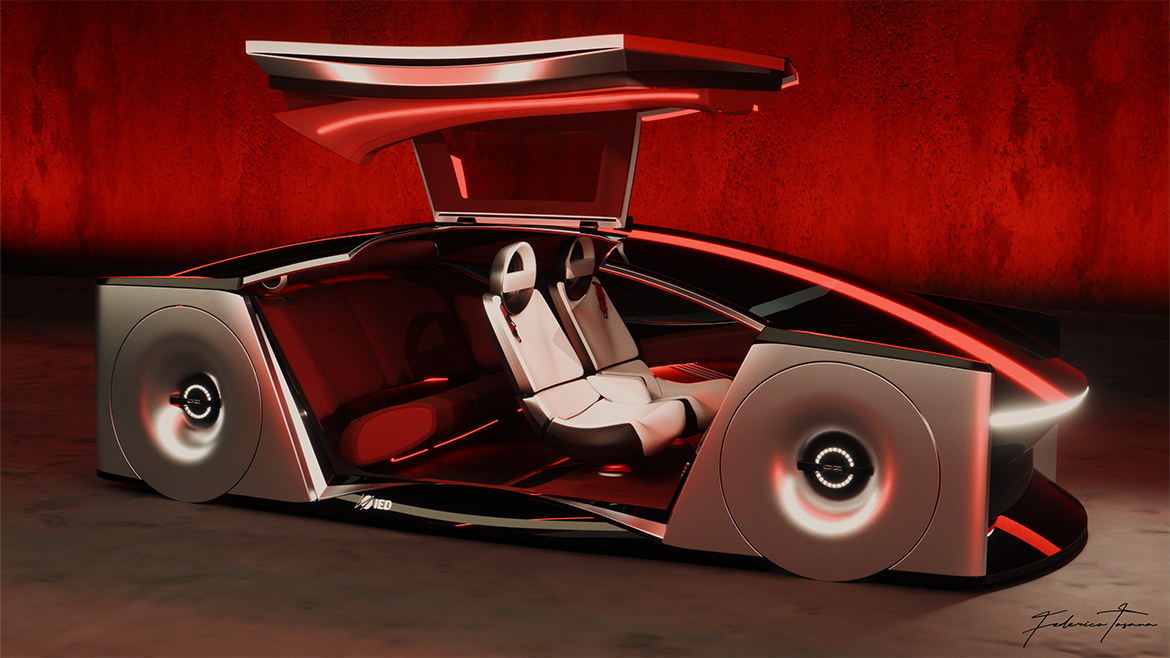
Far removed from any conventional aesthetic, TIME draws inspiration from industrial design and architecture, rediscovering a timeless minimalism that resonates with Tesla’s design language—one that eliminates the superfluous to make way for a pure, functional design. The geometric coolness of the exterior is defined by essential volumes and continuous surfaces, in which a single formal gesture—the wedge, dear to the tradition of Italian design, which unites the roof, windshield, and rear window—forms a compact body, traversed by an hourglass-shaped side element that becomes its hallmark. The front and rear are framed by vertical and horizontal lighting elements, while the wheels are reduced to an evoked presence—cavities in the side panels where the car’s body seems to dissolve as if in the presence of a black hole, suggesting movement rather than representing it. The interior, by contrast, offers softness, warmth, and warm colors: a fluid space where technology takes a back seat and integrates discreetly to make way for the experience. An environment that does not impose functions, but makes them possible.
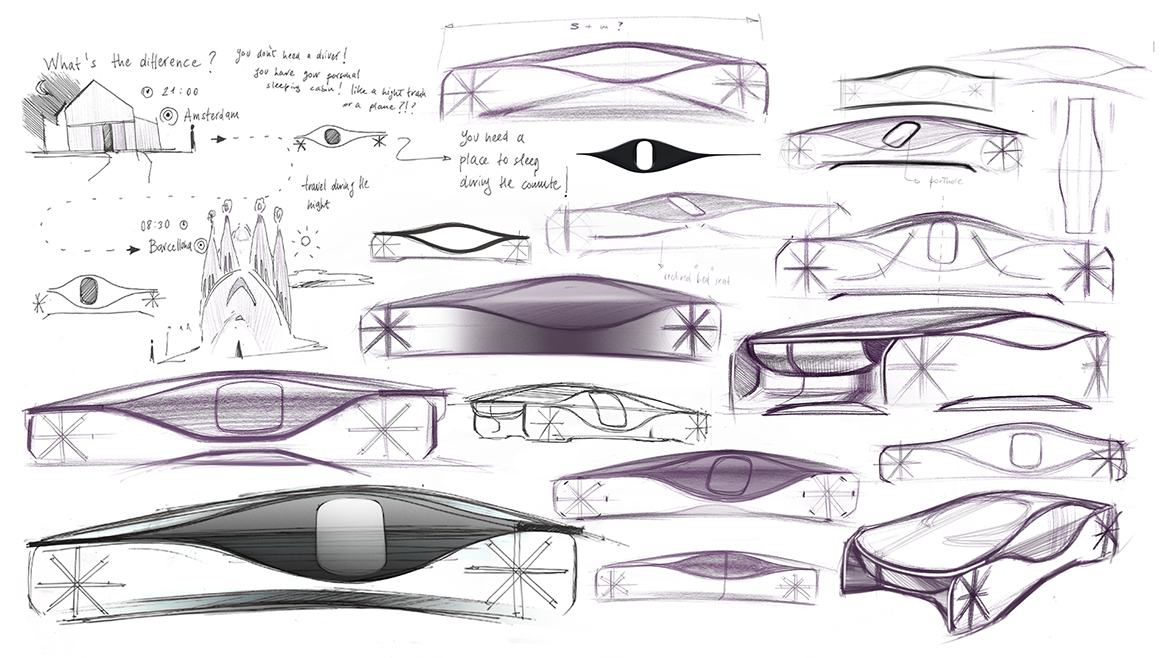
Many organizations contributed to the creation of Time. The exhibition offers a glimpse into the heart of the project through the words of the students who developed the concept and worked for months as a Design Studio, supported by Tesla’s faculty and mentors, to define TIME’s style. The narrative continues by capturing the design process in all its complexity, from sketch to form, highlighting the complementary roles of design culture and new technologies in developing scenarios and solutions. This third chapter also reveals a new way of designing, made possible by the use of advanced tools such as DIGIPHY—a platform developed by Granstudio that integrates virtual reality and physical media—which students used to experiment with and define the project in a dynamic and interactive way. The experience concludes with a more intimate and immersive dimension, dedicated to the interior space, where a voice guides the listener in imagining new ways of inhabiting the time of travel.